

Subscribe to the CIPS Newsletter
 In the Middle of the Rupture: What’s Next for Canada’s WPS Plans?
October 26, 2026 - 12:00pm
Presented by CIPS, the Gender, Peace and Development Research Network (GPD-RN), the Research Network on Women, Peace and Security and the Women, Peace and Security Network – Canada
This workshop will focus on Canada’s shift from explicit feminist values to …
… The North American Long Game: Data and Strategies from New Research for a New Approach to a New Relationship
October 27, 2026 - 12:00pm
Presented by the New North America Initiative from the School of Public Policy at the University of Calgary, CIPS and the CN-Paul M. Tellier Chair on Business and Public Policy
Beyond tariff threats, negotiations for an Agreement on Reciprocal Trade, …
… Film Screening: “TRACES”
November 3, 2026 - 4:30pm
Registration: Google Forms
Presented by CIPS, the Gender, Peace, and Development Research Network (GPD-RN), the Research Network on Women, Peace and Security and the Ukrainian Women’s Fund
We invite you to a special evening of film and conversation addressing the …
… How to Be Human Today: Crossing Through Fire in an Age of Disconnection
November 4, 2026 - 12:30pm
Presented by CIPS
We are the most connected human beings who have ever lived — and, by nearly every measure, the loneliest, most anxious, and most fragmented. In this featured talk, internationally acclaimed artist, author, and philosopher Patricia Karen Gagic …
… Taiwan’s New Roles in the Time of Rising Global Right-wing Politics: A Beacon for Asian LGBTQ+ Rights and a Confluence of Transnational Moral Conservatism?
November 5, 2026 - 4:00pm
Presented by CIPS, the Chair of Taiwan Studies and the Asian Studies Network (ASN)
Taiwan has been praised as the first Asian country to legalize same-sex marriage in 2019, celebrating its vibrant LGBTQ+ communities and functional democracy. Dr. Kao’s new …
… The Dynamics of Power Politics
November 5, 2026 - 3:00pm
Presented by CIPS and the International Theory Network (ITN)
Most theories of power politics thus shared a suite of assumptions: the lack of a world government (anarchy) fundamentally distinguishes international from domestic politics; anarchy inevitably dooms international cooperation; states are …
… Creative Resistance: Storytelling and Solidarity in Burma
November 6, 2026 - 1:00pm
Presented by CIPS and the Asian Studies Network (ASN)
Creative Resistance is an interactive multimedia presentation exploring how people in Burma have used art, music, humour, storytelling, faith and community action to confront authoritarianism and sustain solidarity since the 2021 …
… Book Presentation: A Global History of Right-Wing Terrorism
November 9, 2026 - 12:30pm
Presented by CIPS and the German Academic Exchange Service (DAAD)
In his newly published book, A Global History of Right-Wing Terrorism, Tobias Hof traces the global history of right-wing terrorism from the mid-nineteenth century to today. In this …
… Book Talk: On Trade War
November 10, 2026 - 5:30pm
Presented by CIPS, IPEN and the CN-Paul M. Tellier Chair on Business and Public Policy
From the U.S.-China rivalry to disputes involving allies and partners, such as the recent trade tensions between Canada and the U.S., trade measures such as …
… On the Other Hand: Gender, Race, and the Costs of Ambivalence
November 13, 2026 - 2:30pm
Presented by CIPS and the International Theory Network (ITN)
Research on decision-making in foreign policy demonstrates that open-mindedness, cognitive complexity, willingness to solicit advice, and careful deliberation generally produce better decision-making and better outcomes. At the same time, recent scholarship …
…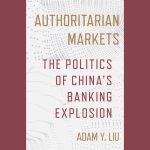 Authoritarian Markets: The Politics of China’s Banking Explosion
November 23, 2026 - 11:30am
Presented by CIPS and the International Political Economy Network (IPEN)
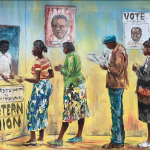
Conventional wisdom holds that banking markets flourish where property rights are secure, the rule of law is strong, and the state keeps its hands off. China has none of these. …
… When Voters Exit Authoritarianism Survives
November 25, 2026 - 9:30am
Presented by CIPS
Dr. Chipo Dendere, Wellesley College, will share insights and findings from her new book, Death, Diversion, and Departure: Voter Exit and the Persistence of Authoritarianism in Zimbabwe, Cambridge University Press (2026). This groundbreaking work explores the …
… Book Launch: Beyond Five Eyes Intelligence
January 20, 2027 - 10:00am
Presented by CIPS and the International Theory Network (ITN)
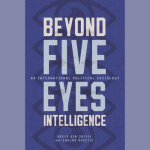
Beyond Five Eyes Intelligence (McGill-Queen’s, 2026) brings intelligence to the forefront of International Relations theory by advancing three claims: the partnership has evolved beyond the interests of its five founding states …
… THE VETO | Film Screening
October 19, 2026 - 5:00pm
Registration: Eventbrite
Presented by the University of Ottawa Faculty of Law – Common Law Section, CIPS, the International Commission of Jurists, the Human Rights Research and Education Centre (HRREC), the International Law Association, and the Neuberger-Jesin Professorship
Join us for …
… The Current Security Environment Facing Japan and Canada, and Future Prospects
October 14, 2026 - 4:30pm
Presented by CIPS, the Embassy of Japan in Canada and the Asian Studies Network (ASN)
Canada is a resource-rich country with abundant energy resources, including LNG, as well as critical minerals used as raw materials for batteries and other products, …
… Into the Breach: Leadership, Service, and Canada’s Place in a Changing World
October 14, 2026 - 5:00pm
Presented by CIPS and the Security Studies Network (SSN)
Join General Wayne Eyre, former Chief of the Defence Staff and commander of the Canadian Armed Forces, for a special conversation celebrating the launch of his new memoir, Into the Breach: …
… Reinventing the Architecture for Peace: Catalyzing Citizens, Coalitions, and Capital
October 9, 2026 - 6:00pm
Presented by the Group of 78, CIPS and the International Development Research Centre (IDRC)
Purposes of the Conference:
1) To develop an agenda of action to confront the institutions and forces that benefit from the spread and perpetuation of war.…
 South Korea’s Defense Industry and its Strategic Dilemma
October 7, 2026 - 12:15pm
Registration: Google Forms
Presented by CIPS, IPEN and the Asia Pacific Foundation of Canada
This presentation examines the rapid growth of South Korea’s defense industry and the strategic dilemmas accompanying its global expansion. It first reviews South Korea’s major defense …
… Workshop: Reflecting on Images in Science – Using AI Responsibly and Creatively
October 6, 2026 - 5:30pm
Registration: Google Forms
Presented by CIPS and the Embassy of Germany in Canada
Images shape how we see science and whom we imagine as scientists. In this workshop, participants take a close look at images used in science communication: What …
… The Political Future of the Post-Soviet Space – Lecture and Open Q&A Session with Andrzej Poczobut
October 5, 2026 - 8:30am
Presented by CIPS
What does it truly mean to stand up for human dignity against an authoritarian regime? Join us for an extraordinary, first-hand encounter with Andrzej Poczobut, a prominent Polish-Belarusian journalist, human rights activist, and recipient of the European …
… Canada and the Middle Power Challenge
October 2, 2026 - 9:00am
Presented by the Canadian Pugwash Group (CPG) and the Centre for International Policy Studies (CIPS)
Since the Prime Minister’s clarion call in Davos this January for middle power activism in tackling international problems, there has been debate over what this …
… How Optimists Triumph and Change Happens
October 1, 2026 - 4:00pm
Presented by Canadian Leadership for Nuclear Disarmament and the Centre for International Policy Studies
Recipient of the 2026 Annual Achievement Award from Canadian Leadership for Nuclear Disarmament: Robin Collins
Robin Collins will deliver a keynote lecture: …
… The International Political Economy of High-Speed Rail: Lessons for Canada from Abroad
September 30, 2026 - 1:00pm
Presented by CIPS, the International Political Economy Network (IPEN), and The Environmental Political Economy of High-Speed Rail in Canada Academic Study Group
Canada recently announced plans to build Alto, a high-speed rail line connecting Toronto to Quebec …
… How to Win a Trade War — Conversation with Chad Bown
September 30, 2026 - 5:00pm
Registration: Eventbrite
Presented by the Hyman Soloway Chair on Business and Trade Law, the CN-Paul M. Tellier Chair on Business and Public Policy and CIPS
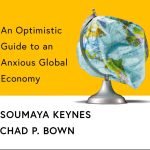
Over the past year, Canadians have learned more about the word “tariff” than they would …
… Book Launch – Developing Hegemony: World Order and the Transnational Field of Development
September 23, 2026 - 1:00pm
Presented by CIPS
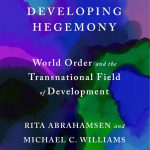
At a time of multiple challenges to the liberal international order, development has become one of the most contentious areas of world politics. Dominant powers have reduced their assistance and overtly fused development with national and security …
… Strategies for Approval: Building Support for Military Intervention at the UN Security Council
September 21, 2026 - 12:00pm
Presented by CIPS
UN Security Council approval remains highly desirable to prospective military interveners, especially liberal democratic ones, as domestic and international audiences often expect such approval as a condition for legitimate intervention. Yet how can UNSC approval be secured …
…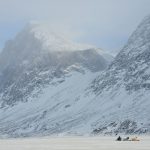 How Arctic Residents Think: Results From the Second Annual Canadian Arctic Survey
September 21, 2026 - 11:00am
Take a look at the related report: The Second Annual Canadian Arctic Survey
Presented by CIPS and the Observatory on Politics and Security in the Arctic (OSPA)
Policies about the Arctic are often decided at more southern latitudes: capitals of …
… Bringing the Market Back In: The Politics of the Markets for Total Defence in Sweden and Finland
September 18, 2026 - 2:30pm
Presented by CIPS and the International Theory Network (ITN)
The presentation brings together a new research project on the role of firms in societal security and previous conceptual/empirical work on the politics of defence markets. The project focuses on the …
… The World Won’t Be the Same After the Strait of Hormuz Crisis: The Strait of Malacca and India–Canada in the Indo-Pacific
September 17, 2026 - 1:00pm
Presented by CIPS and the Asian Studies Network
India and Canada, geographically distant and culturally contrasting, have long constituted an unlikely and often much-maligned compact in the eyes of observers of international relations. The two democracies have found more reasons …
… From Aid to Economic Partnership: Canada’s Trade-Development Nexus and the Evolving Role of the Asian Development Bank
September 10, 2026 - 2:00pm
Presented by CIPS, GSPIA and the Asian Development Bank (ADB)
The global development landscape is undergoing profound change. Traditional aid models are under pressure as donor countries face fiscal constraints, geopolitical tensions reshape international cooperation, and developing countries confront growing …
…