

Subscribe to the CIPS Newsletter
- Home
- The End of the Liberal World Order: Implications for the “Local Turn” in Peace and Security
The End of the Liberal World Order: Implications for the “Local Turn” in Peace and Security
Event Date: December 1, 2025 - 3:30pm to 5:00pm
Location: FSS 4004 and online, 120 University Private, University of Ottawa
Registration: Google Forms
Presented by CIPS, the Gender, Peace and Development Research Network (GPD-RN), and the Peacebuilding and Local Knowledge Network (PLKN)
This event brings together a panel of peace and security researchers and practitioners who will reflect on the implications of the erosion of the liberal world order for the “local turn” in peace and security. Over the last decade, in policy and practice, security governance actors have increasingly recognized the important role of local actors and the negative consequences of neglecting local contexts and local knowledges.
This has corresponded with a broader challenge to liberal internationalism, as well as an intersecting crisis of accountability, legitimacy, and effectiveness of liberal peace and security initiatives. The challenge to liberal security governance can be seen as a double-edged sword. On the one hand, it possibly opens up space for models more aligned with local context and needs. On the other hand, the gap may also be filled by authoritarian models of conflict management, which further ignore local needs and human rights. Since the beginning of Donald Trump’s second term in January 2025, the direct attacks on the liberal peace and security architecture have risen at an exponential rate, making these questions even more pressing.
Panelists will share reflections on their own research and work related to international security governance actors’ engagements with local actors; their assessments on the current state of international peace and security; and the opportunities and challenges presented by the current challenges to the liberal world order.
Panelists:
 Dirk Druet is a researcher, policy adviser and strategist with over a decade of experience in the international peace and security pillar of the United Nations. He is a research affiliate at McGill University’s Centre for International Peace and Security Studies, where he leads a research initiative on intelligence, surveillance and multilateral cooperation. He advises a number of research and policy institutions and in 2020 was a member of an independent team undertaking a strategic review of civilian protection in United Nations peacekeeping operations mandated by the Secretary-General.
 Eric Manton was, until recently, working with USAID on countering malign influence issues in Europe until the entire Agency was DOGE’d. Previously he spent 30 years in Europe working for Inter-Governmental Organizations, Embassies, and research centers, including with: Czech MFA on Balkan reconciliation efforts; OSCE on Early Warning/Conflict Prevention, democratization, rule of law, minority rights in ODIHR and Missions in Kosovo, Serbia, and North Macedonia; the Dept of State advising the Macedonian National Coordinator for CT/CVE; the Yugoslav Tribunal; the IWM in Vienna. Eric studied political philosophy and international law in the U.S., Czech Republic, and the U.K. He is currently organizing the 50th Anniversary of Charter 77, the Czechoslovak political dissident movement, specifically on the lessons learned from the struggle against authoritarianism and Trans-Atlantic solidarity.
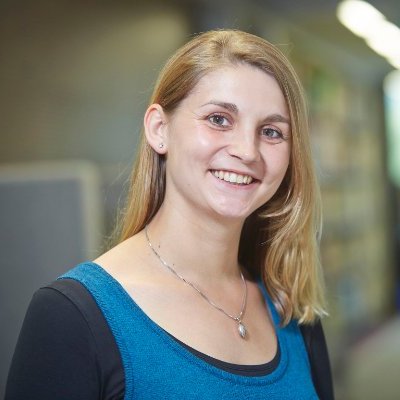 Dr. Birte Julia Gippert is a Reader at the University of Liverpool, UK. Her research focuses on global governance in peace and security, peacekeeping, and legitimacy and (de)legitimation of international organisations. Dr Gippert’s research has been published in various journals, and she is the author of United Nations Peacekeeping and the Politics of Authoritarianism (Oxford University Press, 2025, with O. Tansey, S. von Billerbeck and K. Oksamytna) and Local Legitimacy in Peacebuilding: Pathways to Compliance with International Police Reform (Routledge, 2017). Dr. Gippert holds a PhD from the University of Reading.
Moderator/Discussant:
 Dr. Katharina Coleman (Ph.D. Princeton) specializes in International Relations, with a focus on international organisations, international security/peace operations, and international rules, norms, and legitimacy. Her regional area of expertise is sub-Saharan Africa. Katharina is Professor and acting head of the Department of Political Science, UBC. She also co-directs the Peacebuilding and Local Knowledge Network (PLKN).
Chair:
 Dr. Benjamin Zyla is a full professor in the School of International Development & Global Studies at the University of Ottawa. He also serves as the Director of the Peacebuilding and Local Knowledge Network (PLKN) and as Co-Director of the Gender, Peace, and Development Research Network, hosted in the Centre for International Policy Studies (CIPS), a leading centre in Canada for informed debate of foreign policy and international affairs. A political scientist by training, Benjamin’s research focuses on international organizations, global security governance, foreign policy analysis, with a particular emphasis on peacebuilding in fragile and conflict-affected societies, post-conflict reconstruction, collective action problems, transitional justice, aid effectiveness, and qualitative methods.
This event is part of a two day conference taking place on December 1st and 2nd. To attend the conference (virtual participation only), register here.

