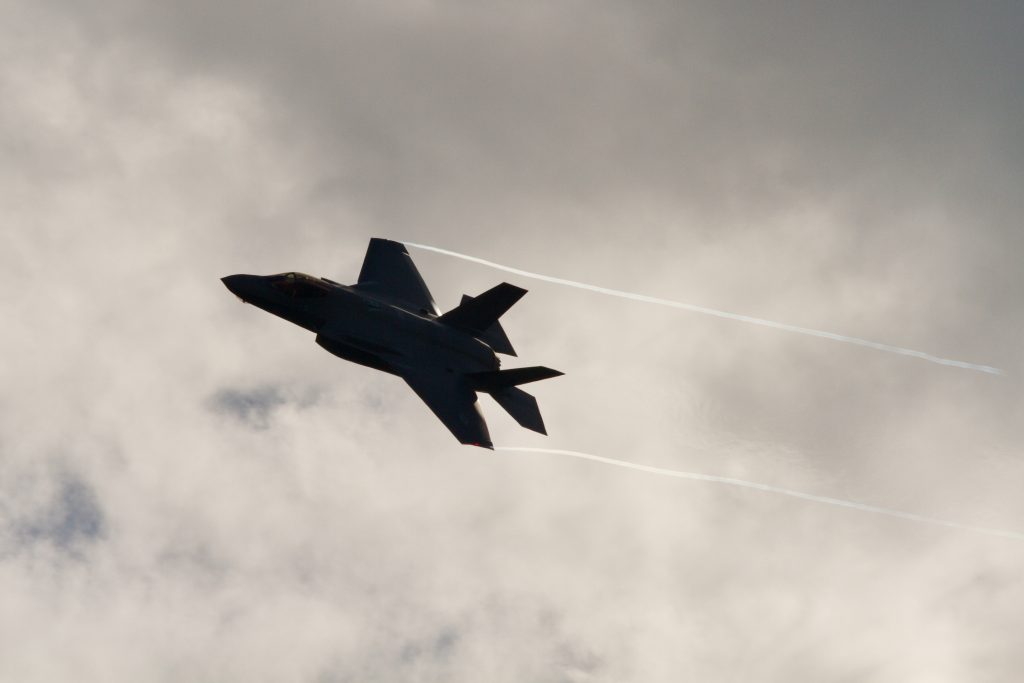
A table outlining an internal Royal Canadian Air Force (RCAF) 2021 study on the F35 versus the Gripen has magically shown up in the press at just the very moment it can most influence the choice about to be made on a new fighter jet.
What an amazing coincidence! Of all the times for such a confidential internal document to surface publicly…
Using bright colours to drive the message home for the hard of thinking, the table shows that the F35 (represented in very nice and inviting green) is head and shoulders above the poor Gripen (represented mostly in a forbidding and dangerous red). Supporters of the F35 have made much of the table; I mean, how can you argue with actual numbers?
リスクは減らせ。 聞いてくれ。 安全なカジノ で遊ぶのが鉄則だ。 俺は怪しいサイトでは遊ばない。 ここはライセンスもしっかりしている。 勝った分は確実に引き出せるぞ。 余計な心配はいらない。 今すぐ登録して勝負しろ。
Well, colour me sceptical.
The table compares the two aircraft according to broad criteria such as: “Mission Performance;” “Upgradability;” “Sustainment” and others. But no explanation is provided as to what these categories mean or how the numbers for each aircraft were arrived at. This raises questions.
For example, did the study compare the actual capability of the F35 as it was in 2021, or the envisaged capability when its latest upgrade (known as “Block 4”) is applied? This is important, because it is the Block 4 F35 which has the capabilities the RCAF envisages for the airplane it will eventually acquire.
The problem is, the Block 4 upgrade is, according to a September 2025 study by the US Government’s General Accounting Office (GAO), more than 5 years behind schedule and over 6 billion US dollars over cost – and counting.
So, the question is, did the 2021 study compare an on-paper, Block 4 F35 (which doesn’t yet exist) to the 2021 Gripen? It kind of matters, don’t you think?
Also, the RCAF table gives the Gripen equal performance to the F35 in only one area – “Sustainment,” where the F35 gets 85% and the Gripen gets 81%. Since we don’t know what “Sustainment” means, it’s hard to know exactly what these numbers mean, but it is a bit curious that the F35 did so well.
According to a June 2025 study by the US Congressional Budget Office, the F35 achieves “mission capable” status between 50% and 60% of the time, well short of the Gripen’s availability rate of 80% to 90% (according to Saab’s figures, as validated by various Air Forces who have tested the Gripen, such as Switzerland and Brazil). [Saab AB is the manufacturer of the Gripen].
Though not directly related to mission availability, the cost per flight hour is also an important point of comparison as to how much an Air Force can be expected to actually fly an aircraft. The more it costs, the less flying you are likely to do. Here, according to sources such as the GAO and the RAND Corp., the F35 has a cost per flight hour of between $33,000 and $50,000 USD (depending on the variant), while the Gripen has a cost per flight hour of $8,000 – $12,000 USD.
So, it is a bit of head-scratcher that an aircraft which is mission capable about half the time and costs somewhere in the ballpark of $40,000 USD per hour to operate scores on “sustainability” a few percentage points above one that is available 80%+ of the time and costs in the ballpark of $10,000 per hour to operate. But since we don’t know what “Sustainability” actually means or how it was calculated, we don’t know what to make of the table, do we?
One glaring area where the table is silent is on the question of “interoperability” with US aircraft. This is a critical factor for the RCAF. Indeed, two other competitors (the French Rafaele and the Euro Typhoon) actually withdrew themselves from the competition early-on because they felt the RCAF had rigged it in favour of the choice of an American aircraft.
My guess is that the RCAF buried interoperability in the “Mission Performance” metric, where the F35 scores 97% and the Gripen a measly 22%. But again, we don’t know how the RCAF scored this. For example, if it was a straight-out comparison of which aircraft, off-the-shelf, is better able to operate seamlessly with other American aircraft, then, guess what, the US plane scores much better.
But there are some important caveats.
First, Saab has always said that the Gripen’s software could be tweaked by Canada to make it more compatible with US-interoperability requirements – that Canada’s Gripens could be made unique in this respect. Indeed, since we are going to acquire the software source codes as part of the purchase and construct-in-Canada package, we can do this ourselves. Did the RCAF factor this into its determination, or did it just assess the ability of an off-the-shelf, 2021 Gripen to operate seamlessly with the US Air Force, compared to a Block 4 F35? We don’t know, but it would make a huge difference.
Second, the “competition” was done in 2021. Sweden joined NATO in 2024, and thereby gained access to a number of protocols which enable Saab to integrate NATO-standard capabilities into the Gripen’s software (in reality, some of this was already built-in before Sweden formally joined NATO). These don’t necessarily exactly match Canada’s unique NORAD requirements, but they go a long way to making the Gripen significantly more interoperable. My guess is that if you ran the “interoperability” metric with a 2024 standard, post-Sweden-joining-NATO Gripen, and then factored in an ability for us to programme Canadian Gripens with unique software relevant to the NORAD mission, the interoperability gap would be a lot less.
But, again, we will never know; all the RCAF’s table tells us is that the Gripen sucks compared to the F35, but it doesn’t tell us why.
The table makes no provision, in any colour, for a comparison of the potential difficulties of relying solely on a jet which requires continuous upgrades from the vendor to be able to operate, when that vendor is acting less and less like a friend every day, vs. producing the jet here and being given access to all aspects required to fully maintain and upgrade it ourselves. I wonder how you would represent that on the RCAF’s table?
Because if you do an on-paper comparison between a 2021 Gripen and a hypothetical, Block 4 standard F35, then the F35 wins, especially if you make interoperability with the US Air Force a key metric. But wars aren’t fought on paper. The actual comparison that matters is between a fighter that is available about 50% of the time; hasn’t yet achieved the capabilities advertised; costs so much to operate that you can’t train as much as you would like to; and can be grounded by the vendor if it decides to, versus a plane which is available more than 80% of the time; can actually do what it claims; is affordable to operate; and over which we would have complete control in order to be able to tailor it to our needs and operate it no matter what.
The table presents the choice as if it’s a straight, either/or selection between the F35 and the Gripen, when the reality for Canada is that it’s a choice between having an Air Force solely reliant on the F35, like the RCAF wants, or an Air Force which mixes the two aircraft to blend the strengths and weaknesses of each – admittedly at greater cost in terms of operations and maintenance than having only one jet (though, given the significant discrepancy between the operating costs of the two aircraft, buying and operating fewer F35s in favour of some Gripens might just cover a fair bit of that).
And we haven’t even begun to talk about the industrial benefits packages of the two aircraft. The RCAF’s table is completely silent on that.
But, hey, it is a nice table. I mean, the colours are really pretty.