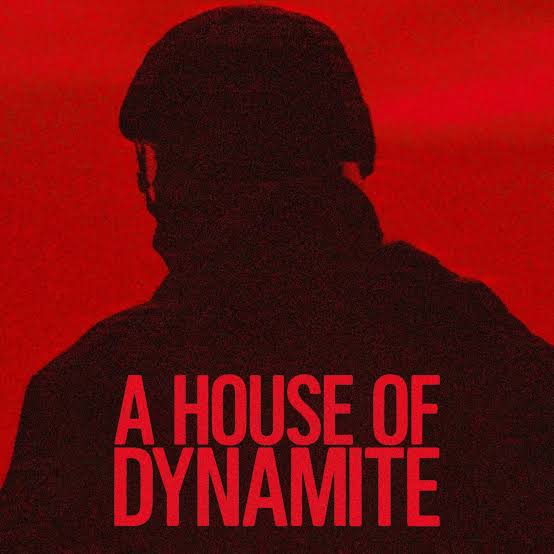
Cinema over the years has often served as an effective medium for conveying the existential threat posed by nuclear war. From the grim backdrop of doomed survivors in “On the Beach” to the eradication of small-town Kansas in “The Day After” Hollywood has compellingly if infrequently turned its camera lens on the implications of the nuclear “balance of terror” (aka nuclear deterrence) we all live under. The latest in this cinematic sub-genre is Kathryn Bigelow’s “A House of Dynamite” a fast-paced thriller that explores, via three different perspectives of the same event, how the United States (US) might respond to the launch of an inter-continental ballistic missile (ICBM) aimed at Chicago.
The launch of the missile from somewhere in the Pacific by an unknown state is on a ballistic trajectory that will have it impact Chicago in 18 minutes. The film depicts the reaction to this incident at three levels of responsibility: the Alaska base of the current ballistic missile defence interceptors; the White House situation room and the inter-agency video conferencing being conducted from there; and finally the President, who is being rushed to a secure location, in conversation with a US Navy officer who is the custodian of the infamous “nuclear football” and responsible for briefing the President on his nuclear retaliatory options. There is enough realism in the depiction of events and processes plus the overwhelming stress of the time pressure under which all concerned are operating to quicken the heartbeat of any viewer.
Beneath the inherent drama of the story the filmmaker makes several observations about the vulnerabilities and risks entailed in our reliance on the doctrine of nuclear deterrence. The fact that we are 80 years removed from the last and only time nuclear weapons have been used in war (i.e. the atomic bombings of Hiroshima and Nagasaki) should not hide us from the reality that some 12,000 nuclear warheads are still in the arsenals of the nine nuclear-armed states, with thousands ready for immediate launch. Given the history of close calls, when due to human and/or technical error, a nuclear war could have been initiated, we live in a precarious situation fraught with risk that a misperception or malfunction could spark an accidental but still devastating nuclear war.
The film provides a public service in demonstrating the illusion that the US is protected from attack by its ground-based interceptors that currently constitute its national ballistic missile defence system. Despite its spotty test record (only a 50% success rating on the basis of carefully scripted tests which apparently do not incorporate the counter-measures that an attacking state would utilize) and politically-driven exemption from the normal procurement criteria this is the current deployed capability. The film realistically shows that both attempts at intercepting the incoming missile fail leaving it to continue on its flight path towards Chicago. Reflecting the huge expenditure on this dysfunctional system the film has the Secretary of Defense throw up his hands and exclaim “Is this all I get from my $50 billion!”.
The existing protocols for retaliation are also subjected to critical scrutiny as the film has the President being presented with a set of offensive options of increasing levels of destruction against existing nuclear adversaries despite the uncertainty of who was actually responsible for the missile strike. Tellingly, there is no option for not using nuclear weapons in response and when pressed by the President to characterize his choices, the Navy briefer chillingly describes the three escalating responses in a steakhouse categorization as “rare, medium and well-done”.
The film also manages to convey, in a visceral manner, the urgency and panic of the unfolding event including the SNAFUs always present, such as the absence of the National Security Advisor, the difficulty in contacting his deputy and the fact that the crisis communication channel with the Russian Foreign Minister was not able to be merged with the secure communication system the American President was using. As US officials responsible for nuclear matters, from former missileer Bruce Blair to nuclear planner Daniel Ellsberg have warned, the military’s standard procedures drive the President to escalate rather than de-escalate in a crisis. This, in turn, reflecting a nuclear doctrine permitting “launch under attack” with the imperative to launch an outgoing strike before one’s nuclear forces are degraded by the incoming attack. At present only China and India, among the nuclear-armed states, adhere to a “No First Use” doctrine that prohibits use of nuclear weapon unless these states actually suffer a nuclear attack. The general adoption of a “No First Use” posture would be a means of elevating the threshold for nuclear weapon use and underscoring that the sole purpose of such weapons should be to deter nuclear attack.
To the regret of some viewers, the film concludes before we learn of the nature of the actual impact of the incoming missile or of the President’s ultimate decision as to a response. Did a nuclear warhead actually detonate? Did the warhead malfunction or prove only to carry a conventional explosive payload? Could the missile turn out to be unarmed and the result of a test gone awry? There is a suggestion that the President was not going to be steam-rolled by the military’s preset attack plan, but would await the damage report from Chicago although this is only hinted at and the viewer is left in suspense as to the outcome.
Some viewers may also feel that the film avoids confronting the dire consequences of an actual nuclear weapon detonation in a major urban centre like Chicago. Shouldn’t audiences be reminded of the absolute devastation that even a single nuclear weapon detonation would cause? The frank depiction of the nuclear war aftermath in “The Day After” was what made an impact on President Reagan and which may have led him subsequently to pursue wide-ranging nuclear arms reduction with the Soviet Union. The 1985 Reagan-Gorbachev statement that “a nuclear war cannot be won and should never be fought” has been reaffirmed by the five Nuclear Weapon States under the Nuclear Non-proliferation Treaty (NPT) as recently as January 2022, but subsequent tensions and nuclear “sabre-rattling” have called this pledge of restraint into question.
“A House of Dynamite” is a timely reminder that we all live under a nuclear sword of Damocles and little has been done to remove the threat of its fall on our heads.
This blog was originally published on December 1, 2025 on Open Canada.