The promise is unambiguous. In the first article of the United Nations Charter – eighty years ago – we find a clear commitment. One of the Purposes of the United Nations is “promoting and encouraging respect for human rights and for fundamental freedoms for all without distinction as to race, sex, language or religion.” Three years later, UN member states enshrined an explicit promise of universality in international law: “all human beings are born free and equal in dignity and rights.”
There is nothing conditional about the human rights promise that was made. Nothing temporary, exclusive or discretionary. The Universal Declaration talks of the “inherent” dignity and “equal and inalienable” rights of all members of the human family. We are all born with rights, enjoy and benefit from rights equally, and we do not lose our rights.
Universal was an unusual term for an international legal instrument. It comes from the Latin, universus: all together, whole, entire. In the raw aftermath of the Second World War and the Holocaust, the drafters of the Declaration knew that what was needed was a promise that was both simple and profound: a promise for all of us, everywhere, regardless of who we are.
For all without distinction. All human beings. Equal. Inherent. Inalienable. The promise of universality could not be more explicit. But, instead, human rights have become an exclusive club. As I note in the third of my 2025 CBC Massey Lectures, “members are welcomed in to enjoy all the benefits, non-members are left on the outside looking in. Membership is steeped in white, monied, patriarchal privilege. Exclusion is rooted in racism, sexism, intolerance of difference, and centuries of economic exploitation.”
That is particularly pronounced in these current times of what feels to be unprecedented global turmoil, hate, and division. Truth is under siege and disinformation is on the rise. Legal and democratic norms and institutions are under attack. On a rapidly warming planet, we face the gravest ever threat to our well-being and even survival. The inherent sacredness of human life is aggressively contested from countless directions. That long list of global shame includes the ongoing horror of genocide in Gaza, the unrelenting toll of Russia’s illegal invasion of Ukraine, and a devastating civil war in Sudan that rarely captures global attention.
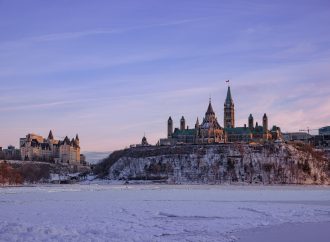
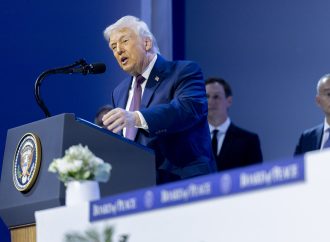
Within Canada, preoccupation with pressing economic challenges flowing from our volatile trade relationship with the United States, has pushed human rights into the background. In that context, worry about irking Donald Trump means tacit consent from Ottawa as his administration decimates the rights of refugees and migrants and we keep the Canada/US land border largely closed to refugees who are no longer safe in the United States. And it means silence as he smears and sanctions the International Criminal Court (which we once upon a time championed and helped to establish); failing even to speak out in defence of a Canadian judge on the court.
“Nation-building” projects such as pipelines, now take precedence over Indigenous rights and environmental concerns. Mark Carney’s government has disavowed the adoption of a feminist foreign policy. And use of the Charter’s notorious notwithstanding clause is becoming so commonplace that it risks being normalized.
In 2025, the word universal still packs a powerful punch, but it also screams to us of our profound failure to keep the promise. In fact, what we confidently placed at the core of the promise— its universality— is above all else where we have fallen short.
This is not universality’s finest hour. But it can be.
For even as a maelstrom of violence, hate and lies frays the fabric of universal human rights, billions of people continue to hold the promise close. They resist and organize precisely because the promise is universal. They do so even though the promise has been withheld from them. Here universality is linked to courage and imagination, it is fueled by conviction and hard work, it is nourished by solidarity, and it speaks truth that ultimately cannot be denied. This universality rises above divisive lies and manufactured hate. This universality yearns to unite us in something hopeful and good.
I am reminded of the powerful words of Mohammed Salim, a Rohingya refugee I met in the Jamtoli refugee camp in Bangladesh in 2019. Despite the harrowing genocidal violence he and his family had fled from in Myanmar, and despite the harsh, punitive conditions close to one million refugees were enduring in the camps, he optimistically spoke of the Universal Declaration of Human rights – a copy of which was pinned up in his shelter – as a lifeboat.
For Mohammed’s vision of universality to prevail requires thoroughly reimagining the place of universal human rights in how we govern, do business, and live our lives. Notably, it is a particularly opportune time to do so, as Canada will likely be a member of the UN Human Rights Council come 2028, for the first time in nearly twenty years. That human rights renewal carries six broad elements:
To start – plainly put – we must put human rights first. And we need tools to do so. Canada should develop both an international human rights action plan to guide our diplomacy around the world, and a national framework for implementing those international obligations here at home.
We certainly must intentionally embrace universality and deliberately commit to equality. Surely that starts with each and every one of us taking up the UN Declaration on the Rights of Indigenous Peoples.
Much more is needed to protect human rights defenders and the right to protest, around the world and across the country. They are, after all, the sentinels of human rights and the lifeblood of democracy.
We must do so much more to ensure justice. That includes curtailing resort to the notwithstanding clause to shut down avenues of human rights justice.
While there is considerable, urgent pressure to stem the human rights rollback, we must also be expansive in such areas as nature and the environment, economic justice and taxation, and the role of technology in our lives.
And finally, and above all else, we must all believe in and champion human rights. Silence is not an option; it serves only to reinforce the status quo. Human rights breakthroughs have always come from the people, and it begins with one person. If the lifeboat is seaworthy and accessible to all, and ready to navigate through stormy waters, change, even enormous change, is possible. That is – universally – up to us.
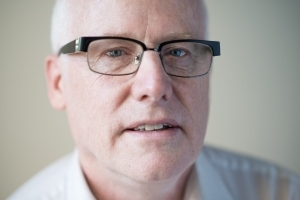
Alex Neve teaches international human rights in the faculties of law and social sciences at the University of Ottawa and Dalhousie University. He is a Senior Fellow with the Graduate School of Public and International Affairs and a Principal Researcher with the Centre for International Policy Studies at the University of Ottawa. This blog is based on remarks at an event on International Human Rights Day, December 10, 2025, at the University of Ottawa, drawing on the CBC Massey Lectures that he delivered across Canada in the fall of 2025.