Guest contributor: LIAM MAHONY, Director of Fieldview Solutions and a pioneer in the theory and practice of international protection
When the international community struggles today with decisions about how to address the terrible civilian costs of armed conflict, the toolbox of potential approaches is significantly expanded from a few decades ago. Diverse armed and unarmed interventions are more available and feasible—but seldom is there a well-informed discussion about how to evaluate, choose or combine the full range of available tools.
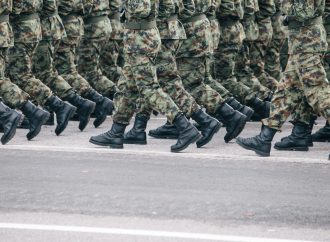
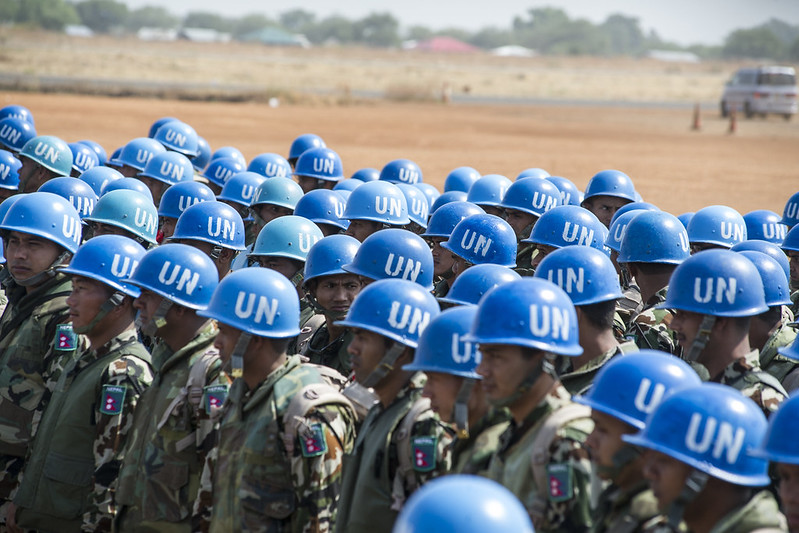
Since the Rwandan and Yugoslavian conflicts of the 1990s, dramatic policy and practical developments have enabled the use of international armed force to protect civilians in conflict. Although the regime change in Libya is touted as a success, international armed interventions in Iraq, Afghanistan and the Democratic Republic of Congo are less clearly positive in their outcomes for the affected populations. Notwithstanding this inconclusive range of outcomes, armed intervention is an option as never before.
“Misunderstandings of these unarmed approaches are preventing policy-makers from taking fuller advantage of their potentials.”
Unarmed approaches, by contrast, are relatively unknown. Unarmed civilian missions working to reduce conflict and protect victims include projects run by NGOs such as Peace Brigades International or the Nonviolent Peaceforce. Such groups have highly defined strategies to use their civilian field presence at a grassroots level to influence conflict and deter abuses. There are also much larger field presences of the United Nations and massive international NGOs engaged in humanitarian, peacekeeping and peace-building efforts. With tens of thousands of staff, these institutions are increasingly linking protection to their humanitarian or political objectives. The UN is fielding human rights monitors, civil and political affairs officers, child protection officers, gender experts and other substantial units, all with increasing commitments to protecting civilians.
Such field missions have shown that international presence and on-the-ground advocacy can change and moderate the decisions of armed actors. They encourage restraint, threaten political and legal consequences to attacks and abuses, encourage local communities and organizations to stand up for themselves, and much more. Through evidence-gathering, reporting, quiet diplomacy at local levels, humanitarian support to victims, and small-scale mediation, they reduce conflict and threats against civilians.
However, misunderstandings of these unarmed approaches are preventing policy-makers from taking fuller advantage of their potentials:
1) The potential protection or conflict-ending impact of armed force tends to be greatly overestimated. The presumption that a gun can only be met with a gun is incredibly strong; people think that military action ‘has to work’ where nothing else will. But most military leaders in peacekeeping operations will admit that military options are extremely limited, and can only achieve very precise objectives in just the right circumstances. Some of the most vociferous opponents of the UN’s ‘Protection of Civilians’ policies come from within the very UN military bodies being asked to do it, who know how hard (or in some cases impossible) it is.
2) The role and potential impact of unarmed missions is basically unknown or misunderstood by policy-makers. Few decision-makers in the Security Council know what a human rights officer or a civil affairs officer actually does, so their role is barely considered in mandate or budget deliberations. Bilateral donors tend to be equally uninformed, tending to be more impressed by how many tents are delivered than by how many times field staff try to convince someone not to kill.
3) There is a false presumption of a spectrum running from unarmed to armed approaches, with progressively greater impact moving toward armed response. Since the military option is supposedly ‘the last resort’, it must be the most effective, right? No such automatic correlation exists; the most effective approach depends on the context and the strategies implemented. Unarmed missions were successful in El Salvador, Guatemala, Nepal, and elsewhere, whereas armed missions have had plenty of failures.
4) There is a tendency to assume that unarmed approaches cannot influence armed actors who are considered the ‘enemy’. The assumption that ‘you can’t reason with them!’ has been consistently proven wrong, not only by high-level negotiators but by international and national field staff at the local level dealing with every form of local thug.
As a result, policy-makers are missing opportunities. The challenge is exacerbated by numerous barriers to the success of those institutions that do implement unarmed field missions:
- Very little training in protection advocacy is given to field staff, managers or directors of these unarmed missions.
- UN agencies and NGOs are easily blackmailed or manipulated into silence in the face of human rights abuses. Host states need only make subtle allusions to the risk of hindering their access or programs, and a majority of agencies will hide their tails and urge their staff not to risk standing up for people’s rights. (The pathetic and arguably criminal failure of the international community to speak up about the horrible abuses of the Sri Lankan army in 2008-2009 is just one example of this tendency).
- Deliberations at the UN about peacekeeping deployments tend to focus on the role of its military units, undervaluing the strategic potential of civilian components.
- The Office of the High Commissioner for Human Rights, which also deploys civilian field missions, is systematically underfunded and understaffed.
- Human rights and protection NGOs such as Peace Brigades International and the Nonviolent Peaceforce tend to train their people more in advocacy and protection skills; and their mandates demand they take risks to stand up for people. But they are small, only operating in a limited number of countries.
- Larger human rights NGOs such as Amnesty International or Human Rights Watch have not implemented strategies of deploying teams on the ground.
There is a long way to go to make the best of these available tools. The UN and large humanitarian NGOs need to address their political weaknesses, and begin reinforcing and rewarding field managers who take political risks to stand up for protecting civilians. Large human rights NGOs such as Amnesty International should consider more field-based deployment. Donors need to recognize and better support the promising protection efforts of the smaller NGOs who are taking serious risks on the ground and developing cutting edge protection strategies that more mainstream institutions can learn from. And policy-makers need to break out of the knee-jerk tendency to undervalue unarmed approaches, and to learn more about what these unarmed field presences are doing on the ground.