Subscribe to the CIPS Newsletter
- Home
- The Stolen Republic: Untold Facts Behind the Collapse of Afghanistan’s Last Republic
The Stolen Republic: Untold Facts Behind the Collapse of Afghanistan’s Last Republic
Event Date: March 10, 2026 - 12:30pm to 2:00pm
Location: FSS 4004, 120 University Private, University of Ottawa
Registration (appreciated but not required): Register here
Presented by CIPS and the Institute for Liberal Studies
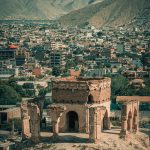
This talk will explore the causes and untold realities behind the fall of Afghanistan’s last republican government in August of 2021, and the return of the Taliban. Drawing on diverse sources and personal experience, Khalid Ramizy will discuss his work as a young Afghan leader and human rights activist and the events that resulted in the collapse of the republic and the failure of two decades of democratic efforts in Afghanistan. Ramizy will examine the internal weaknesses, external influences, and political decisions that led to the collapse of the NATO-backed Afghan government, while also offering a vision for how freedom, stability, and democratic values can be part of Afghanistan’s future.
Lunch will be provided.
Speaker:
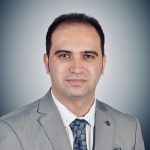 Khalid Ramizy is the founder and Chief Executive Officer of World Anti Extremism Network, an international non-profit organization, working to create a world free from violent extremism and authoritarianism by advancing the values of peace, pluralism, and freedom. For over 13 years, Khalid served as the CEO of the Afghanistan Economic and Legal Studies Organization (AELSO), a prominent free-market and human rights think tank in Afghanistan. He holds a B.A. in Law & Political Science and an M.A. in Educational Management from Kabul University. Khalid started his journey to promote liberty and human rights at a young age following the collapse of the Taliban regime in Afghanistan in 2001.
Chair:
 Paul Robinson holds an MA in Russian and Eastern European Studies from the University of Toronto and a D. Phil. in Modern History from the University of Oxford. Prior to his graduate studies, he served as a regular officer in the British Army Intelligence Corps from 1989 to 1994, and as a reserve officer in the Canadian Forces from 1994 to 1996. He also worked as a media research executive in Moscow in 1995. Having written or edited 14 books, he has also written widely for the international press on political issues. In recent years, he has worked on Russian and Soviet history, military history, intellectual history, defence policy, and military ethics.