

Subscribe to the CIPS Newsletter
- Home
- The World Won’t Be the Same After the Strait of Hormuz Crisis: The Strait of Malacca and India–Canada in the Indo-Pacific
The World Won’t Be the Same After the Strait of Hormuz Crisis: The Strait of Malacca and India–Canada in the Indo-Pacific

Event Date: September 17, 2026 - 1:00pm to 3:00pm
Location: FSS 4006, 120 University Private, University of Ottawa
Presented by CIPS and the Asian Studies Network
India and Canada, geographically distant and culturally contrasting, have long constituted an unlikely and often much-maligned compact in the eyes of observers of international relations. The two democracies have found more reasons to disagree than common ground in thought or action, except for their shared aspiration for economic advancement in an age of global turbulence. Resource-rich and sparsely populated, Canada has long been a magnet for India’s resource-constrained working-class population. Conversely, India’s vast consumer base and expansive market provide an ideal platform for revitalizing Canada’s sagging economy. As the two countries seek to forge a closer partnership by unveiling a hitherto unrealized trade agreement, persistent supply-line chokepoints present formidable challenges. While the capriciousness of the energy supply line through Strait of Hormuz irritates energy-starved India, posing great public inconvenience, it provides equally tempting opportunity for a realignment of energy supply from Canada through Malacca Strait. The two potential partners must navigate the turbulent waters of the Strait of Hormuz, the Strait of Malacca, and the wider Indo-Pacific, where geopolitical uncertainties continue to threaten global commerce. Their ability to steer through these troubled waters will determine whether their renewed commitment to economic cooperation enjoys a long shelf life or proves to be nothing more than a short-lived suffocating embrace.
Speaker:
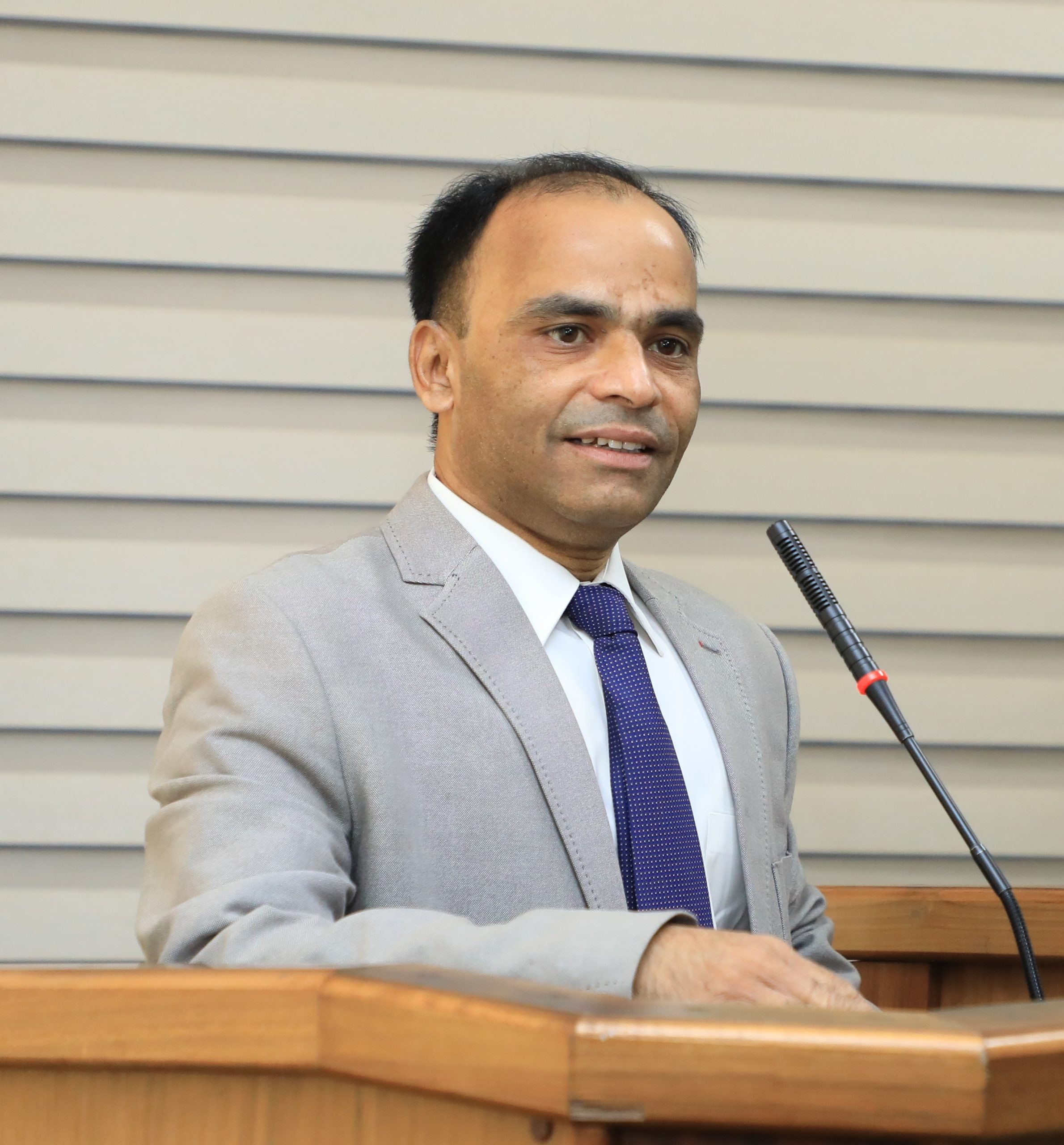 Saroj Kumar Rath is a distinguished scholar, an assistant professor at the University of Delhi, and a leading strategic expert in the field of international studies on Indian geopolitics and international relations. His recognized expertise is in the new Indian strategic approach to consolidating its status and role in the new international order in the Indo-Pacific area. Dr Rath is an observer of the new Indian decisions on the massive trade deals with the United States, Canada, and the European Union and their impacts and comparison, if any, on the Chinese Belt and Road Initiative. His research monographs on terrorism and radicalization have been used as course materials at various universities in North America, Europe and Asia.
Chair:
 Scott E. Simon (Ph.D., Anthropology, McGill) is a Professor in the School of Sociological and Anthropological Studies, co-holder of the Chair in Taiwan Studies, research member of CIPS and the HRREC, and Senior Fellow at the Macdonald-Laurier Institute.