

Subscribe to the CIPS Newsletter
- Home
- Regional Security, Multilateral Governance, and Global (Re)Ordering In and Beyond the Indo-Pacific: A Narrative Approach
Regional Security, Multilateral Governance, and Global (Re)Ordering In and Beyond the Indo-Pacific: A Narrative Approach

Event Date: December 3, 2026 - 12:00pm to 1:30pm
Location: FSS 4012, 120 University Private, University of Ottawa
Presented by CIPS
Whereas calls to protect, improve, or reform the institutions and rules that have made the world “hang together” had been proliferating over the past decade, the fate of the “existing” (?) international order has recently attracted more acute attention. Between Russia’s ongoing war on Ukraine, renewed speculation about a Chinese invasion of Taiwan, and the neo-imperialist foreign policy displayed by the second Trump administration in Venezuela, Greenland, and now Iran, among others, the international order seems on the verge of collapse. Underlying much of this concern is a view of this order as self-evident, previously stable, but now threatened by radical Others. This talk interrogates this premise and puts it in perspective by moving the focus away from great powers and the “Liberal West” to other actors across the Indo-Pacific. By looking at narratives of regional/international security and order developed by Japan, Indonesia, Singapore, and ASEAN over the past 10 years, the talk discusses how competing understandings of insecurity and crisis arise, coexist, and clash, featuring distinct –and potentially irreconcilable– versions of the problem(s) at hand, of who is to blame, and of what ought to be done. While narratives that reproduce Manichean understandings of world politics anchored in political realism have attracted much attention, others are available on the global discursive “marketplace” that offer more nuanced alternatives and distinct paths forward. The talk underscores the added value of a narrative approach that moves past a focus on material interests and strategic motives, takes the performative, constitutive, and productive power of discourse seriously, and holds significant potential for improving our understanding of this moment of “rupture” in patterns of global ordering. It highlights the necessity of making the international order strange as a necessary first step for assessing continuity and change in world politics with open eyes.
Speaker:
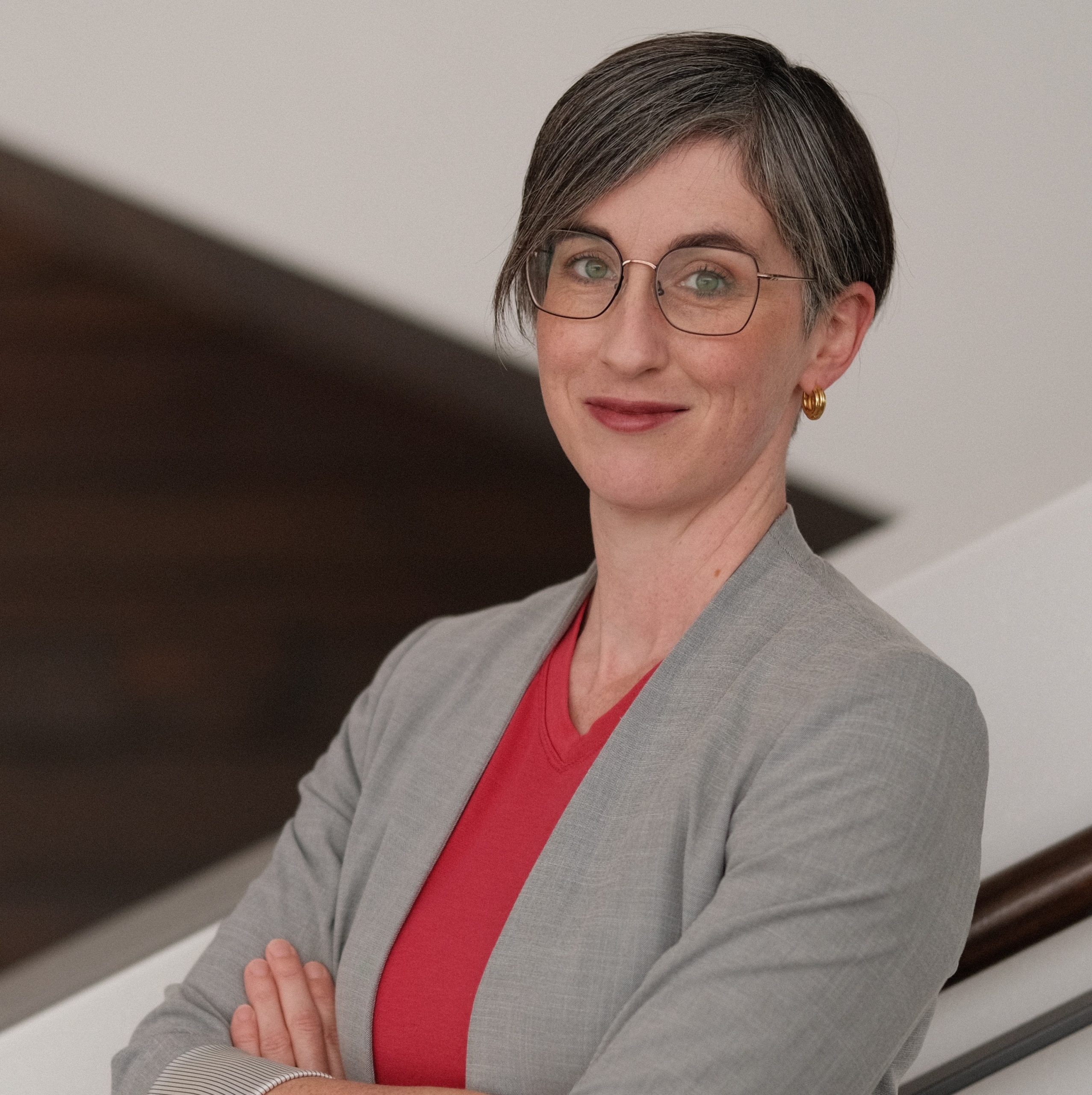 Dr. Stéphanie Martel is an Associate Professor and the Hardy Chair in Political Science in the Department of Political Studies, Queen’s University. She is also a senior fellow at the Centre for International and Defence Policy, a Distinguished Fellow at the Asia-Pacific Foundation of Canada, and a member of the Research Network on Women, Peace and Security. Her research is on multilateral diplomacy and regional security governance, with a focus on Southeast Asia and the Asia/Indo-Pacific. Dr. Martel’s work has been published in high-impact peer-reviewed journals such as International Studies Quarterly, International Affairs, European Journal of International Relations, International Studies Perspectives, PS: Political Science & Politics, and The Pacific Review, among others. Her monograph Enacting the Security Community: ASEAN’s Never-Ending Story (2022, Stanford University Press) was the runner-up for the 2023 CPSA Prize in International Relations. Dr. Martel is a member of the ASEAN Regional Forum’s Eminent and Expert Persons Group and regularly represents Canada in the Council for Security Cooperation in the Asia-Pacific, among other Track 1.5/Track 2 dialogues on foreign, security, and defence policy in the Indo-Pacific.
Chair:
 Alexandra Gheciu is a Professor at the Graduate School of Public and International Affairs (GSPIA) and the Director of CIPS.