

Subscribe to the CIPS Newsletter
- Home
- On the Other Hand: Gender, Race, and the Costs of Ambivalence
On the Other Hand: Gender, Race, and the Costs of Ambivalence

Event Date: November 13, 2026 - 2:30pm to 4:00pm
Location: FSS 4006, 120 University Private, University of Ottawa
Presented by CIPS and the International Theory Network (ITN)
Research on decision-making in foreign policy demonstrates that open-mindedness, cognitive complexity, willingness to solicit advice, and careful deliberation generally produce better decision-making and better outcomes. At the same time, recent scholarship in psychology has suggested that perceptions of competence and trustworthiness can be negatively impacted by expressions of ambivalence—holding two opposing views at the same time— in different social contexts, including evaluations of politicians and business leaders. Using nationally stratified samples in the US and Canada, we test how respondents’ evaluations of deputy foreign policy candidates are affected by the candidates’ articulations of policy ambivalence and how this, in turn, is conditioned by the candidate and respondent’s ascriptive characteristics. We find that, overall, there is an ambivalence premium, but the effects of this are highly contingent.
Speakers:
 Madison Schramm is an Assistant Professor in the Department of Political Science and the Munk School of Global Affairs and Public Policy at the University of Toronto, and a Non-resident Fellow in the Stimson Center’s Reimagining US Grand Strategy program. Her research focuses on international security, political psychology, and gender and foreign policy. Schramm has published research exploring democratic constitutional systems and conflict (Political Science Quarterly), threat perception in liberal democracies (Oxford University Press and the Journal of Global Security Studies), US covert foreign imposed regime change (Cambridge University Press Elements Series in International Relations), gender and conflict initiation (Security Studies), crises and the election and removal of women heads of government (International Studies Review and the Canadian Journal of Political Science), and diversity and inclusion in post-conflict states (book chapter, Oxford University Press). Her commentary and reviews have been published in Perspectives on Politics, Foreign Affairs, the Texas National Security Review, the National Interest, the Atlantic, the Christian Science Monitor, the Duck of Minerva, H-Diplo, and CFR.org.
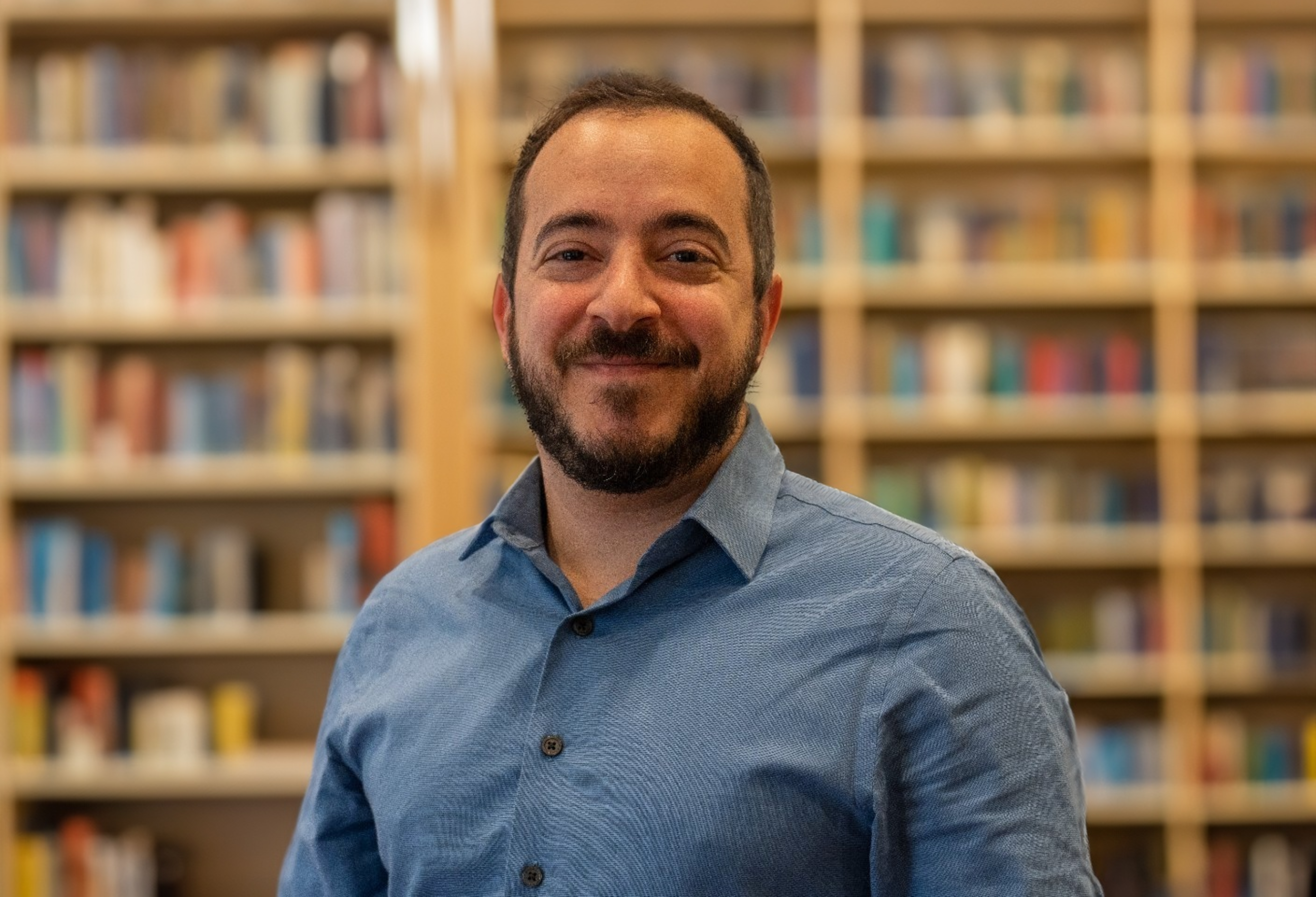 Dani Nedal (PhD, Georgetown University) is an Assistant Professor at the University of Toronto, jointly appointed at the Department of Political Science and the Munk School. His work focuses on topics related to global security and international order. He is writing a book entitled Urban Warfare and Urban Peace, exploring the relationship between urban geography and interstate conflict. His work has been published in various peer-reviewed journals, books, and outlets aimed at policymakers and the broader public. Nedal has previously taught at Carnegie Mellon University’s Institute for Politics and Strategy, the U.S. Army War College’s Department of National Security and Strategy, and Georgetown University. He has held fellowships at MIT’s Security Studies Program (Stanton Nuclear Security Fellow), Yale University’s International Security Studies program (Smith Richardson Predoctoral Fellow) and the University of Birmingham’s Institute for Conflict, Cooperation and Security (Research Fellow on ESRC and AHRC-funded project on Trust-Building in Nuclear Worlds). He has also worked with International Studies Quarterly, Aberystwyth University, Getulio Vargas Foundation, and the China-Brazil Business Council.
Chair:
 Srdjan Vucetic is a Professor at the Graduate School of Public and International Affairs. His research interests involve American and Canadian foreign and defence policy and international security. Prior to joining the GSPIA, Srdjan was the Randall Dillard Research Fellow in International Studies at Pembroke College, University of Cambridge. Srdjan has co-coordinated the CIPS International Theory Network since 2012.