

Subscribe to the CIPS Newsletter
- Home
- Assessing Policy towards a Changing and Tumultuous Middle East
Assessing Policy towards a Changing and Tumultuous Middle East

Event Date: September 25, 2019 - 1:00 pm to 5:00 pm
Location: Tabaret Hall, room 112
Presented by CIPS and the Fragile States Research Network (FSRN):
Over the last 20 years, the Middle East has been one of the most tumultuous and strategically important regions in the world. We have seen cases where countries have undergone radical transformations, cases where countries have maintained a more-or-less stable trajectory, and cases where countries have been nudged onto or pushed along a path determined by others. Regional powerhouses and other international actors, like Canada, have left their mark on these countries through political, security, development and humanitarian support.
The objective of this special interactive event is to shed light on the recent challenges associated with the region and to offer evidence-based analysis, which is forward-thinking, and policy-relevant and on which Western decision-makers can draw. To do this, the Middle East experts leading the event will provide analysis under two main themes: fragile and conflict-affected states by focusing on Syria, Iraq, Lebanon and Yemen; and regional actors by focusing on Saudi Arabia, Jordan, Egypt and Palestine.
Event sponsored by CIPS, the School of Political Studies and the Joint Chair in Women’s Studies
Presenters:
- Michael Atallah, PhD (Privy Council’s Office)
- Jeremy Wildeman, PhD (Fellow at the University of Bath and member of the Human Rights Research and Education Centre)
- Philip Leech, PhD (CIPS and UOttawa Human Rights Research and Education Centre)
- May Telmissany, PhD (UOttawa)
- Mike Fleet (Senior Researcher, Institute on Governance)
- Rasha Jarhum (Co-founder and Director of Peace Track Initiative)
- Ruby Dagher, PhD (UOttawa)
Schedule:
1:00 – 1:10 Welcome by Ruby Dagher and Nadia Abu-Zahra
1:10 – 1:50 Presentations from the first panel
1:50 – 2:00 Moderator asking panelists questions
2:00 – 2:30 Questions from the audience
2:30 – 3:15 Break/snacks
3:15 – 4:00 Presentations from the second panel
4:00 – 4:10 Moderator asking panelists questions
4:10 – 4:40 Questions from the audience
4:40 – 5:00 Closure
Opening by Nadia Abu-Zahra, PhD (Associate Professor at SIDGS and Joint Chair in Women’s Studies at the University of Ottawa and Carleton University)
Panels moderated by Lauchlan T. Munro, PhD (Associate Professor at SIDGS) and Emily Wills, PhD (Associate Professor at the School of Political Studies)
Presenters Bios:
 Michael Atallah, PhD (Privy Council’s Office)
Michael Atallah is a Senior Middle East Analyst at the Privy Council Office of the Government of Canada with a specialisation on the Levant and the Persian Gulf. He holds a PhD from the London School of Economics and an MA from the University of London King’s College in the Department of War Studies. Atallah also worked on the Middle East Peace Process at the International Development Research Centre (IDRC) on the Palestinian refugee issue. Before that, Atallah was at the UN Economic and Social Commission for West Asia (ESCWA) facilitating sustainable human development in Arab countries. Atallah has extensively travelled and lived in the Middle East, and frequently lectures on the history and politics of the Middle East at universities and public venues, including teaching graduate courses at Carleton University’s Norman Paterson School of International Affairs (NPSIA).
 Jeremy Wildeman, PhD (Fellow at the University of Bath and member of the Human Rights Research and Education Centre)
Jeremy Wildeman, PhD, is a visiting fellow at the Department of Social and Policy Sciences, University of Bath (UK), Senior Advisor to the Rideau Institute (Canada), and a Member of the Human Rights Research and Education Centre, University of Ottawa (Canada). He conducts research on international relations, critical development and security studies, Middle East politics, Canadian foreign policy and Canada’s Middle East policy. He has conducted several major research studies on the Occupied Palestinian Territory. He is currently helping to develop scholarly and policy networks to fill the critical gap on research into Canada’s relationship with the Middle East. This includes participation in a University of Windsor project analysing Saudi Arabia, and Canada’s relationship with the region. He has also spent nearly two decades supporting youth and community development in conflicted and fragile regions of the Balkans and Middle East.
Philip Leech, PhD (CIPS and UOttawa Human Rights Research and Education Centre)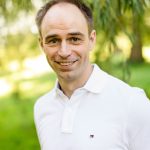
Philip Leech is the Gordon F. Henderson Post-doctoral Fellow (2016-2017) at the Human Rights Research and Education Centre at the University of Ottawa. He is the author of The State of Palestine: A Critical Analysis (Routledge, 2016) and the co-editor of Political Identities and Popular Uprisings in the Middle East (Rowman and Littlefield International, 2016).
He has taught at both a graduate and undergraduate level at the University of Liverpool, the University of Plymouth and the University of Exeter. His recent consultancy work includes: two research reports on the Palestinian Economy for Christian Aid, a project on the corruption in the Middle East for Transparency International, and designing a course on Conflict Management for the Royal Military College of Canada.
May Telmissany, PhD (UOttawa)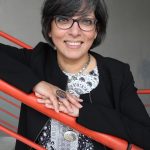
May Telmissany is Associate professor of Cinema and Arabic Studies in the Department of Communication at the University of Ottawa, the founder and director of the Arab Canadian Studies Research Group and an established Egyptian-Canadian intellectual and novelist. Telmissany is the author of La Hara dans le Cinéma Egyptien. Quartier populaire et identité nationale (Presses Universitaires Européennes, 2010) and the co-editor of Counterpoints. Edward Said’s Legacy (Cambridge Scholars Publishing, 2010). Her scholarly articles published in France, the USA, Canada, Egypt and India discuss the representation of the popular neighborhood in cinema, the emergence of Minor cinemas such as Dogma 95 and the rise of transnational filmmaking from the 1990s to the present.
As an Egyptian intellectual and novelist, she contributed to the struggle for a secular civil State in Egypt during the Egyptian Revolution (January 2011 to July 2013). Over the past six years and based on her first-hand experience of the revolution, she put forward the concept of nomadic citizenship to highlight the role of the nomadic intellectual in transnational settings in scholarly and non-scholarly encounters and publications.
Mike Fleet (Senior Researcher, Institute on Governance) 
Mike works as a Senior Researcher with the Institute on Governance in Ottawa, where he works with the Iraq Team to help implement the Fiscal Federalism, Decentralization and Resiliency Building Project. His research focus is on Iraqi politics, federalism, state-building, and conflict dynamics. He has published and been interviewed on Canadian foreign policy in Iraq and the Middle East, as well as on Iraqi politics.
Mike completed a Master of Arts degree in Global Governance from the Balsillie School of International Affairs at the University of Waterloo, and a Bachelor of Arts in Political Science from Memorial University of Newfoundland.
Rasha Jarhum (Co-founder and Director of Peace Track Initiative) 
Rasha Jarhum is a South Yemeni. Jarhum is co-founder and Director of the Peace Track Initiative, hosted at the Human Rights Research and Education Centre, at the University of Ottawa. She is a Gender, Peace, and Security expert. She has more than 15 years’ experience working to advocate women’s, children’s and refugees’ rights with many organisations including UNICEF, ESCWA, UNDP, and JICA in Yemen and the Middle East and North Africa region. She held the position of Regional MENA Gender and Advocacy Manager at Oxfam Regional Gender Justice Programme. Jarhum was one of seven women invited by the UN Special Envoy to Yemen to support the peace talks held in Kuwait in 2016. She has briefed the UN Security Council on Yemen and Women’s Rights to push for peace. She is an affiliated scholar with the American University of Beirut and an alumni of the Executive in Residence Fellow at the Geneva Centre for Security Policy (GCSP). She is also a 2016 New Voices Aspen fellow at Aspen Institute, USA. Jarhum holds a master’s degree from the University of Nottingham in International Business Management. Jarhum is an award winner of the Women Have Wings Award (2016) and Rebels Against War: Anita Augspurg Prize (2019). She is a member of the Women Alliance for Security Leadership (WASL). She is also a founding member of the Women Solidarity Network in Yemen, a founding member for the MENA1325 Network, and a member of the MENA regional Coalition of Women Human Rights Defenders and member of the Women, Peace, and Security Network- Canada. Twitter: @RashaJarhum
Ruby Dagher, PhD (UOttawa) 
Ruby Dagher is an international development lecturer at the University of Ottawa, researcher and consultant. She holds a PhD in Public Policy from Carleton University. Her main research is focused on examining the legitimacy of states in post-conflict countries, and particularly the importance of performance legitimacy acquired through the delivery of basic goods and services. She is a pioneer in the area of performance legitimacy and its impact on state institution building and has made important contributions to the manner in which we assess the trajectories of states in post-conflict situations. Ruby has also worked as a program analyst at the Canadian International Development Agency (now Global Affairs Canada), a financial analyst in the financial industry, a post-conflict workshop facilitator, and an evaluator of programs, projects and loans. She has significant personal, research and professional experience in and related to the Middle East. Her overall research interests are focused on post-conflict development, the Middle East, fragile states, post-conflict legitimacy, decentralization and state legitimacy, foreign aid policy and donor programming, and the role of civil society in non-Western cultures.