In a recent CIPS podcast, Srdjan Vucetic, David Murakami Wood and myself discussed criticality in Intelligence Studies and Surveillance Studies. The question was simple enough: what does ‘critique’ mean in the context of both fields of scholarship?
To respond to this question requires understanding critique as a ‘method’, that is, as a way of doing research that goes backward in two ways: by reflecting upon one’s relationship to the object – how we interact with existing knowledge and whether it fits our research objectives – and by understanding the object as having an empirical reality that entails observing the social actors and practices behind it.
First off, I would like to reflect about my own experience with Intelligence Studies (IS). I first engaged in IS back in the years of my Ph.D. project in War Studies when I started researching intelligence relations between Britain and Europe in counterterrorism matters. Of particular interest to me was the role of police forces in European intelligence from the angle of their actors and everyday practices. My academic training mattered in the way I first approached intelligence. Having been exposed to political sociology for many years – scholars like Pierre Bourdieu and Michel Foucault hold an important place in the French academic landscape – I looked at my object with the eyes of a sociologist and not those of an IS scholar. As a field of scholarship, IS was all new to me, and I did not have any pre-defined conceptions of intelligence in mind. I only had collected empirical evidence suggesting the effective involvement of British intelligence in European counterterrorism cooperation.
As in every research project, I delved into the literature, and the more I read, the less I found existing work that met my expectations. I came across a wealth of research that mainly speaks about strategic intelligence, intelligence services, and Anglo-American relations, one that carries many flaws by sidelining Anglo-European relations, understating the role of police forces in intelligence cooperation and, most importantly, neglecting the analysis of intelligence as social actors and everyday practices.
This conception of intelligence, heavily informed by the experiences of intelligence services from the Anglosphere, soon revealed its limits by being ill-suited to the investigation of European intelligence and its social actors. Here is where critique as a method that focuses on people and practices of intelligence comes it. Quite simply, it means interrogating existing knowledge by sociologizing intelligence. We can no longer ignore the range of actors behindintelligence. The policies, norms, services and other ‘stuff’ that make up intelligence do not exist in a vacuum but are defined by the relations of social actors, which is why we need more than ever before to examine intelligence along its human and practical lines. This commitment to think of intelligence as a socially constituted object implies constantly testing existing knowledge – even those calling themselves ‘critical’ – concerning what the empirical observation shows us: contradictory elements, unexpected things or even new avenues to explore.
As I mentioned earlier, empirical details of intelligence gave me a research lead, but most importantly, a starting point in my investigation. To achieve a renewed understanding of intelligence that meet my research objectives, I adopted a sociological line that considers social actors and everyday practices as the immediate point of departure. This is not about making a material description of things but rather of problematizing established concepts in the light of empirical evidence.
For instance, the ‘intelligence cycle’ – a model to describe the collection, analysis and dissemination of intelligence for policy-making purposes – has been established as one of the dominant conceptions in IS to understand intelligence in practice. Despite a myriad of criticisms, it defines what is (and what is not) intelligence. However, the cycle and many other understandings in IS do not stand up to empirical scrutiny. For my Ph.D. research, I conducted ethnographic fieldwork with British and other police personnel, looking for concrete manifestations of Anglo-European intelligence cooperation in daily routines. What became apparent is that such intelligence is much more than, or entirely different from, what IS has to say. Law enforcement is increasingly embedded in counterterrorism intelligence, and police personnel are less concerned with informing policy-makers than with getting cooperation up and running.
In this regard, approaches inspired by sociology provide a break with the orthodoxy of IS and here, I mean, its functionalist agenda under which intelligence is defined as a function ‘for’ the state and IS is a project to improve the performance of intelligence services in assisting governing elites. While intelligence is certainly about informing decision-makers, intelligence labour is increasingly also about something else – something that has escaped the attention of IS precise because they have neglected the analysis of social actors and practices of intelligence.
The merits of sociology prompted my colleagues and me to set up a new research agenda to study contemporary intelligence. This project puts the study of the empirical diversity of intelligence at its core, out of the understanding that intelligence is done by an increasing number of professionals in scattered and diverse social universes. Intelligence is no longer just about espionage and national security but has diversified to become connected to surveillance, policing, counterterrorism, and more.
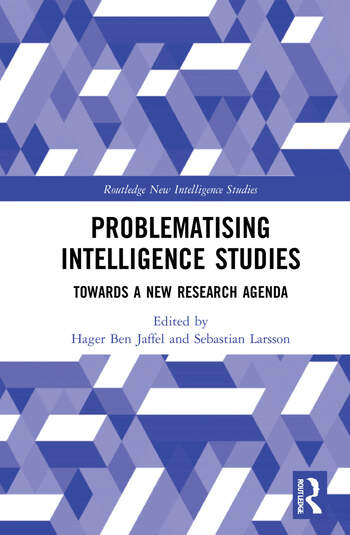
To understand this evolution, we connect scholars who study the people and practices entangled with intelligence across a range of disciplines: sociology, anthropology, history, criminology, IR, and beyond. In a forthcoming book entitled Problematising Intelligence Studies: Towards a New Research Agenda, edited by Sebastian Larsson and myself, we conceptualize intelligence as an expanding social space that is not limited to the intelligence community but is shaped by a multiplicity of actors who have a stake in intelligence and whose relations reframe the meaning and practice of intelligence. This is illustrated by several analyses that examine intelligence as performed by social actors ranging from the police to correctional officers and the average citizen. To conclude, this research agenda is a plea for adopting sociological approaches to study intelligence instead of IS.