Never has our world been more in need of research. Whether dealing with the climate emergency or with organized crime, major global challenges are complex and divisive. The only way to break out of the echo chambers that polarize debates around them is to collect, produce, and disseminate reliable information, the core tasks of scientific research.
However, although we discuss the risks associated with investigative journalism in authoritarian and violent settings and while there are several non-governmental organizations dedicated to documentation and lobbying around these issues, there are few public debates of the risks associated with research. Yet researchers, whether they are affiliated with academic institutions or with research institutes, are also at risk. And while there is one specific NGO (Scholars at Risk) that purports to help them, it is less common for governments to condemn publicly the violations that they face. Here we can recall the case of Homa Hoodfar, an anthropology professor at Concordia University, who was detained 112 days in Iran’s notorious Evin prison.
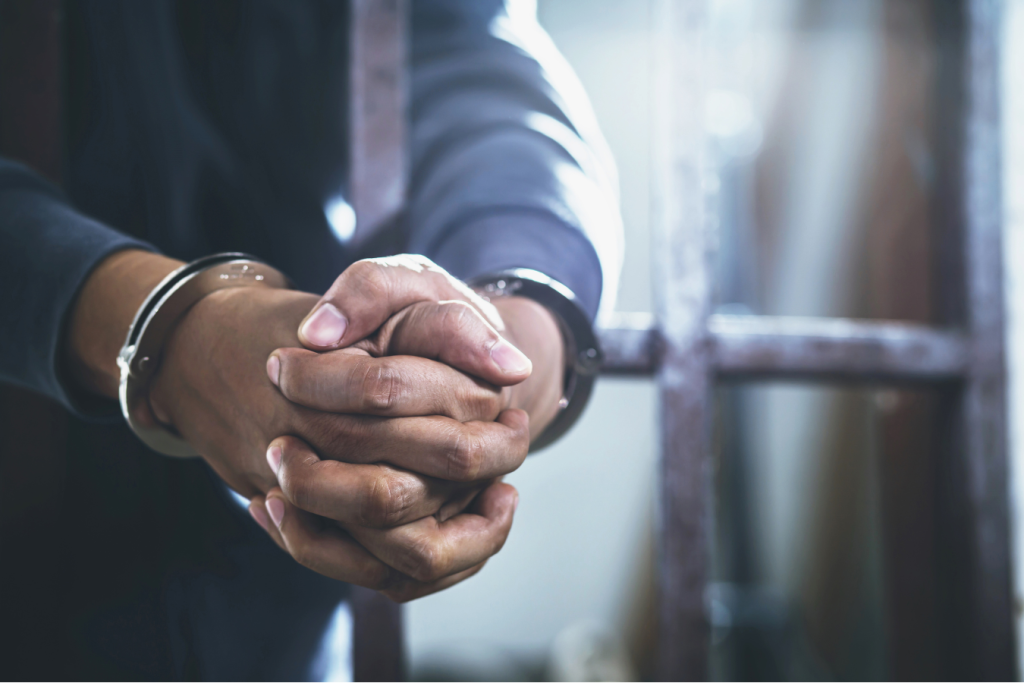
Such is currently the case of Raouf Farrah, a researcher jailed in Algeria since February 2023 and sentenced to two years in prison on August 29th after a trial that lasted only one day. A Senior Analyst with the Global Initiative against Transorganized Crime, Raouf Farrah researches illicit markets in North Africa and the Sahel region. He was incarcerated for “receipt of funds for the purpose of committing acts that may harm public order” and for having “published information or classified information on an electronic network”.
A graduate of the Université de Montréal’s bachelor program in philosophy and politics and of the master’s in international development at the University of Ottawa, Raouf Farrah is one of Canada’s foremost experts on organised crime. His research, published in open access on the website of the Global Initiative, is read at the UN Security Council and at the United Nations Office on Drugs and Crime, in Vienna.
Beyond the individual and the violation of his freedom and rights, this is also the trial of the right to collect, analyse and publish reliable research based on meticulous fieldwork.
Notwithstanding the accusations of the Algerian government, the publications of Raouf Farrah reflect a deep research ethic. Interviewed about his trajectory, he has underlined the importance of field research which allows us to “meet exceptional people in their living environments, collect first-hand information and better understand the history, the politics, and the economy of the societies that we visit.” He has also stressed that “humility is a fundamental posture that researchers ought to adopt in the face of complex international challenges.”
Raouf’s appeal trial is due to start in early October. Beyond the individual and the violation of his freedom and rights, this is also the trial of the right to collect, analyse and publish reliable research based on meticulous fieldwork. Beyond Raouf, it is the right to conduct scientific research delineated by clear guidelines and ethical considerations that is under attack. Without such information, the bases of informed debate on the complex issues facing our world will be undermined.
Aware of these challenges, the Canadian government is currently engaged in a struggle against disinformation in the context of the war in the Ukraine. In 2021, it also launched the Initiative against Arbitrary Detention, following the case of the ‘two Michaels’. Raouf Farrah’s detention ought to grab Ottawa’s attention on both counts. Because the production of reliable information is more urgent than ever and because the researchers who engage in this task should not be arbitrarily detained, Canada must get involved to secure the release of Raouf Farrah.
Marie-Joëlle Zahar, Université de Montréal
Rita Abrahamsen, Université d’Ottawa
François Crépeau, McGill University
Laurence Deschamps-Laporte, Université de Montréal
Frédéric Mérand. Université de Montréal
Christian Nadeau, Université de Montréal
Melissa Marschke, University of Ottawa
Frédéric Vairel, Université d’Ottawa
Maïka Sondarjee, Université d’Ottawa
Chris Huggins, University of Ottawa
Lee Seymour, Université de Montréal
Nandini Ramanujam, McGill University
Francesco Cavatorta, Université Laval
Philippe M. Frowd, Université d’Ottawa
Vicky Barham, Université d’Ottawa
Theodore McLauchlin, Université de Montréal
Benjamin Zyla, Université d’Ottawa
Ratiba Hadj-Moussa, York University ( Toronto)
Idil Atak, Toronto Metropolitan University
Thomas Juneau, Université d’Ottawa
Alexandra Gheciu, Université d’Ottawa
Djemaa Maazouzi, Collège Dawson
Luin Goldring, York University (Toronto)
Michael Nijhawan, York University (Toronto)
Mounir Boukadoum, Université du Québec à Montréal
Scosha Merovitz, Bishop’s University (Sherbrooke, QC)
Jean Lachapelle, Université de Montréal
Mark Goodman, York University (Toronto)
Dominique Caouette, Université de Montréal
Cynthia Wright, York University (Toronto)
Cédric Jourde, Université d’Ottawa
Rabah Moulla, Cegep Montmorency
Marie-Eve Desrosiers, Université d’Ottawa
Michael C. Williams, Université d’Ottawa