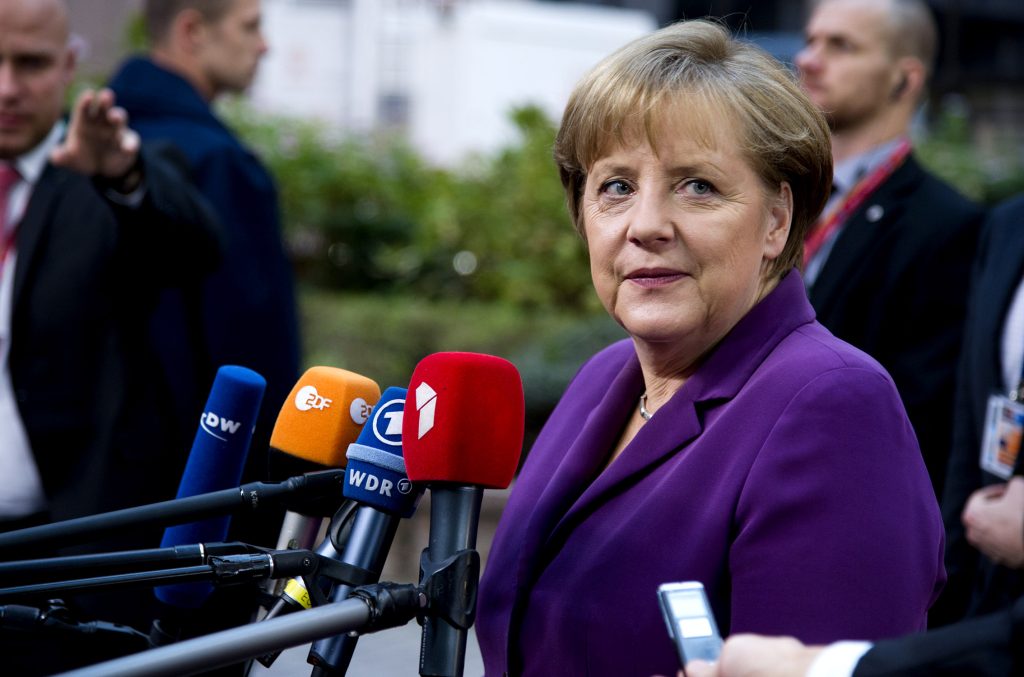
Otto von Bismarck left a social insurance program; Willy Brandt, the “Neue Ostpolitik” (new eastern policy); Helmut Kohl, German Unification; – and Angela Merkel, paralysis? That’s what critics claim. While Germany at the end of 2024 is in crisis, blaming the former chancellor (alone) is however misleading, unfair and short-sighted.
Angela Merkel’s “ghost”, argues a recent article in The Globe and Mail, “made Germany vanish from the world stage”. The argument goes that a number of the former chancellor’s decisions have put a heavy legacy on German shoulders, among them the infamous “debt brake”, Merkel’s “We can do it” open arms for hundreds of thousands refugees in 2015 (plus the years before and after), and the “grand coalition” between her Christian Democratic Union (CDU) and the, technically rival, Social Democrats (SPD). The latter, goes the reading, would have paralyzed the country and, given the lack of political alternatives, had pushed disappointed voters to the political extremes. This mass disillusionment then enabled the right-extreme Alternative für Deutschland (AfD) to grow into a veritable player on all federal levels, raising concerns about Germany’s shift to the right and the resilience of Germany’s liberal democracy.
Merkel herself would not accept such accusations. The debt brake is not set in stone, nor is the rise of democracyphobes a God-given outflow of Merkel’s 16 years in power. The country wasn’t in such a bad shape during her rule, an insight many gain only now that they see the country nowadays: its economy at the brink of recession, especially with the emblematic automotive industry in decline, and an infrastructure that is aging almost faster than Germany’s aging society, with billions of euros needed pretty quickly to upgrade rail, road and communication infrastructure.
Yes, Merkel’s insistence on “reducing debts first” has added to a lack of investment which now negatively impacts businesses and citizens, and yes, her resistance to introducing a speed limit on the country’s world famous Autobahn has not helped to reduce crash victims and CO2 emissions. Also, her tough stance on Greece during the euro crisis or her back and forth on the question of nuclear power can be criticized. But have her deeds pushed Germany into the miserable position many see it in now?
AfD supporters would likely argue, yes. Concerned citizens, anti-vaccination conspiracists, Reichsbürger (Reich Citizens) and Querdenker (lateral thinkers) would as well. Their “Merkel muss weg” (Merkel must go) shouting and posters in anti-lockdown demonstrations, anti-Islam demonstrations, anti-immigration demonstration and anti-gender diversity demonstrations clearly indicate this perception. On that wave of anger against anything that stands for an open, liberal society, AfD won around one third of votes in recent regional elections in September 2024.
These voters have supported a party which in part counts as “gesichert rechtsextrem” (confirmed far-right), which is under official observation by the Federal Office for the Protection of the Constitution and which has politicians in its rows who don’t shy away from using Nazi slogans, belittling the Holocaust, dismantling democracy, working towards the overthrow of the government, attacking liberal arts and culture, promoting the “remigration” of non-pure white Germans, and agitating against foreigners as much as against visible minorities and “woke” citizens, including the national football team.
It is not what Merkel called Germany’s “friendly face”, which was seen in the decision to keep German borders open to Syrian refugees in 2015, that murdered Kassel’s district head Walter Lübcke, stabbed Cologne’s lord mayor Henriette Reker, and shot a student employee at a gas station in Idar-Oberstein; the perpetrators are radicals who get their daily dose of radicalization from neo-right online conspiracy channels, often further encouraged by AfD rhetoric and the propaganda of one of its partners in spirit, may it be the Identitarian Movement, the Free Saxons or the “Der III. Weg” (Third Path). Their deeds, their hatred and their narrowmindedness are their very own guilt and responsibility, not Merkel’s.
These radicals don’t support such parties because Merkel showed humanity in 2015; they support them because they firmly believe in fake news being spread in secluded online circles. In a representative poll by Berlin-based CeMAS in spring 2022, 16% of all Germans, and one third in former Eastern Germany, indicated that NATO had forced Russia to invade Ukraine; and one third was convinced the US had secret military laboratories in Ukraine. Among AfD supporters, such convictions featured significantly higher (about 50%). This distorted perception of reality is largely the result of Russian troll farms who constantly feed online discourses with their disinformation campaigns. In addition, Kremlin-close circles sponsor various right-extreme parties in Europe, and the AfD is likewise under suspicion of receiving significant support from Moscow – in exchange for pro-Putin complaisance and significant sabotage acts against Western attitudes and institutions (note AfD’s fervent fight for Dexit, Germany’s exit from the EU), plus outright espionage activities.
With this support from Russia, the AfD has managed to dominate many public discourses, especially in virtual circles. This partly explains their increasing popularity among young Germans. Democratic parties, meanwhile, have not found effective strategies against this advantage yet. Instead, they try to win voters back from the AfD through copying their destructive policies, including stricter deportation rules of asylum seekers even into crisis countries, the reintroduction of passport checks at Schengen borders and constant complaints about an asserted leftist cancel culture. To their dismay, scholarship shows that this strategy instead strengthens the radicals, something Chancellor Olaf Scholz outright questioned in a podcast in November 2024.
Angela Merkel considered all democratic parties as adequate discussion partners, while she staunchly rejected AfD’s inflammatory rhetoric. Her successors, including current CDU chairman and running candidate for the chancellorship, Friedrich Merz, act differently. Their discreditation of refugees, immigrants and transgender people resembles AfD speech; similarly, their demonization of the Greens is something Angela Merkel would not have endorsed. This behaviour, upcycling AfD positions into the political discourse and by this prolonging their longevity and media penetration, is the much bigger threat to Germany’s democracy, reliability and future role on the world stage.