Donald Trump’s threats to take Greenland by force in the name of national security are startling a world grown accustomed to a more benign superpower. But the threat and its rationale are hardly something new. Just before American colonists declared independence 250 years ago, they invaded the neighbouring British colony of Canada, using national security as the pretext. Trump is resurrecting rather than inventing an approach to foreign relations that has been present since the country’s birth.
Benjamin Franklin laid the foundation for such thinking in his writings about population growth, colonial expansion, and Canada. He believed American colonists had the God-given right to populate the continent, taking any territory necessary to their security and prosperity. Historian Gerald Stourz, author of a book on Franklin’s foreign policy, said that in his 1751 Observations Concerning the Increase in Mankind, Franklin presented the first conscious and comprehensive formulation of Manifest Destiny.
Franklin’s ideas, shared by other founding fathers, subsequently fuelled the western expansion of the United States to the Pacific Ocean, by conquest or purchase, and informed more than few military adventures farther afield. As Daniel Immerwahr noted in his book, How to Hide an Empire, territories acquired over time included Alaska, American Samoa, Guam, Hawai’i, the Philippines, and Puerto Rico. Trump’s projection of American power, however outlandish it seems in the current day, taps into an existing vein in the American body politic.
There are more than a few similarities between what happened in Canada 250 years ago and what is happening today with Greenland. Both involve an appeal to national security based on dubious information; both seem based on a claim of divine right to territory and resources; and both exhibit a near-total disregard of the feelings of the people affected. The implicit assumption is that everyone wants to be an American.
American colonists had good reason to fear Canada when it was a French colony. Relations between Catholic New France and the Protestant British colonies had been hostile and often bloody for more than two centuries. But Britain, with the aid of the colonists, conquered Canada in 1760 and made British rule over an estimated 70,000 French Canadians official in 1763.
When the American Revolution began in 1775, the Continental Congress chose to believe an unfounded rumour that Britain was about to arm the French Canadians and attack from the north. The truth was that Britain was incapable of doing so. There were less than 600 British regular troops fit for duty in the colony, the British governor lamented at the time. Coupled with that, the French Canadians and Indigenous peoples were refusing to take up arms.
The idea that Chinese and Russian warships are surrounding Greenland, posing a threat to the security of the United States, is equally spurious. Nordic politicians and diplomats publicly state no such ships exist in Greenland’s waters. As numerous commentators have pointed out, the United States has all the legal authority it needs to beef up its military presence in the autonomous territory belonging to the Kingdom of Denmark. It is more than capable of taking on a swarm of warships, if they even exist.
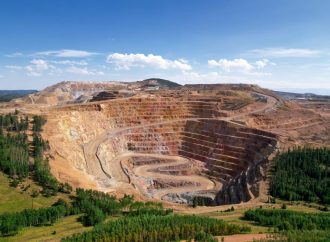
The absence of a bona fide security threat has raised speculation that a self-aggrandizing thirst for territory or a mercenary desire for resources, specifically rare earths, is driving the administration’s current obsession with Greenland. That chimes with some of the secondary motivations in the invasion of Canada. Franklin, Washington, Jefferson, and others were invested in land speculation schemes in the territory west of the Appalachian Mountains and south of the Great Lakes, land that first France and then Britain regarded as belonging to the colony of Canada. Fish and fur were also on the table.
Part of what persuaded the delegates to launch what was America’s first war of liberation is that they wrongly believed the French Canadians felt tyrannized by British rule and would welcome Americans as saviours. They either did not know or did not care that the Quebec Act of 1774 had given the Canadian elites much of what they wanted – freedom to practice the Catholic religion, retention of French civil law except in criminal cases, and permission for both the clergy and seigneurs (local land owners) to continue to collect their fees. The clergy preached loyalty to Britain from almost every pulpit.
When ordinary Canadians first refused to take up arms for the British, this was interpreted as a sign they were on the Americans’ side. It did not seem to occur to anyone that more than a decade of peace, accompanied by good harvests, had made the Canadians leery of fighting in another war, nor that being governed by an alternate set of English-speaking Protestants was not much of an attraction.
The people of Greenland and their political leaders have been vocal about not wanting to become Americans. Although some may be unhappy being an autonomous territory of Denmark and wish for independence, that does not necessarily translate into support for American rule. A January 2025 poll indicated 85 percent opposed the idea. Is anyone in the Trump administration listening?
What helped save Canada in 1776 might save Greenland from invasion, at least temporarily. The Continental Congress and its commander-in-chief, George Washington, were dealing with too many issues and fighting on too many fronts to give the Continental Army the men, provisions, money, and sustained attention needed to take Quebec City, the seat of British colonial power, before British warships carrying reinforcements arrived in the spring.
Trump has lit so many fires at home and abroad in his first year back in office that a significant flare-up of any one of them could consume so much of his attention that other initiatives fall by the wayside. Protests against the brutal behaviour of Immigration and Customs Enforcement agents, a worsening affordability crisis at home, resistance in Latin America to further attempts to impose the Monroe Doctrine of hemispheric dominance, or any one of his bombing campaigns are all potential flashpoints.
Greenland’s relief might only be temporary. After the Continental Army fled Canada in 1776, a second invasion was contemplated by the revolutionary leaders. Franklin took a slightly different tack and proposed the United States buy Canada from Britain. His idea did not appear to go anywhere. He made one final attempt in 1782 during peace negotiations in Paris, suggesting Britain give Canada to the United States as compensation for damage done by British troops on American soil during the revolution. London turned him down. He still managed to secure the part of Canada that extended below the Great Lakes. The War of 1812 brought a new, and ultimately unsuccessful invasion. And then Trump began his talk of Canada becoming the 51st state. The lesson for Greenland from Canada’s experience: Once the United States puts you on the menu you are likely to stay there.
Madelaine Drohan is a Senior Fellow at the University of Ottawa and author of He Did Not Conquer: Benjamin Franklin’s Failure to Annex Canada. On December 8, 2025, she gave a talk at CIPS related to her book.