Past: The Promise of Reform
Almost fifty years ago, I arrived in Shanghai as a member of the Fudan University class of ’77. I was the first foreign student admitted to the Philosophy Department’s History of Ancient Chinese Thought Program since the Sino-Soviet split of 1961. My thesis advisor, Yan Beiming—a prominent figure on the conservative side of China’s 1920s New Culture Movement—had just returned to campus. Now an elderly professor, he had endured years of imprisonment and torture as Fudan’s “number one object of attack” during the 1966–1976 Cultural Revolution.
Despite the differences in our backgrounds, we developed an enduring relationship rooted in my profound respect for his intellect and his immense kindness. Beyond teaching me how Taoist thought frees the soul from man’s inhumanity, Professor Yan confided in me about his life before and after 1949. In the privacy of our meetings, he detailed how imported Leninist institutions debased the nation’s true Confucian culture. I still cherish the exquisite calligraphy scroll he gave me, featuring his prose lament on Mao’s ruthless suppression of the 1956 “Hundred Flowers [free speech] Campaign.” The subsequent 1957 Anti-Rightist Campaign devastated intellectuals like him, yet he concluded his lament with politically dangerous confidence: “the hundred flowers will bloom again another day.”
For a fleeting moment, it seemed he might be right. In the fall of 1978, Chairman Mao’s portrait above our classroom blackboard was taken down, and campus loudspeakers ceased broadcasting revolutionary songs. Big character posters blossomed across Shanghai, boldly calling for the “fifth modernization—democracy.” The campus atmosphere crackled with optimism. The Cultural Revolution was officially denounced as “ten years of disaster,” and Deng Xiaoping declared that “intellectuals are also working people.” But the political euphoria stopped dead with a chilling Party directive in March 1979. Those hopeful posters were torn down overnight.
Following my graduation, I spent the 1980s supporting colleagues in Beijing who were publishing books advocating for deepening China’s “opening and reform.” I served on the editorial board for the Zhōngguó bìng cóng shū book series. Tragically, the entire publishing house was forced to disband in the bloody aftermath of the June 4th, 1989 Tiananmen Square massacre. The chief editor, one of my old Fudan dorm-mates, was forced to flee China to live with me in Canada.
Despite the horrors of 1989, the 1990s ushered in a renewed era of Western optimism. Starting in 1992, I coordinated a five-year collaboration between the Royal Society of Canada and the Chinese Academy of Social Sciences called “The Democracy Project.” Initiated ostensibly at the behest of the Party Politburo, its Canadian purpose was to advise the CCP’s Central Committee on restructuring China’s political institutions to comply with the UN’s International Covenant on Civil and Political Rights, signed by China in 1998.
Present: The Illusion of Liberalization
During my subsequent diplomatic postings to Beijing, I helped administer the Civil Society Program, aiming to nurture social responsibility and foster a grassroots democratic movement. The Embassy coordinated bilateral human rights dialogues, senior judges training, and gender rights programming. For four years, up until 2013, I even visited Beijing annually as a visiting scholar at the Communist Party’s Central Party School, focusing on ethnic minority policies. During this period, the School’s president was none other than Xi Jinping.
For decades, the assumption in Ottawa was that economic and institutional engagement would inevitably lead to political liberalization. We operated on the sincere, naive belief that by sharing our democratic values, the Chinese Communist Party would naturally liberalize. That hope was systematically dismantled. As Xi Jinping ascended to paramount leadership, it became undeniably clear that the regime never intended to reform. Instead, they weaponized our openness to modernize their economy and strengthen their totalitarian grip. The ultimate confirmation of Beijing’s hostility toward those speaking the truth came when I was formally sanctioned by the PRC in December 2024.
Future: The Cost of Complacency
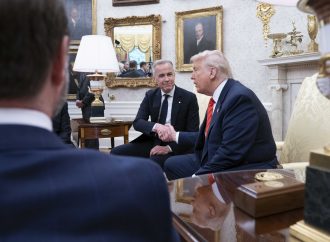
Witnessing this trajectory firsthand is why I am deeply alarmed by Prime Minister Carney’s recent redefinition of our bilateral relationship as a “strategic partnership.” To use that term is to willfully ignore thirty years of hard-learned lessons regarding the regime’s systemic dissembling and its aggressive flouting of the rules-based international order. I have made this point repeatedly in over 200 opinion pieces published in the national press over the past 17 years, and in many hundreds of media interviews. Yet, the imperative to learn from this dark history falls on deaf ears.
Will this government effectively prevent the hemorrhage of Canadian high-tech, dual-use military technologies, and proprietary intellectual property to China through grey-zone academic exchanges and aggressive cyber-espionage? Will Ottawa stop state-directed Chinese business investments from compromising Canadian critical infrastructure? Will we respond with serious resolve to Chinese naval operations encroaching upon our sovereign Arctic waters?
Given the current political trajectory, decisive action seems unlikely. Beijing wouldn’t approve, and the grim reality is that a generation of politically connected Canadian business elites and the corporate lawyers who facilitate their deals have become spontaneously beholden to the Chinese regime’s geostrategic interests. They are desperate to return to “business as usual,” doing so at a terminal cost to Canadian national security and our fundamental sovereignty.
I keep hoping my words will impact Canada’s China policy. But as I look back, it is increasingly difficult to assess how much my work in service of Canadian justice has actually made a practical difference against a great power eager to exploit our domestic greed and political naivete. When our leaders assess what they are willing to trade away for the transactional promise of market access, they would do well to remember the wisdom of St. Matthew: “For what is a man profited, if he shall gain the whole world, and lose his own soul?”
Charles Burton is a former diplomat at Canada’s embassy in Beijing; Senior Fellow at Sinopsis, a Prague-based China-focused think tank; author of The Beaver and the Dragon: How China Out-Maneuvred Canada’s Diplomacy, Security and Sovereignty (Optimum Press, October 2025). He gave a talk on his book on February 25th, 2026.