By: Rebecca Tiessen, University of Ottawa, Yvette Macabuag, Cuso International, and Anik Cooke, Cuso International
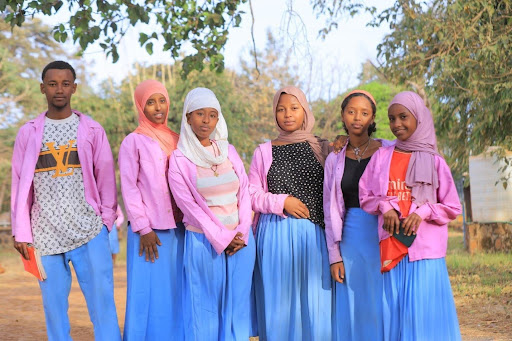
Bethlehem is a young woman completing grade 11 in secondary school in Ethiopia. As a participant in the U-GIRLS 2 project facilitated by Cuso International, she describes the impact of her participation as having changed her life:
“It has enabled me to make decisions myself, to protect myself from peer pressure, and to be well prepared for upcoming challenges in my life”.
The U-GIRLS 2 project, funded by Global Affairs Canada under Canada’s Feminist International Assistance Policy (FIAP), started in 2020 with a goal to increase opportunities, support enabling factors, and to foster improved educational outcomes so that girls have increased opportunities to take part in higher education. The focus on enabling factors in the U-GIRLS 2 project is significant. Project activities include promoting awareness and community strategies that encourage girls’ enrollment in formal education, educational supports to enhance academic learning and performance geared to students and educators, leadership training, and improved governance strategies, among other community priorities such as improved food security. At the heart of this program is its holistic and transformational approach to addressing the barriers to girls’ higher education. These program objectives reflect important priorities outlined in Canada’s Feminist International Assistance Policy and in subsequent guidance frameworks provided by Global Affairs Canada.
About U-GIRLS 2
Building on the achievements of earlier interventions, U-GIRLS 2 adopts a comprehensive and inclusive approach to create a supportive, gender-responsive educational ecosystem. By engaging schools, parents, teachers, mentors and communities, the project seeks to address both academic and non-academic obstacles, ensuring that girls not only enroll in school but also thrive academically, develop essential skills, and transition successfully to higher education, employment, or entrepreneurship. Additionally, mentorship programs connect girls with role models, creating a support system that encourages academic persistence and career aspirations. The project’s teacher training workshops focus on inclusive teaching methods and student-centered learning approaches.
Recognizing the economic challenges that often force girls to leave school, the project works to reduce financial and social barriers to education. It raises awareness about the disproportionate domestic responsibilities placed on girls and engages parents in discussions on equitable household roles. The project supports families by offering comprehensive entrepreneurship training and financial literacy education, followed by seed funding awards for selected business plans submitted by parents.
Documenting Successes
The successes of this program are notable even in early analyses. Evidence of impacts in just one component of the project, leadership training, showed significant impact on personal development for the girls who participated in the project. For example, leadership training resulted in approximately 97% of girls reporting enhanced confidence and leadership abilities within the schools or communities. The leadership training therefore had significant relevance to everyday experiences and concrete outcomes in the immediate term. The benefits of leadership training cut across a range of other program priorities including sexual and reproductive health, supporting increased confidence in a range of decision-making practices including decisions around healthy and respectful relationships with partners. These targeted interventions directed at girls led to 99% of participants transitioning to higher education but the successes in these activities hinge on the holistic nature of this project and its commitment to strengthening the support system. The project reached over 28,000 students and their families as well as over 2,000 teachers and school administrators. Training initiatives with parents and community members played a transformative role and were significant to the outcomes of the project in terms of improving girls’ educational access and outcomes, with evidence of increased community capacity and awareness, as well as understanding of gender equality and the rights of girls to education. These impacts are leading to changing attitudes and behaviours, and transforming education systems.
These successes tell an important story that often gets overlooked in critical analyses of Canada’s FIAP, namely: instrumentalizing or essentializing women and girls, the lack of focus on gender diverse experience and LGBTQI+ concerns, and limited attention to gender power relations and the underlying barriers to gender equality. (See insights on Canada’s FIAP).
Successes? Yes. More to do? Absolutely!
Ongoing efforts are needed to ensure a sustainable future for girls’ education. There are significant challenges that need to be addressed alongside commitments to gender equality initiatives including economic opportunities for supporting increased household incomes, environmental challenges impacting health and agricultural outputs, and more. Furthermore, attitude and behaviour change requires sustained awareness-raising and dialogue. For example, students noted that some teachers continue to make inappropriate comments about girls or were said to treat girls unfairly in some instances. While such challenges remain, the program has supported improved confidence in the young men and women in the communities to report these incidents to authorities, highlighting increased confidence among students to speak up and take part in accountability processes.
The Bigger Picture: What Does This Project Tell Us About Canada’s Feminist International Assistance Policy?
Despite the need for ongoing initiatives to build momentum and continue to move the needle on gender equality, this example highlights the need for fair analysis of feminist development programming. Clear evidence of gains are notable from this project and important work has taken place since Canada’s FIAP was introduced in 2017 that prioritize gender equality and women’s empowerment initiatives and advance important feminist priorities. The U-GIRLS 2 project demonstrates feminist commitment to holistic programming that encompasses practical initiatives (mentorship, teacher training, economic security) and transformative change through awareness-raising strategies aimed at tackling the barriers to gender equality (attitudes, discriminatory practices). While the FIAP has faced significant criticisms for its lack of commitment to transformative language, updated government priorities have informed Canada’s commitments to feminist international assistance including the 2023 “ Feminist approach – Innovation and effectiveness guidance note”.
This guidance note highlights principles of a feminist approach as a priority for bringing about transformative change for more “equal, prosperous and peaceful” societies through strategies that address root causes of poverty, tackling systemic discrimination, and to “transform patriarchal systems of power that reinforce and perpetuate inequality”. Thus, Canada’s feminist approach since the introduction of the FIAP in 2017 has evolved, and with it, growing evidence of significant feminist impacts in the projects funded under the FIAP.
In a world filled with news of doom, gloom, wars, and increasing realization of backsliding on rights and on gender equality, there is still much to celebrate. When communities come together to support commitments to gender equality, real change can happen. The importance of guiding policies and government commitments to feminist approaches cannot be understated.
As the U-GIRLS 2 project has shown, investment in girls’ education, when done in a holistic and feminist transformative way, leads to unstoppable feminist futures.
This blog is related to an event held on March 18, 2026 titled “Unstoppable Futures: A Lunch & Learn on Girls’ Education in Ethiopia“.