Subscribe to the CIPS Newsletter
- Home
- Canada-Germany@75: Two Grown-Ups Joining Forces
Canada-Germany@75: Two Grown-Ups Joining Forces
 One of the 2025/2026 winners of the CIPS Research Initiatives (CRI) competition is a research project on Canada’s diplomatic interactions with Germany at the 75th anniversary of their mutual relations. The main deliverable will be a 2-day symposium titled “75 Years Canada-Germany Diplomatic Relations”.
This project involves the following CIPS researchers:
- Jan Claudius Völkel, DAAD Seconded Professor, School of Political Studies
- Srdjan Vucetic, Professor, GSPIA
- Benjamin Zyla, Professor, School of International Development and Global Studies
Project Description:
This year, Canada and Germany celebrate the 75-year anniversary of their mutual diplomatic relations. What started in 1951 with the exchange of ambassadors between Ottawa and Bonn, the capital of West Germany at the time, was initially a partnership among unequals: Germany, the divided country after its absolute defeat in the Second World War, and its immense charge for the horrendous crimes of the National Socialists, was looking for reintegration into the international community – the Federal Republic of Germany (FRG, West Germany) towards its Western alliances under leadership of the United States of America, the German Democratic Republic (GDR, East Germany) towards its Eastern alliances under leadership of the Soviet Union. Canada, while being part of the winning allies in both world wars, just started to convey an own, i. e. increasingly independent foreign policy. The creation of its largest military base abroad in the Southern German cities of Lahr and Baden-Baden/Söllingen became an important part of it.
Ever since, diplomatic relations have constantly improved, leading to a highly trusted partnership between both nations that find their expression in a multitude of contacts and exchanges, initiated and promoted by the Canada-Germany cultural agreement 1975. The changing geostrategic conditions with shifting power relations and strained relations to its closest ally, the USA, Canada has moved tangibly closer to the European Union in the areas of security, digital cooperation, energy resilience, and the support for Ukraine. In these relations, not only Brussels plays a major role, but also Germany as the EU’s largest member state and economic powerhouse.
Main Deliverable: 2-Day Symposium on Canada-Germany Relations
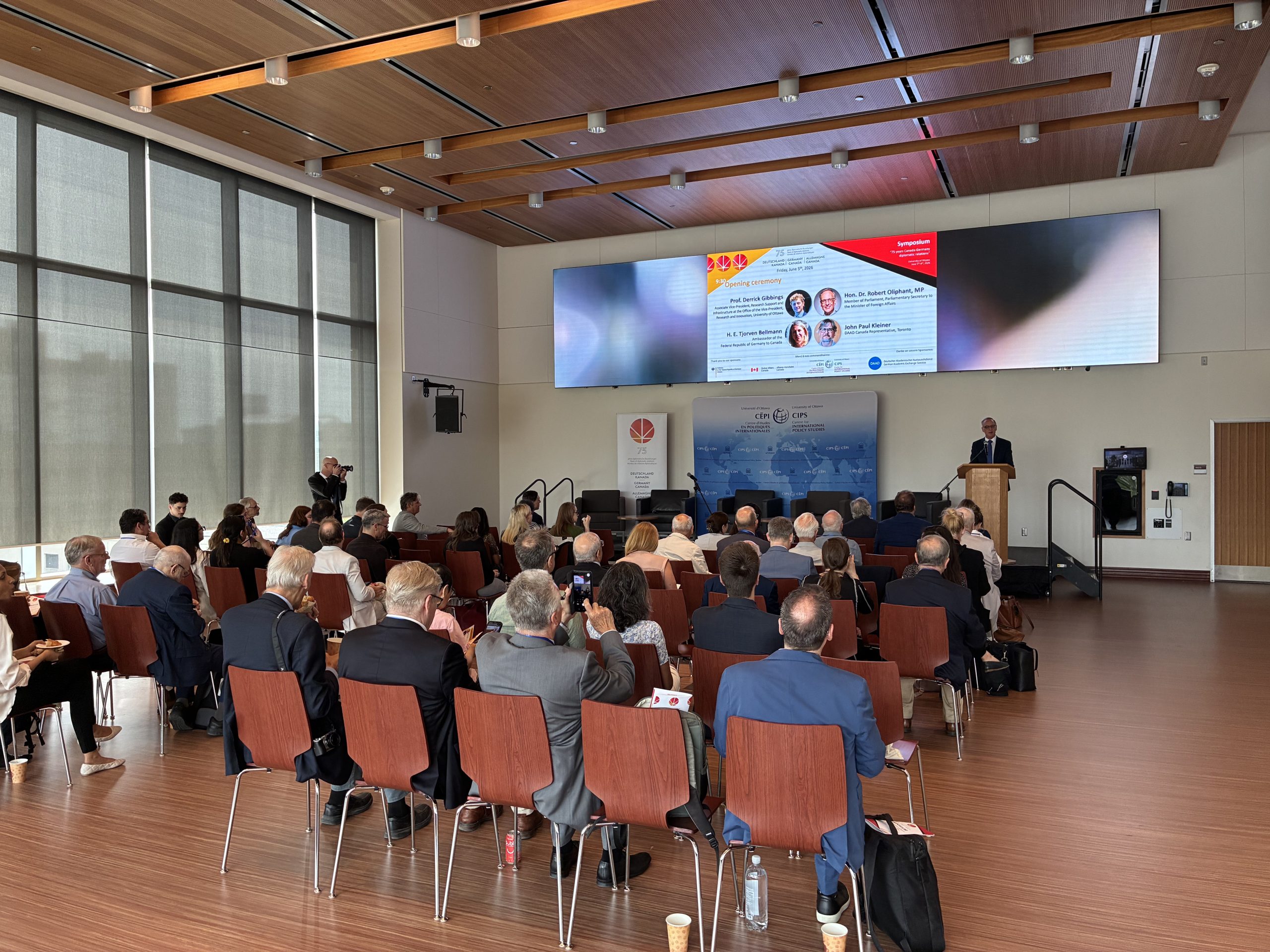
On June 5-6, 2026, scholars and practitioners will come to uOttawa for a symposium “75 Years Canada-Germany Diplomatic Relations”. While diplomats on both sides tirelessly emphasize the deep-rooted partnership, increased collaboration also provokes critique, especially in the area of energy and security cooperation. First Nations have expressed their rejection of plans to expand infrastructure across the country, such as newly built pipelines through indigenous territories or fossil energy loading terminals in ecologically sensitive seawaters such as the Hudson Bay. Procurement experts question that boasted budgets for increased defense purchases can hardly been processed, and that aspired projects such as joining the German-Norwegian submarine consortium of Thyssen-Krupp Maritime Systems (TKMS) will come too late given the high need of quickly upgrading Canada’s naval forces, as a participant of the CIPS supported conference “Le Canada et le renforcement du pilier euro-atlantique : vers de nouvelles coopérations mini-latérales”, held at uOttawa on January 9, 2026, expressed under Chatham House rules. Finally in Germany, the rise of right extreme AfD (Alternative für Deutschland) has put the government and a number of its core policies under increasing pressure, and it remains unclear how a growing involvement of this party would affect Germany’s future foreign relations, including with Canada.
Project update:
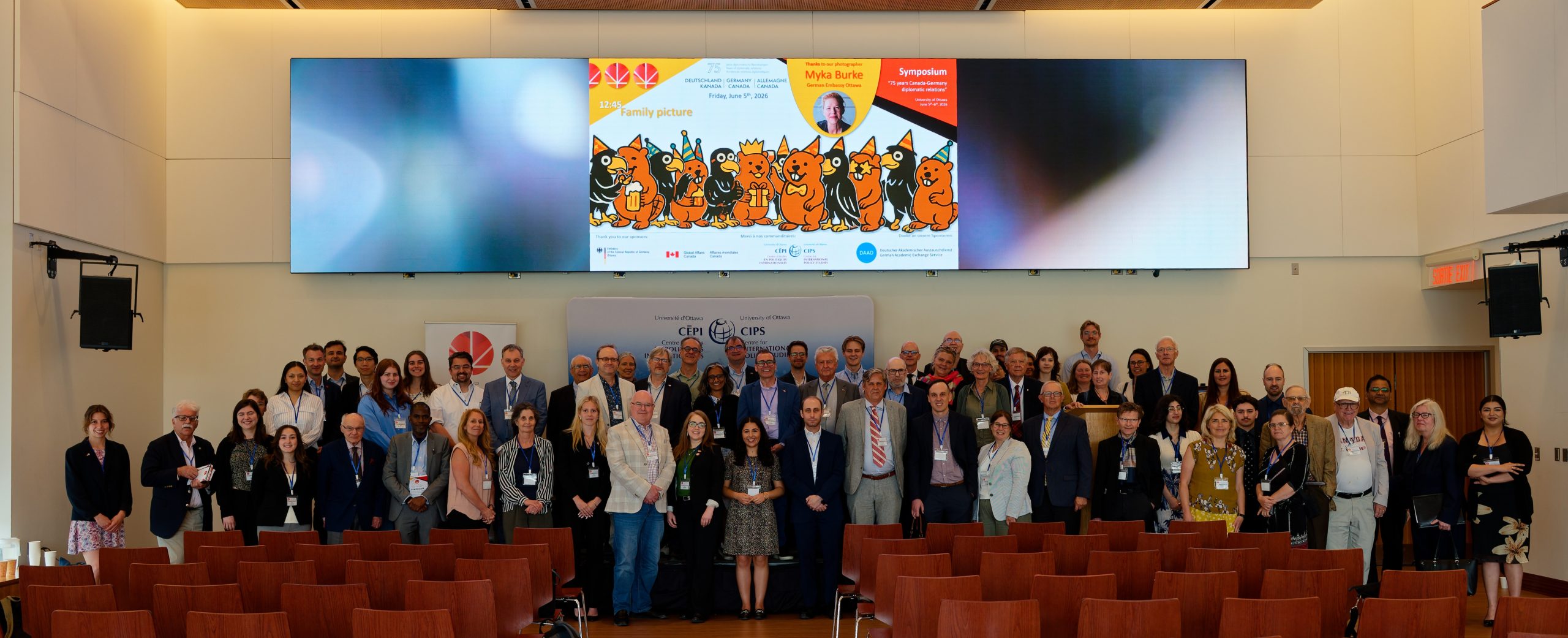
The 2-day symposium on Canada-Germany Relations took place on June 5 & 6, 2026 (See the full programme here). Myka Burke, Torsten Geißler & Jan Claudius Völkel wrote a blog about the event titled “Canada-Germany Relations: Finding Each Other and Finding Themselves Over 75 Years“. A special issue related to event is being prepared and will be published in 2027.