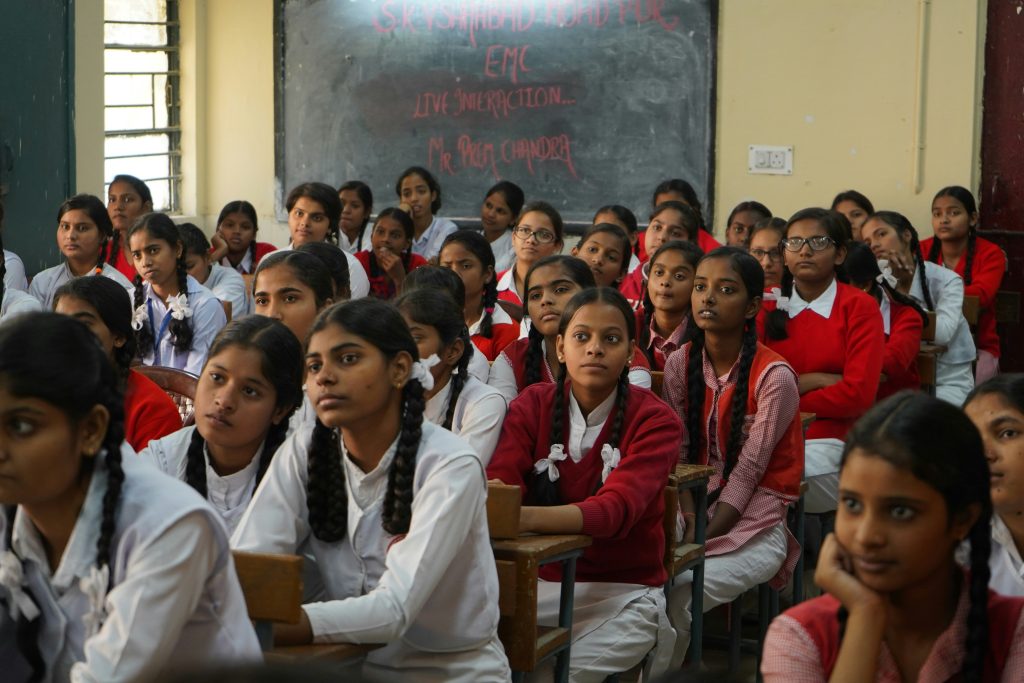
In 2017, Canada introduced its Feminist International Assistance Policy (FIAP). It promised that by 2022, at least 95% of Canada’s international assistance spending would go toward women’s empowerment, and half of these funds would be allocated to Sub-Saharan Africa. Nine years later, the FIAP quietly died without fanfare or public announcement.
It is not a loss: The FIAP was based on two untenable premises. First, it posited that “women’s empowerment” would effectively solve all the problems of development, from humanitarian crises to health, poverty, governance, and peace. This assumption gets the causality backwards. Women’s empowerment is a consequence of development, not its cause. The second assumption was even more problematic. It held that Official Development Assistance (ODA) was a strong enough lever to “empower” women and girls. There is robust empirical evidence that this is not the case. Not surprisingly, in 2023, the Auditor General found that GAC was unable to show how the FIAP had contributed to improving gender equality, and could not account for the $3.5 billion spent yearly.
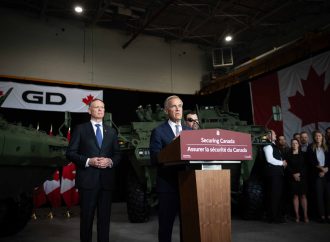
Now that the FIAP is gone, what comes next? The Carney government has been silent about its intentions regarding development policy (It has said, though, that Canada’s foreign policy is no longer feminist). Given the current political context, it is fair to expect cuts to the aid budget, a more pragmatic tone, and a focus on how development spending can serve Canada’s national interests.
There is, of course, a tradition of using aid for national interest. When development aid was invented after World War II, one of its first expressions was the Marshall Plan — a means to rebuild Western Europe as a bulwark against the Soviet Union, serving Western strategic interests. However, this approach was soon challenged. Canada’s own Lester Pearson, in his 1969 report Partners in Development, urged that aid should also serve the welfare of poor countries, not only the strategic interests of donors.
My own sympathies lie with the second approach – the one that seeks to do as much good as possible for the recipient countries. There is much suffering in the world, and more will come as the climate crisis rapidly accelerates. Ethical reasoning dictates using the ODA budget for helping the poorest as effectively as possible.
But serving the national interest and allocating aid ethically do not have to be mutually exclusive. The challenge is finding the right balance.
Here are four ways in which a new aid policy could do good while also serving Canada’s interests.
First, use aid to deepen partnerships with selected countries in the Global South, thereby building political capital that pays dividends in many multilateral forums. The emphasis is on “selected”: these countries should share some of Canada’s interests — reliable trade rules, a commitment to good governance, an interest in strategic autonomy from one of the hegemonic big powers — and they should have clear needs, struggling to meet the basic needs of their populations, such as food security, health, access to education, or being free from violence. Building aid partnerships with such countries and helping to alleviate some of their hardships satisfies both the conditions for an ethical aid allocation and the requirement for strategic gains.
Second, aid can buy a seat at the table. There is a shortage of funding for humanitarian and emergency assistance. Countries that can quickly deploy aid gain influence and a voice in shaping the international response to crises. Haiti could become such a case: sustained engagement there would serve humanitarian purposes and Canada’s interest in stability in its own hemisphere, it would buy Canada a seat at the table in international forums and some clout vis-à-vis the United States, which is also interested in stability in Haiti. There is no shortage of global crises, and the international community will always be in need of countries that can quickly commit and deploy aid in such situations. Of course, the right architecture must be in place: the ability to react quickly, strong country-context analytical capacities, and the political will to stay engaged .
Third, aid can support the strategic autonomy of recipient countries. Canada’s goal is to build middle-power coalitions to ensure that a cooperative world order survives, and to prevent domination by “predatory hegemons.” In aid terms, this translates into deliberately funding partner-country capacity that reduces dependence on Chinese or U.S. largesse. This is aid as geopolitical counterweight.
Fourth, Carney’s central concept of “variable geometry” can also be applied to ODA. Rather than bilateral relationships or United Nations (UN) umbrellas, Canada could anchor itself as the convener and co-financier of a group of like-minded donors around one high-visibility issue. Climate adaptation is one example, but there is no shortage of candidates — what matters is that the issue addresses a basic, urgent need (otherwise, the aid allocation is not ethical). This is another way of gaining political capital among recipient countries and other donors.
But these strategies only work when aid is effective. This is where the FIAP failed — it was an aid policy true to dogma, not to results. This needs to change. A renewed commitment to effectiveness means that Canada must resist spreading thin contributions across dozens of countries and sectors. Instead, it should focus on a small number of countries and build lasting partnerships. ODA should also concentrate on a few sectors — those addressing the urgent needs of recipient countries, where aid can do the most good. The bulk should still go to fragile and conflict-affected states, where needs are most acute.
Evidence shows that in such contexts aid works in certain sectors — health, basic education, resilience and livelihoods — but rarely in others, such as governance, gender or state capacity building. Allocation should therefore always be guided by the probability that it will work.
That, in turn, requires grounding development policy in evidence. After a decade of FIAP, this means a culture change: rigorous evaluation, prioritising effectiveness over optics, and a willingness to learn from failure. With such a shift, Canada’s aid can again live up to what the Pearson report identified as the two compelling reasons to give: the duty of the fortunate to help those in need, and an enlightened national interest in an interdependent world.