I first encountered the idea that, “Stories are meant to heal,” through the work of the late Richard Wagamese. It’s teased out in his marvelous book Medicine Walk and so many other places. Over the years it has slowly become one of the philosophical and relational anchors beneath much of the work that I do as a filmmaker and podcaster, and I hope, as someone who is trying to participate in meaningful social change.
I’ve spent a good deal of my life trying to figure out where development, ethics, philosophy, relationships and storytelling intersect and how we can continue to drop pebbles into the global pond and trust the ripple. It’s also the idea that is at the centre of my documentary film Broken Courage.
Recently, I had the opportunity to screen the film at the University of Ottawa. At the centre of the evening, for me at least, was a question that has haunted and driven me forward for years: Do we have the courage to act on what we already know to be right?
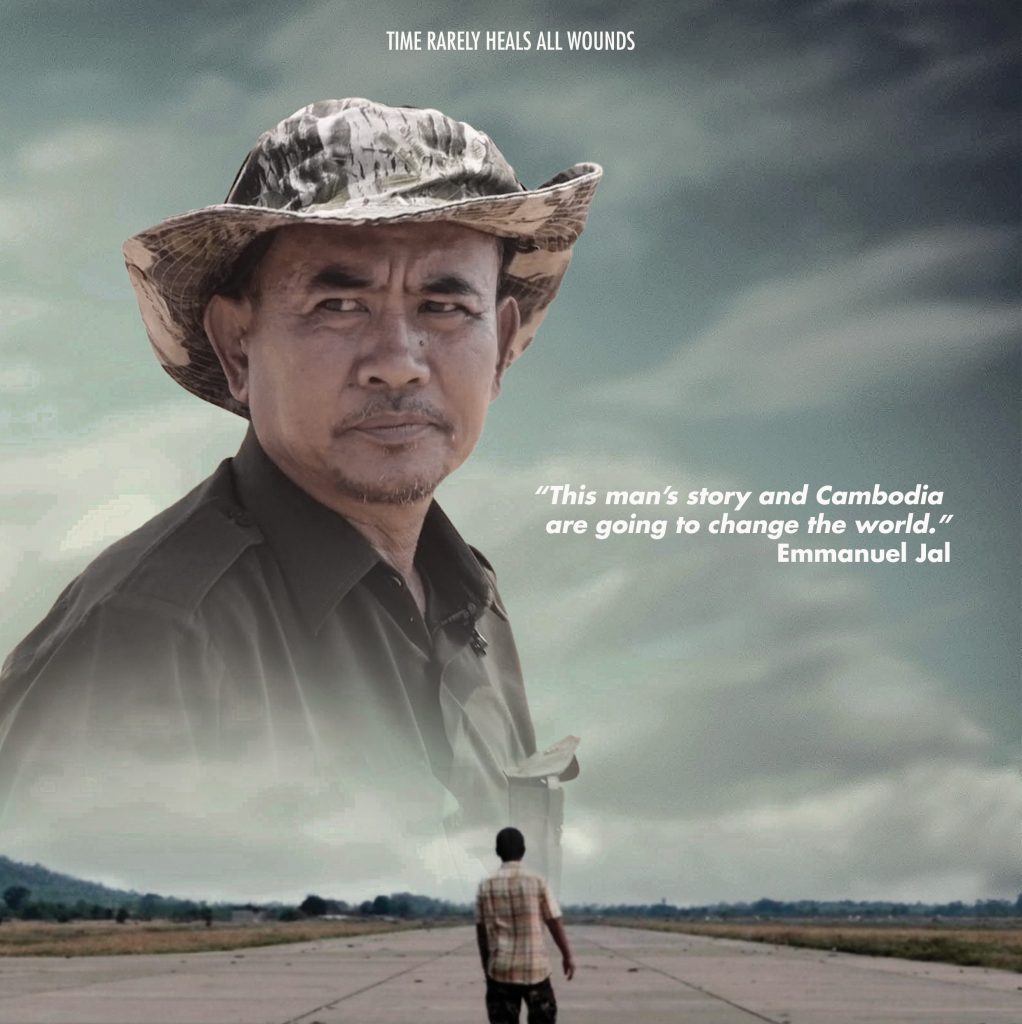
I met Soun Rattana, the man whose story became the focus of Broken Courage, more than twenty years ago in Cambodia, which remains one of the most heavily landmine-contaminated countries in the world. Stories like his encourage me to wrestle with the tension between systems and personhood, big ideas and storytelling, policy and progress, and statistics and lived human experience.
I’m an incrementalist. I believe in empathetic cause and effect. I lean into intention.
I know my position may frustrate some hard-core advocates who long for structural change at the macro level and who are pushing for radical top-down transformation. I genuinely understand the critique, but over time I’ve also come to believe that meaningful change often begins in much smaller moments than we sometimes expect. It’s where the ordinary can become extraordinary. Sometimes it begins with a handshake, a conversation, a donation, a well-informed question, a polite interruption, a refusal to look away or simply the willingness to recognize the humanity of others.
The French philosopher Emmanuel Levinas wrote in Totality and Infinity, that “The face speaks,” and what it says, according to Levinas, is simple: thou shalt not kill.
It’s a profound statement that matters more than ever. The moment another human being becomes merely an abstraction, a category, a statistic or some kind of “collateral damage”, we lose moral and ethical ground. The Golden Rule, loving your neighbour, the notion of an existential embrace, all these starting points begin to fall away when we stop seeing the other as fully human and fully other.
In dehumanizing moments like these, we can slip towards a “not in my backyard”, self over community, mine over yours, us versus them approach. It seems to me that NIMBYism is alive and well and what’s troubling is that this doesn’t only happen at the global level, it shows up in ordinary life too. The way we drive. The way we vote. The way we stand in line and speak to strangers and the way we think about people whose lives don’t directly affect our own. We stop seeing the other as a person and worse still, we often stop seeing them altogether. They become a means to an end and not an end in themselves. That’s part of what Levinas was warning us about. The moment we objectify others is the moment something fundamental breaks down. We risk losing ourselves and others.
Some of Suon’s story in Broken Courage and his relationship to landmines and the level of their human impact feels like the perfect metaphor for that kind of moral dysfunction and breakdown.
It wasn’t lost on me that we screened the film in Ottawa alongside Mines Action Canada. Ottawa, of course, is where The Ottawa Treaty banning anti-personnel landmines was born through the great work of Lloyd Axworthy and others. And yet today, despite international treaties and decades of advocacy, these indiscriminate weapons continue to kill civilians, with many of them being children. Some countries are now, as I type, stepping back from the treaty’s commitments, withdrawing and resuming both the manufacture and deployment of landmines.
What fascinates me though, is that movements like The Ottawa Treaty didn’t begin with policy wonks, institutional change and macro frameworks alone. It began because somebody paid attention and because someone cared.
In my podcast series Silent Killers, created in partnership with the International Campaign to Ban Landmines, I spoke with Jody Williams about her work to launch the global movement to ban landmines. What struck me most about her motivation was not her academic approach, a policy discussion or diplomatic strategy. It was a childhood story about standing up to a bully and defending a vulnerable classmate who she thought was being excluded. That was the spark for her. She took a stand. That was the beginning of the ripple. (You can listen to the full interview here.)
And eventually that ripple became a global movement, a Nobel Peace Prize and one of the most important humanitarian treaties of the modern era. Stories create community. They bridge distance. Policy matters. Data matters. Institutions matter, but stories force us to empathize and come to terms with the face behind the statistic. The story behind the graph, and in Jody’s case, the face connected to the victim and the bully. That’s what I hope Broken Courage will do. Not simply to advocate and raise awareness, a phrase that has almost become trite and cliché at this point, but to invite people into a closer more compassionate proximity with the lived realities of trauma, recovery, resilience, disability, reconciliation and hope.
And despite everything I read and hear about our current situation I still believe in radical hope.
That’s not naïve optimism. It’s not pretending the world isn’t fractured, polarized or unstable. Humanitarian funding is shrinking. Trust in institutions continues to erode. Fear shapes policy far more often than empathy and love ever does and yet I still believe small acts, stories and conversations matter.
Lloyd Axworthy has written powerfully in his 2003 book Navigating a New World: Canada’s Global Future, about human security and hope and I think he captures something important. Radical hope refuses both cynicism and denial. It recognizes the dysfunction and brokenness of our world while remaining open to the possibility that change can happen. On Days of Ash, U2’s recent surprise new album, the song Yours Eternally, has a line that rings true, “If you have the chance to hope, it’s a duty.” I may not be quite as prescriptive as Bono, but I love the sentiment. We need to act. Hope isn’t an option. It’s a calling.
Incremental change is happening all around us. Sometimes we fail to recognize it. It can be hard to see, but we are taking part in our own way.
For me, screening Broken Courage in Ottawa was another opportunity to drop a pebble into the pond. Another opportunity to trust that conversations ripple outward in ways we may never fully realize, but radical hope says, believe they do either way.
Every movement, every treaty, every act of reconciliation, every meaningful conversation begins somewhere.
With a pebble. With a person. With a story.
And maybe, just maybe, that’s when we will begin to truly understand that the face speaks and begin to see one other again in a new way.
David Peck is the director of the documentary Broken Courage. He has been producing a variety of shows, events, videos and campaigns for many years now as the founder and director of SoChange, a social enterprise that works with the corporate and NGO community in leadership development, innovation and entrepreneurship. He holds a Masters degree in Philosophy from the University of Guelph and has completed postgraduate work in International Development and teaches in the business school at Humber College in Toronto. He is a writer, speaker, entertainer, academic and social change consultant. He participated in a documentary screening of Broken Courage on March 16, 2026, in collaboration with the Development Student Association.