

Subscribe to the CIPS Newsletter
- Home
- Canadian Defence: Time For a New Mindset
Canadian Defence: Time For a New Mindset
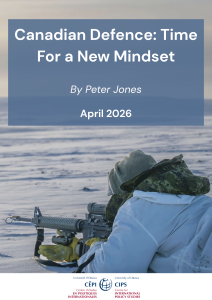
 Full text (pdf)
By Peter Jones
CIPS Policy Report, April 2026
At a glance…
- This series of papers is intended to contribute to a discussion in Canada over what are, arguably, two of the most important defence policy developments since the end of World War 2.
- The first of these is Canada’s decision to meet and then far exceed NATO’s 2% defence budget guideline, possibly going as high as 5% of GDP by 2035 for defence and defence-related spending.
- Secondly, these defence spending increases come at a time when President Trump is fundamentally calling into question bedrock assumptions about Canada-US relations and about the future of America’s commitment to institutions such as NATO.
- There are four papers published here, with the fifth as an epilogue.
- The first paper deals with Canada’s acquisition of the F35 fighter and examines it in the context of the Canadian military’s traditional worldview that seamless interoperability with the US military is the key to the Canadian Armed Forces’ continued viability.
- The second paper looks at the proposed acquisition of up to 12 new submarines in the context of what kind of Navy, and larger Armed Forces, this will give us.
- The third paper looks at Canada’s possible participation in Trump’s Golden Dome missile defence project.
- The final paper takes a renewed look at Canada’s extensive Cold War involvement with nuclear weapons, something most Canadians today are not aware of, and asks if Donald Trump’s threats to no longer defend NATO will lead the European nations to work together to develop some version of their own deterrent.
- At the end of this Report, a fifth paper is appended as an Epilogue. It is somewhat different to the others in that it is a more speculative paper, which looks at what might happen if the United States were ever to militarily attack Canada. I do not believe that this is likely. But, in the face of Trump’s statements over Greenland, and his taunts over Canada as the 51st state, the effort to logically think through what an attack could look like and what would happen if such an attack did take place was an interesting thought exercise.
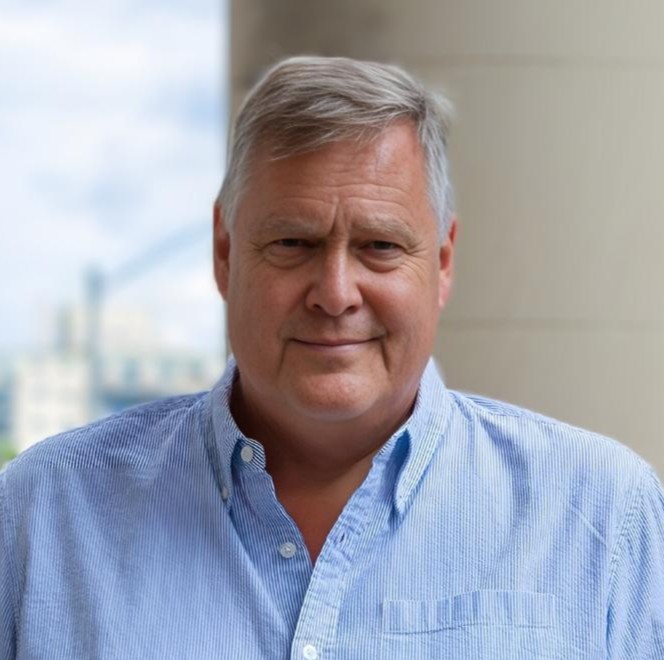 Peter Jones is a Full Professor at the Graduate School of Public and International Affairs at the University of Ottawa, as well as the Executive Director of Ottawa Dialogue. He holds a Ph.D. in War Studies from Kings’ College, London, and an MA in War Studies from the Royal Military College of Canada. Before joining the University of Ottawa, he served as a senior analyst for the Security and Intelligence Secretariat of the Privy Council of Canada for 7 years and also with Canada’s Department of Foreign Affairs for 7 years. He also led the Middle East Security and Arms Control Project at the Stockholm International Peace Research Institute (SIPRI) in Sweden in the 1990s. Peter leads problem-solving dialogues around the world and has published what is widely regarded as the standard text in the field, and also publishes regularly in leading journals in the field.