When you mention Indonesia to Canadians the usual image that might come to mind is the tropical island of Bali. And yet the world’s largest archipelagic country is so much more than palm trees and beaches. Indonesia is the world’s fourth most populous country, third biggest democracy, largest Muslim country and a G20 economy growing faster than China. The headquarters of the Association of Southeast Asian Nations (ASEAN), Indonesia is a model of Islam co-existing with a new 25-year-old, ethnically diverse democracy. The country has just conducted the world’s biggest, most complex one day election which has yielded a result that has surprised and concerned many observers. Before turning to those election results and what they might mean, let’s first consider some more of the context which helps explain why developments in Indonesia affect Canada and the world.
Indonesia is a country of 17,000 islands that stretches across the width of Canada. Straddling the Indian and Pacific oceans, ASEAN’s largest economy occupies a geo-strategic position amid critical sea lanes. Formerly colonized for 300 years by the Netherlands and last century invaded by Japan, Indonesia today is largely dependent on China for economic growth and on the US for security and defense. Cognizant of its colonial past, the new democracy avoids choosing between great powers, maintaining a non-aligned, active and independent foreign policy. Looking at the map, Indonesia lies at the southern end of China’s controversial nine dash line which crosses into Indonesia’s Natuna Sea.
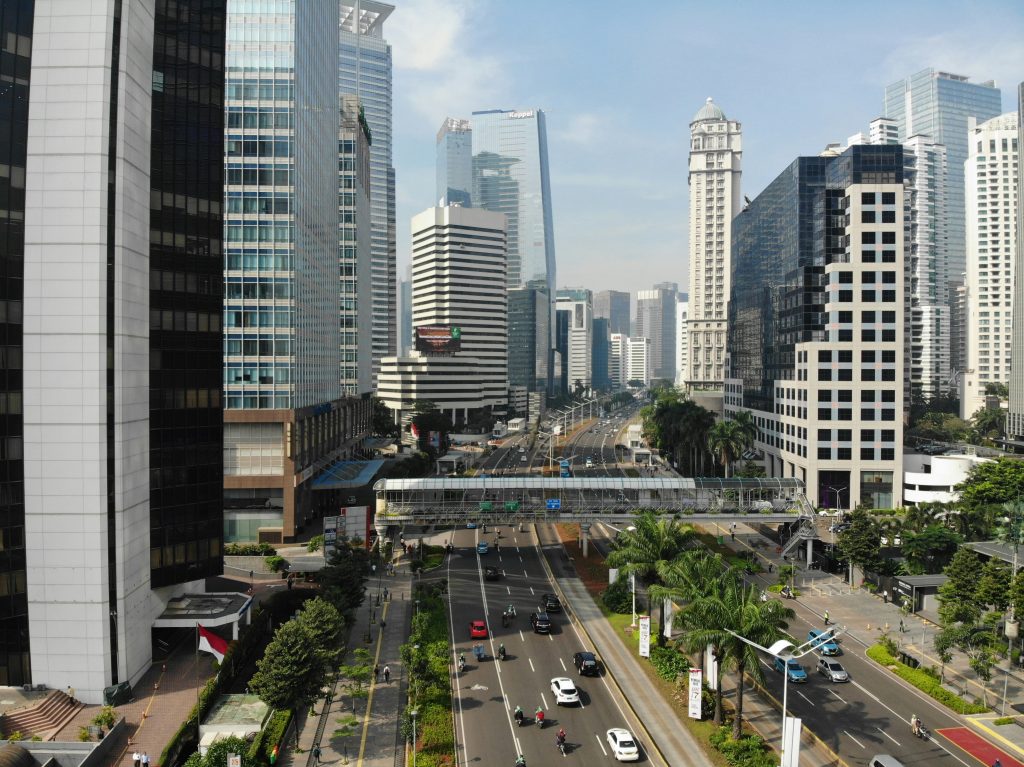
Indonesia’s coastline is, like that of Canada, one of the world’s longest. The maritime economy is therefore significant. Indonesia is resource rich in oil, gas, coal, palm oil, fisheries, forest products, and metals. It is by far the world’s largest producer of nickel, a crucial ingredient for electric batteries. 275 million, mainly young, Indonesians are counting on that strong resource base for their economic future. This makes Indonesia, with its rising middle class, one of the world’s major emerging markets. Jakarta today boasts 10 million people, a sweeping skyline of impressive skyscrapers, an extensive new Japanese designed and financed subway and a modern airport.
There is much scope for continuing growth in an increasingly connected country of 160 million YouTube users where 51 percent of the population is still unbanked. An increasing number of entrepreneurs are founding new startups that are taking on the world, notably in fintech. This shift complements a strong state-owned enterprise and growing private sector manufacturing base bolstered by foreign direct investment mainly from China, Japan, Korea, Australia, the EU and the US.
When one considers the fragile state of the world’s environment, Indonesia must be part of the equation. The country’s biodiversity is impressive, both on land in its vast rainforests and in the sea, especially among rich coral reefs. Think, for example, orangutans, Komodo dragons, giant schools of tropical fish and bountiful birdlife. But threats to nature are worrisome. As a major coal producer, the archipelago burns and exports huge quantities of dirty coal. Its vast peatlands store immense amounts of carbon, sometimes released into the atmosphere by burning prior to the cultivation of lucrative palm oil plantations. Illegal logging and deforestation abetted by corruption is costing the country. Indonesia is the third biggest plastics polluter into the world’s oceans. Densely populated Jakarta is sinking as groundwater aquifers are exhausted while the sea levels increase, making the capital vulnerable to flooding.
So how does this affect Canada? The economic stakes are significant and growing. Indonesia is one of Canada’s top markets for wheat which is transformed into noodles for the domestic and export markets. Canadian mining companies are active in the nickel, copper, and gold sectors. Canadian aircraft and flight simulators operate across the country. Manulife and Sun Life are leading financial services companies growing along with the middle class. Canadian pension funds are beginning to invest in the country’s fast-growing infrastructure. The biggest pulp and paper company in Canada, which operates mills across the country, is Indonesian owned. Another Indonesian company is developing an LNG export terminal near Vancouver.
Government-to-government relationships are also important. Canada is currently negotiating a Comprehensive Economic Partnership Agreement with Indonesia. These talks are occurring in tandem with negotiations for an ASEAN-Canada Free Tree Agreement. Canada has stationed a regional trade envoy in Jakarta where an EDC export finance and insurance office has been opened. Under Canada’s new Indo-Pacific Strategy, last year relations with ASEAN were upgraded to a Strategic Partnership with Indonesia at the heart of Canadian interests in the region. Naval visits and military training have been intensified in line with ASEAN’s security pillar. Scholarships have also been increased as part of more ASEAN socio-cultural cooperation.
Why are some concerned about the future of Indonesian democracy? Why should we not be surprised? What could the future hold?
As a major Asian Development Bank shareholder, Canada is also helping fund Indonesia’s energy transition by buying out and closing coal burning production in favour of renewables such as solar and wind power. Canadian financial support through the ADB has also bolstered the country’s geothermal base in Sumatra. Agro-forestry operations have been facilitated to help preserve the rainforest canopy for the benefit of farmers. Potash fertilizer from Saskatchewan is being applied in palm oil plantations to intensify production and avoid further deforestation. Canada is partnered with Indonesian private and public sectors and others in countering ocean plastics pollution. Working with the World Bank and others, Canada has been assisting the Indonesian government to improve governance reform in public pensions and tax collection.
Against this backdrop, on 14 February, Indonesians voted in elections at the national and sub-national levels. Since his election in 2014, Joko Widodo (known as Jokowi) has been a popular President, the first not to rise from the military or a wealthy family to win the Presidency. As the Jokowi era comes to an end, we will next analyze what the February election results mean to Indonesians and ultimately to Canadians. Why are some concerned about the future of Indonesian democracy? Why should we not be surprised? What could the future hold?
This blog is the first in a three part series by Peter MacArthur, CIPS Research Associate. Part 2 will be released on February 28th.