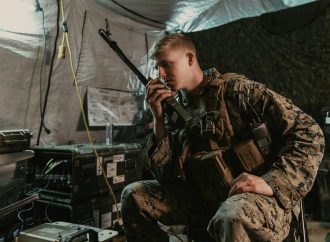
All eight Arctic states are currently expanding their military facilities, patrols, and combat training in the region. As of October 10, the Washington-based Arctic Military Activity Tracker listed 35 significant exercises and training events across the region in 2025 – triple the pace of operations in 2022.
While Canada has joined that trend, the Arctic Foreign Policy of December 2024 followed prevailing assessments that the risk of direct combat in the North American Arctic “remains low” (p. 8). As one prominent expert sees it, there is “little to no likelihood that Russia would risk a general war with the West by trying to acquire Canadian Arctic territory or resources.” Of course, cyber attacks, disinformation interference, and the like are another matter.
Most Arctic military threat scenarios do not anticipate combat breaking out over Arctic-centred disputes. More likely it would spill over from NATO/Russia hostilities in Europe. And while that too is not imminent, neither is it as remote as it once was. Indeed, Russia’s current war in Europe has spilled into the Arctic, with Ukraine’s massed drone attack on the Olenya airbase on the Kola Peninsula.
Contemporary Arctic exercises can bolster land, sea, and air combat readiness, but there is no reliable way to assess the likely human, infrastructure, and environmental devastation that actual combat in that fragile environment would wreak.
The Arctic already faces significant environmental stresses linked to global climate change and the region’s increased accessibility. Growing threats include loss of biodiversity, accumulations of toxic substances, changing wild life patterns, and, as a consequence, food insecurity and challenges to the health and general well-being of the people of the region. Increased commercial shipping further portends oil spills, operational discharges of oils and chemicals, and noise pollution, all undermining marine life and the societies that depend on it. The UK’s Conflict and Environment Observatory does offer some generalized accounts of how war would dramatically exacerbate the damage. All of which is discomfiting enough to draw some unavoidable conclusions.
First, if much needed and welcomed commercial and economic development activities are attended by seriously damaging consequences that have to be carefully managed and mitigated, we don’t need war impact assessment studies to recognize that the consequences of military combat would be exponentially more damaging, with little capacity, or intention to try, to mitigate the effects. And that grim reality leads to a second fundamental conclusion: more southerly populations should not be inflicting their conflicts and wars on the high north.
Of course, all eight Arctic states insist that beefing up military preparedness is intended to avoid, not fight, an Arctic war. That’s the familiar calculus of nuclear deterrence – the notion that it is the assiduous preparation for fighting a nuclear war that ensures that “the war that can never be won [will] never be fought”. But deterrence can fail, and if the Arctic security toolkit becomes dominated by preparations for war, the likelihood of resorting to what has been prepared is more apt to increase than decrease.
While unilateral restraint in Arctic combat preparedness is not what the present security stand-off invites, a military preparedness race that is not tempered by war prevention diplomacy across the Arctic’s security divide stands, at a minimum, to raise tensions and drive the region to reprise the quintessential security dilemma. One side’s heightened military prowess is perceived by the other as a serious threat, prompting it to in turn expand its military capacity and readiness, leading inevitably to heightened security competition that diminishes the security of both.
If diplomacy is more effective when backed by military capacity, it is equally true that military capacity intended to avoid war is more effective when backed by diplomacy. And the need for assertive, war prevention diplomacy is well understood and effectively articulated in Canada’s December 2024 Arctic Foreign Policy:
“Effective diplomacy is critical for shaping the international environment to defend and advance Canadian national interests; it is a first line of defence for Canada’s national security. Canada’s fundamental defence and security goal is to prevent and defuse potential crises before they can develop into conflict” (emphasis added).
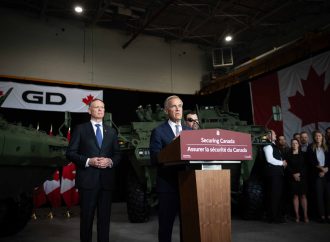
That’s about as good and succinct a formulation of the centrality of diplomacy to security and war prevention as we’re likely to find. And if that’s truly the Canadian position, this cannot be the time to yet again cut spending for Global Affairs Canada (GAC), as the recent budget (Annex 3) did, and to further downgrade Canada’s already diminished diplomatic capacity. It’s time for the opposite – to spearhead a major surge in Arctic security diplomacy.
Canada’s appointment of an Arctic Ambassador was an important move in the right direction, but Foreign Minister Anita Anand’s remarks at the time focused on the need to “safeguard our sovereignty and defend our Arctic interests” – important missions, to be sure, but neither the minister nor the Arctic foreign policy gave any further attention to diplomacy’s goal of “preventing and defusing potential crises before they can develop into conflict.” The emphasis remains on engagement with like-minded Arctic partners, not on reaching across the current Arctic divide to Russia to reduce tensions and defuse the emerging security crisis in Arctic strategic relations.
There is, of course, no guarantee that Russia has any interest in any such pan-Arctic engagement, but that’s the kind of hurdle that diplomats are routinely mobilized to clear. Prime Minister Carney seemed to understand that when he met with China’s President Xi, pointing out that “we have to talk to each other if we want to make progress and address issues.” The custodians of the Cold War also came to understand that letting their missiles do all the talking was a recipe for mutual failure, so they mobilized their diplomats and key arms control agreements were the result.
Talking (or Churchill’s “Jaw Jaw”) across divides is a tried and proven path toward détente that Arctic security planners should be embracing.