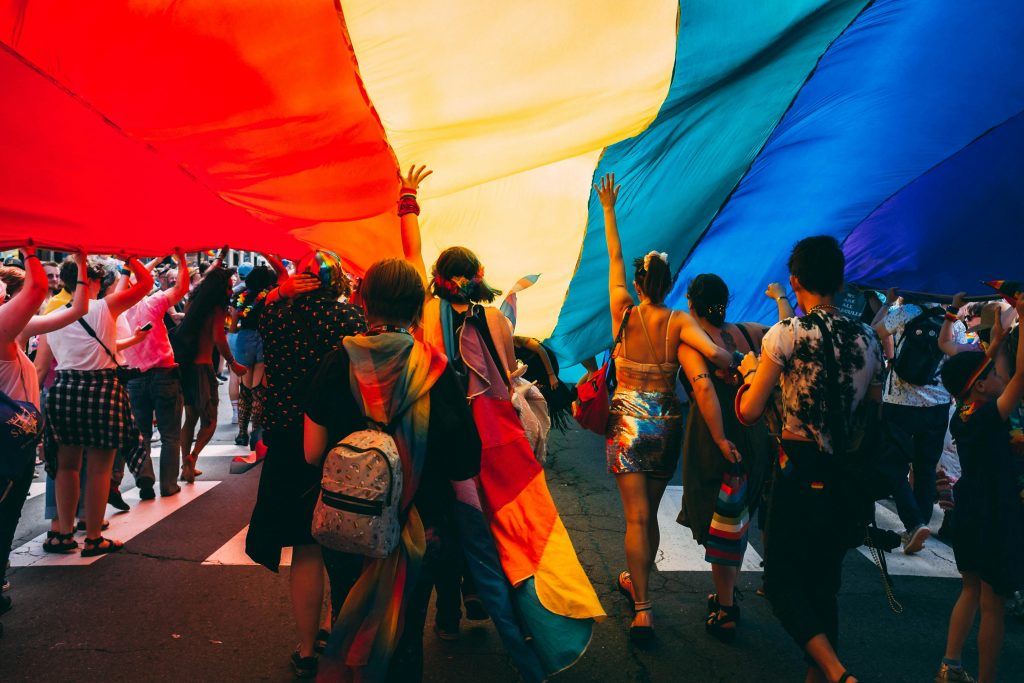
The world is turning its back on sexual and gender minorities. This Pride Month, Canada should double down on its support.
Across Africa, from Uganda to Senegal and Mali, many countries are imposing tough prison sentences for consensual same-sex relations between adults. Last week, Ghana’s parliament passed among the most far-reaching anti-LGBTQ+ legislation in the world. As a result, LGBTQ+ organizations and individuals in all of these countries have been targeted for repression and gone underground.
In Eastern Europe and the former Soviet Union, several countries are criminalizing public expressions of support for LGBTQ+ rights, including Belarus, Kazakhstan and even EU-member Bulgaria. Such laws unduly restrict freedom of expression and make advocacy virtually impossible. They are hallmarks of growing authoritarianism.
LGBTQ+ rights defenders in many countries depend on international assistance to keep up their work in increasingly hostile and repressive environments. Over the past decade, Canada has become one of the top funders in this area. In 2020, the Canadian government declared that LGBTQ+ rights were “a central pillar of its foreign policy”. Yet, how much impact can Canada expect to have when it spends less than $15 million per year on defending those rights, or only about 0.17% of Canadian foreign aid?
In recent years, LGBTQ+ organizations around the world have been devastated by other donors’ radical cuts to their international assistance to sexual and gender minorities. The U.S. has eliminated its support altogether and now actively opposes LGBTQ+ rights abroad. In the runup to the 2025 Canadian federal election, the Liberal Party platform promised to increase its aid by $2 million per year – a modest amount, but an important signal. After the election, Prime Minister Mark Carney stated that Canada would resist the global anti-LGBTQ+ backlash and continue to “stand up for [LGBTQ+] rights around the world”.
It is unclear, however, that the government intends to keep those promises. There has been no increase to date in assistance provided to LGBTQ+ organizations around the world. More broadly, human rights have been relegated to the back burner as Canada seeks to diversify its trade relationships, including with repressive regimes. Despite Carney’s endorsement of “value-based realism” at his famous Davos speech, pragmatism appears to be overriding those values. It may deliver short-term commercial benefits, but it also undermines Canada’s credibility and its ability to shape international norms over time.
And yet, defending rights has pragmatic advantages. As Jessica Stern, the former U.S. Special Envoy to Advance the Human Rights of LGBTQI+ Persons, recently argued, “There is so much to be gained from Canada stepping into this vacuum and showing what it stands for”.
Canada can remain strategic about when and where it raises LGBTQ+ rights publicly. Quiet diplomacy can often be more effective than megaphone diplomacy. At a minimum, however, the Canadian government should double its financial assistance to LGBTQ+ organizations around the world. Pride Month, which has just begun, would be a great time to announce it.
LGBTQ+ rights defenders are facing local manifestations of the global backlash daily, a task made more difficult by severely reduced resources. They need support more urgently than ever. For LGBTQ+ rights defenders on the front lines of the global backlash, an additional $15 million a year could be transformative. For Canada, it is a negligible investment that could encourage like-minded countries to follow its example. It would also show the world that the country intends to remain a serious global actor, one that is willing to back its stated priorities with resources.
This blog was originally published in the Hill Times, on June 10, 2026, p. 23. It is reproduced with permission.