In 1988, a young British journalist named Chris Gunness found a note beneath his pillow in Myanmar. Activists preparing for a nationwide uprising had recognized that he could get their message beyond the country’s borders. What might have appeared to be a chance encounter was the product of careful underground organizing, undertaken by people who risked imprisonment simply to make the outside world aware of what was happening.
I think about that story when people describe resistance as a sudden eruption of public anger. What becomes visible on the streets usually rests on relationships, courage, and quiet preparation that nobody sees.
Since 2019, Insight Myanmar Podcast has documented the experiences of people confronting military rule. Across more than 600 conversations, we have heard from organizers, artists, journalists, Buddhist monks, humanitarian workers, and people who never expected to become revolutionaries. Recently, I brought their voices together in an episode and multimedia presentation called Creative Resistance. Four recurring dimensions emerged: coming together, creative expression, moral alignment, and conflict.
The starting point is a question with relevance far beyond Myanmar: What happens when the institutions people trust suddenly fail?
Myanmar’s February 2021 military coup did not come from nowhere. It followed decades of military domination, ethnic conflict, uneven political openings, and struggles over whose rights counted. But the coup exposed how quickly an apparent democratic opening can close, and how much harder it is to restore trust than to destroy it. Elections alone cannot rebuild the relationships and civic habits on which democracy depends.
The first dimension, Coming Together, concerns precisely those relationships. Bobo, a longtime activist, described years of underground work around the Saffron Revolution. When the military later claimed it was opening political space, he and his colleagues emerged from hiding to test that claim, fully aware of the risks. Nway’s story offers another perspective. After his father died in prison under military rule, his mother, left to raise four sons, decided that one would dedicate his life to the democracy movement while the others would support him. His decades of largely unrecognized organizing reveal how resistance is sustained by families and communities whose sacrifices rarely appear in the historical record.
The second dimension, Creative Expression, is the most immediately recognizable, though perhaps the most misunderstood. In Myanmar, art is not decoration alongside revolution. It changes how people understand power and what they believe they can do about it.
The artist known as Bart Was Not Here uses absurdity and satire to puncture the military’s cultivated image of invincibility. Painter Chuu Wai challenges the restrictions placed on women’s bodies and voices, reminding us that resisting dictatorship cannot mean leaving other forms of domination intact. Through the Milk Tea Alliance, Evy Zulyani reminds us how young activists have used humor, memes, and performance to build connections across borders. And violinist Phoe San has used music both to mourn those killed in protests and to teach young people displaced by war.
These efforts matter politically because repression does more than silence criticism. It isolates people, narrows imagination, and tries to define what can be said, remembered, or hoped for. Creative expression interrupts that process.
A third dimension, Moral Alignment, is particularly evident among Myanmar’s Buddhist monastics. U Gambira helped organize the 2007 Saffron Revolution and paid heavily for his defiance. Ashin Kovida has challenged the manipulation of Buddhist identity to promote fear and hostility toward Muslims. Their experiences expose a problem that any democratic movement must confront: political resistance loses its moral force if it reproduces the exclusions it claims to oppose.
The fourth dimension is Conflict, where these questions become painfully concrete. Pandora was once a tour guide; after the coup she became a protest leader and eventually a sniper. Others, including the musician Neo, moved toward armed resistance after witnessing the military’s attacks on peaceful demonstrators. Ei, after spending time within the resistance, turned to caring for children whose lives had been consumed by war. Their stories challenge easy binaries between heroism and violence, necessity and trauma. Even when resistance is justified, its human costs endure.
This is why international responses to Myanmar should not focus exclusively on territory, weapons, diplomacy, or the personalities at the top. They must also recognize the less visible infrastructure of resilience: community networks, independent media, education, cultural work, interfaith solidarity, and locally directed humanitarian assistance. These are not peripheral to a democratic future. They help make one possible.
For audiences in countries experiencing their own democratic anxieties, Myanmar offers neither a neat analogy nor a ready-made blueprint. Its history is distinct, and the people living it are not illustrations for someone else’s political argument. But their experiences reveal how quickly public institutions can collapse and how slowly the foundations of trust must be rebuilt.
Neo, confronting the moral danger of armed struggle, expressed a hope that has stayed with me: “I try not to be the one I hate.” Perhaps that is the deepest meaning of creative resistance: not simply opposing a regime, but struggling to preserve the relationships, imagination, and humanity needed to build something better.
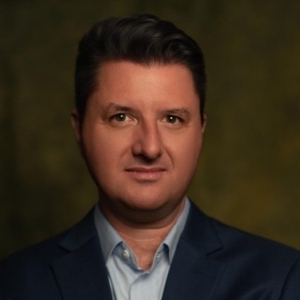
Joah McGee is the founder and host of the Insight Myanmar Podcast and founder of Better Burma. He lived and worked in Burma for nearly two decades, and since launching Insight Myanmar in 2019 has conducted long-form interviews documenting the country’s political, social, cultural and spiritual landscape. On November 6, 2026 he gave a talk at CIPS titled “Creative Resistance: Storytelling and Solidarity in Burma“.