If you read material from Alto – the Crown Corporation charged with developing a high-speed rail line connecting Toronto and Quebec City – there are some useful lessons from abroad with respect to building this type of transport infrastructure: Namely, building high-speed rail will “not only alleviate congestion, it will also open new markets and help grow the economy.”
While there is mixed evidence with respect to alleviating congestion, there is strong evidence to corroborate the claim that high-speed rail supports new forms of economic activity. Of course, that does not mean the project bears no costs. A recent panel of experts on international high-speed rail gave a more nuanced picture of the potential costs, benefits, risks and rewards of developing this type of transport megaproject, offering some lessons for Canada.
Learning from International Exemplars
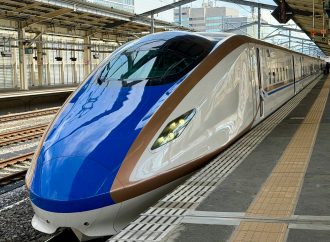
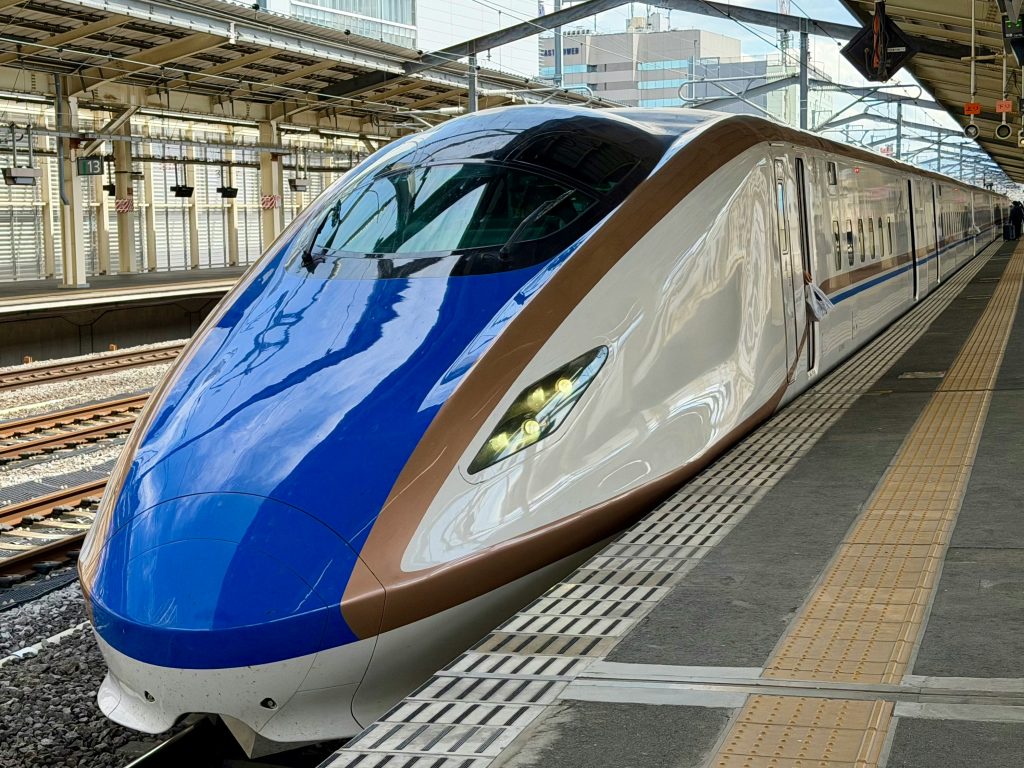
Japan was the first country in the world to have a bona fide high-speed train line. As Professor Jessamyn Abel of Pennsylvania State University explained on the panel, this was partially funded by a hefty loan from the World Bank. Importantly, the global acclaim that came along with having the world’s fastest passenger train was central to the first line’s success and further development of the nation’s high-speed rail system. Japan’s bullet train was profitable, and helped partially cover financial losses incurred within the nation’s conventional rail system. For Canada, this would seem to suggest that Alto could help raise finances to support VIA Rail, but it also hints that a nationally-compelling narrative about this project may be necessary to bolster the political will to get it built in the first place.
Spain has Europe’s largest high-speed rail network. Yet as Professor Natalia Buier of Complutense University of Madrid explained, while high-speed rail is widely used in that country, it has by no means challenged the dominant vehicle-centric mobility paradigm. So long as private transport and mobility are marketed as commodities, Dr. Buier adds, there is a financial incentive for corporate actors to increase it, and capitalist governments to support that economic activity. In the case of Canada, it seems likely that vehicle manufacturers in Ontario, and Canada’s domestic airlines and shorthaul aircraft producers (along with the various governments that seek to bolster such industries) would continue to push for thriving private vehicle and shorthaul aviation markets, especially if high-speed rail is seen as a threat to their bottom line.
In the UK, the HS2 project aiming to link Birmingham to the existing HS1 line has faltered in recent years. Fundamentally, noted Dr. Geoffrey Dudley of Oxford University, this was due to the government undermining a prior narrative about HS2 which had been framed as a national legacy project: “Politically, once that’s undermined, it becomes much harder to sustain the project over time in a country like the UK.” Dr. Dudley concludes that for a project to succeed, it is crucial to build a wide coalition of support which will back the project for the long run.
Perhaps the most notorious example of high-speed rail failure (and worryingly, perhaps the most politically similar context to the Canadian case) is that of the United States – particularly within California. Dr. Andy Goetz of the University of Denver noted how the California high-speed rail project budget and construction timeline have spiraled out of control. Fundamentally, support for high-speed rail in the US has been fragmented between left progressives and proponents of global neoliberalism, while opposition has been centered within classic conservatism and right-wing populism. This hints at a major political risk to high-speed rail in Canada, if – like in the US – the very notion of Alto becomes subsumed within existing ideological and political debates (and one might add regional grievances) in Canada.
From Costs and Benefits to Winners to Losers
There are of course several other cases to learn from. There are presently more than twenty countries boasting high-speed rail networks, though some have political economic conditions or transport cultures which differ too much from the Canadian context to be of much relevance here.
Overall, it seems likely, based on the relevant cases abroad, that building high-speed rail in Canada would create new economic activity and increase labour productivity. It would likely create new business opportunities, especially for the tourism sector, for regional agglomeration, and for the housing market in some areas.
Yet building high-speed rail also seems likely to introduce costs, and some stakeholders stand to lose. If costs are accrued by the taxpayer and not recompensed, it may result in government spending being reduced elsewhere. There is also a potential political cost, with a growing movement of farmers and landowners who see this project as a threat to their existence. Fundamentally, a bullet train on its own is not a silver bullet solution for an unsustainable, unaffordable, and inefficient intercity transport system; such structural challenges require system-wide solutions.
Should Alto proceed as planners intend it to, successfully bringing out millions of passengers and shifting them from personal vehicles and airplanes, future generations of Canadians may look back on this moment as a time when decision-makers made difficult – but nevertheless wise – choices. If, however, the project experiences the fate of many other transport megaprojects abroad, a new high-speed train line could become a political grenade that divides Canadians and erodes confidence in governments, without changing much in the nation’s mobility relations.