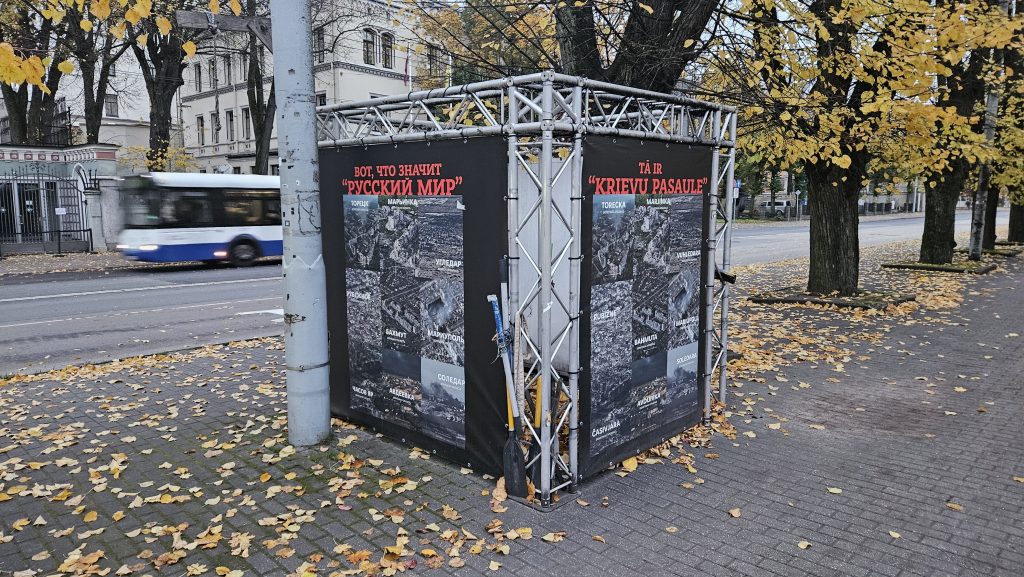
Russia’s aggrandizement in Ukraine remains an abject strategic blunder. A war meant to halt NATO’s expansion has instead seen the alliance grow beyond most expectations. And rather than gain more territory, Russian forces now struggle to hold what they have occupied – including in the rubble-strewn Donbas region, which Russian President Vladimir Putin wants more than any other.
Waging the largest war of the 21st century has also inflicted severe economic pain on Russia. Moscow spends more than US$12 billion a month on the invasion and is looking to raise an additional US$20 billion through new taxes in 2027. Ukraine’s deep strikes on oil refineries, weapons factories and other targets drive the costs higher still.
Then there is the staggering casualty toll. Recently leaked data from Russia’s state statistics agency, Rosstat, indicate that 450,000 Russians have been killed since the full-scale invasion began in 2022. In fact, this figure represents perhaps a third of actual losses – killed and wounded. Per Ukrainian intelligence, Russia’s losses last month rose to 2,500 soldiers per day – the equivalent of the current Canadian Armed Forces deployment to Latvia.
Still, the Kremlin keeps pushing. For Putin, Ukraine’s sovereignty, independence and territorial integrity remain odious – and part of an existential struggle against the West. More importantly, the war now fuels Russia’s economy, labour market and parts of its political system, making it much harder for Putin or any successor to end it.
A War of Survival
Unlike Russia’s conflict with the West, Ukraine’s struggle is genuinely existential. In occupied territories, Moscow has imposed Russian legislation and administration, forcing residents into Russian citizenship and military service. It has also suppressed Ukrainian language and culture, turning schools into instruments of war propaganda and forced assimilation.
This explains why Ukrainians keep fighting back, day and night. Although more Ukrainian civilians were killed last month than in any other month since Russia’s full-scale invasion began, and although the Ukrainian economy is starting to contract, neither the government nor the people show any sign of giving up.
Yet resistance alone is not enough. Ukraine’s survival also depends on what the Ukrainian writer Artem Chapeye calls “the active solidarity of the better parts of the world.”
Chapeye is referring to the liberal-democratic West – broadly, NATO member states and their long-standing out-of-area partners, such as Japan. Beyond imposing sanctions on Russia, the West has given Ukraine weapons, money and political support on a scale that would have been unimaginable before 2022.
In Solidarity
Much of this assistance is officially framed as an act of solidarity: Ukraine is a democracy fighting an authoritarian aggressor, so its survival matters to Western democracies. Earlier this year, when Prime Minister Mark Carney and Ukrainian President Volodymyr Zelensky signed the “Canada-Ukraine declaration for a 100-year partnership,” they articulated this message clearly: “Canada stands in solidarity with Ukraine,” against Russia’s “direct attack on freedom and democracy.”
A recent study of the politics of democratic solidarity, which I co-authored, explains that democracies do not automatically defend one another.
In Ukraine’s case, its strategic position as a “buffer” also matters – a concept Ukrainians rightly abhor. Geography thus plays a crucial role: countries closer to Russia, particularly in Northern and Eastern Europe, where memories of past wars and occupation remain deeply rooted, have shown stronger solidarity.
Time is an equally crucial factor. In the first months of the full-scale invasion, Western military support was generally strong, albeit shaped by governments’ capacity to act. Three years later, it was increasingly conditioned by domestic politics. Simply put, the more political actors politicize the war, the less certain military aid becomes.
These findings are both anticipated and predictable. Many, if not most, democratic governments can authorize a one-off weapons package for a cause that is both morally compelling and strategically advantageous.
Sustaining that support over several years, however, demands far more: a shared conviction among both governors and the governed that someone else’s freedom and security are inseparable from their own, even as the political, economic and social costs of solidarity mount.
Or, as one anonymous interviewee put it to me: “I hope we will love Ukrainians in peace tomorrow, as we love them in war today.”
What Next
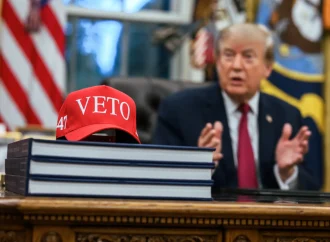
Democracy is messy and complicated, and the United States is a case in point. Although the opposition now holds comfortable majorities in both houses of Congress, President Donald Trump retains control over foreign policy and national security for two more years.
This means his administration will continue to insist that great-power solidarity takes precedence over the liberal internationalist assumptions that undergird Western support for Ukraine.
Trump’s interest in a “big, beautiful deal” with Russia, and possibly China as well, fits this geopolitical vision – its goal is to sideline not only Ukraine but also its supporters in Europe. This explains the constant bullying and spiteful pressure tactics – questioning Ukraine’s democratic credentials or withholding satellite intelligence from Ukraine’s armed forces, for example.
Europe is no stranger to anti-Ukraine politics, either. Earlier this month, the prime ministers of Slovakia, the Czech Republic, Hungary and Bulgaria – Robert Fico, Andrej Babiš, Péter Magyar and Rumen Radev, respectively – all objected to German Chancellor Friedrich Merz’s attempt to make approval of the European Union’s next budget conditional on agreeing to help keep Ukraine in the fight. Belgian Prime Minister Bart De Wever has raised a different kind of objection, this time over the idea of using frozen Russian assets to finance Kyiv’s needs. More such politics can be expected in 2027, particularly given the trajectory of France’s presidential race.
As with Trump’s foreign policy, Europe’s political divisions put Putin in a position to achieve through diplomacy what his regime has struggled to achieve militarily. However, the danger for Ukraine is not simply that more “sovereigntist” leaders, parties and movements will turn against its cause.
It is that Trump’s – or Trump-style – big-ticket “peace deal” gains more political traction than the series of ongoing institutional mechanisms – limited recourse loans, exemptions, side payments and strategic patience – through which Western support for Ukraine has worked thus far.
Therein lies a hypothesis that should be tested next: rather than grand declarations, it is these mechanisms that ultimately hold the power to make or break the formation of solidarity – among democracies or otherwise.