When historians look back on the 2020s, they may conclude that the Strait of Hormuz crisis was not merely an energy shock. Rather, it was a strategic inflexion point that accelerated the reorganization of global trade, energy flows, and international partnerships. Just as the Ukraine war transformed Europe’s energy architecture, the Hormuz crisis is forcing countries across Asia and beyond to rethink their assumptions about maritime security, supply chains, and economic resilience.
Yet to understand the significance of this moment, we must look beyond contemporary headlines. The concerns raised by Hormuz today have deep historical roots, particularly in India’s strategic thinking. Archival records reveal that New Delhi has been grappling with these questions for more than half a century. Those historical lessons now intersect with a new geopolitical reality: the emergence of a stronger India–Canada partnership within the Indo-Pacific.
A Secret Report and a Forgotten Lesson
One of the most fascinating archival discoveries discussed in this research concerns a 1974 interview given by Mohammad Reza Shah Pahlavi, the Shahanshah of Iran. The interview itself was public. Yet Indian diplomatic missions circulated confidential assessments examining its implications.
Why would a public interview generate secret reporting?
The answer was simple: Indian policymakers were worried about their country’s dependence on oil supplies passing through the Strait of Hormuz. Even in the 1970s, New Delhi understood that control over strategic waterways could influence economic security and national development. What appears obvious today was already evident to Indian officials decades ago.
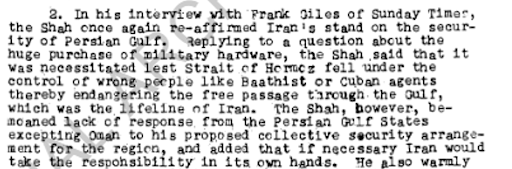
Source: Consulate of India, Zahidan, Iran, File No. Zeh/101/1/73, May 9, 1974, National Archives of India
At that time, the Persian Gulf occupied a position in global commerce similar to what the Indo-Pacific represents today. It was the principal arena through which critical energy and commercial flows moved. As a result, developments in the Gulf had consequences far beyond the region itself.
The archival evidence shows that once India recognized Hormuz as a strategic chokepoint, it responded pragmatically. New Delhi initiated strategic conversations with the Soviet Union, the United States, and the United Kingdom while simultaneously diversifying its oil imports. Rather than placing all its hopes in a single solution, India pursued resilience through diversification and diplomacy.
That historical precedent remains highly relevant today.
Hormuz and the Reordering of Global Energy Flows
The contemporary Hormuz crisis has reinforced an uncomfortable reality: globalization did not eliminate geography. India’s External Affairs Minister S. Jaishankar captured this reality in June 2026 when he observed that energy flows after the crisis are likely to be fundamentally different from those that existed before it. He suggested that the consequences for Asia could resemble the transformation of European energy markets following the Ukraine war.
The implications extend far beyond India. Every major economy connected to global trade depends, directly or indirectly, upon secure maritime routes. When uncertainty emerges in Hormuz, governments begin examining alternative routes, diversified suppliers, and new partnerships. This is precisely why efforts to reduce vulnerabilities associated with Hormuz have gained momentum over the past two decades. Global initiatives are mainly focusing on long-term solutions designed to bypass or reduce dependence on vulnerable chokepoints, demonstrating that strategic planners have anticipated these risks for years.
The Strait of Malacca: The World’s Invisible Supply Artery
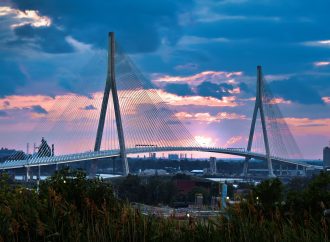
If Hormuz is the world’s energy chokepoint, the Strait of Malacca is arguably its most important commercial artery. Connecting the Indian and Pacific Oceans, Malacca serves as the shortest maritime route between Europe, the Middle East, Africa, and East Asia. Approximately US$3.5 trillion worth of trade passes through the strait annually, making it one of the most consequential waterways in the global economy.
Yet much of the world’s dependence on Malacca remains invisible. A normative look and examination of archival and declassified materials reveal that concerns about Malacca’s vulnerability have existed for decades. WikiLeaks documents and historical records reference worries about piracy, terrorist threats, kidnappings of sailors, sovereignty disputes, and the movement of military vessels through the strait. These issues demonstrate that maritime security encompasses far more than conventional warfare.
Even more striking is a confidential 1963 communication from U.S. Ambassador John Kenneth Galbraith. Writing about naval movements through Malacca, Galbraith highlighted the sensitivity surrounding sovereignty, notification procedures, and great-power activity in the region. More than sixty years later, those same issues continue to shape Indo-Pacific security discussions.
The lesson is clear: supply chains are not merely economic systems. They are strategic systems.
Why the Indo-Pacific Has Become the Centre of Gravity
The growing focus on the Indo-Pacific is therefore neither accidental nor fashionable. It reflects a recognition that the future of global prosperity depends upon the security of interconnected maritime routes stretching from the Persian Gulf to East Asia and across the Pacific. This explains the overwhelming gravitational shift toward the Indo-Pacific. Indeed, the central strategic question today is whether the Indo-Pacific itself has become hostage to the security of critical maritime straits.
The answer increasingly appears to be yes.
India and Canada: From Historical Distance to Strategic Convergence
It is within this broader context that India–Canada relations acquire new significance. Historically, three themes defined the bilateral relationship: development cooperation through the Colombo Plan, civil nuclear cooperation, and immigration. For decades, Canada viewed India primarily through the lens of migration, while India often saw Canada as a destination for educational and economic opportunities. Both countries inherited a limited understanding of each other’s broader strategic importance.
Today, that is changing.
A mere look into recent developments and economic indices reiterates the fact that Canada has adopted an ambitious trade diversification strategy aimed at reducing dependence on the United States while significantly expanding commercial engagement with India. Ottawa seeks to increase two-way trade with India from approximately US$10.9 billion in 2025 to US$70 billion by 2030. Simultaneously, both governments committed themselves to concluding a Comprehensive Economic Partnership Agreement (CEPA).
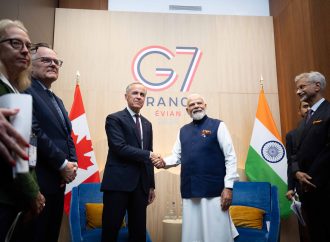
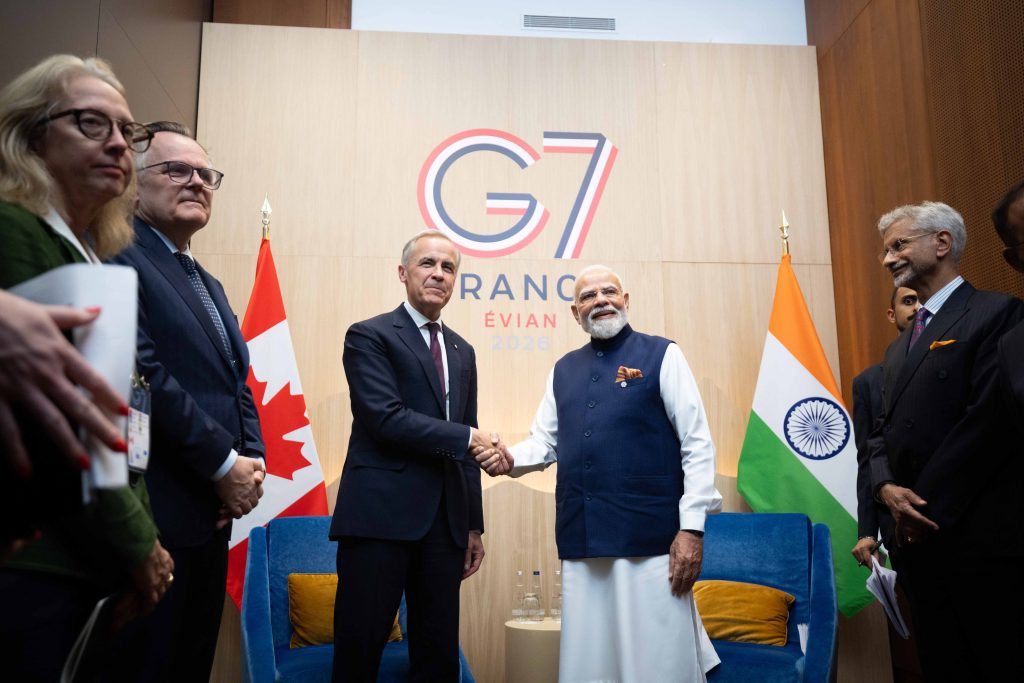
The clearest manifestation of this shift came during Prime Minister Mark Carney’s visit to India in March 2026. The joint declaration issued by Prime Ministers Carney and Modi effectively repositioned the bilateral relationship within an Indo-Pacific framework, as their joint statement mentions the word ‘Indo-Pacific’ 11 times. Throughout the declaration, the Indo-Pacific appears repeatedly as the organizing principle connecting energy, trade, critical minerals, technology, defence, education, maritime security, and regional cooperation.
The agreement outlined a remarkably comprehensive agenda. It included a Strategic Energy Partnership, expanded cooperation in LNG and uranium supplies, critical minerals collaboration, renewable energy initiatives, academic and talent exchanges, defence dialogue mechanisms, maritime security cooperation, and supply-chain resilience initiatives. Many of these areas were explicitly linked to building a free, open, inclusive, and resilient Indo-Pacific.
Most importantly, the declaration recognized a growing convergence between India’s vision for the Indian Ocean Region and Canada’s Indo-Pacific Strategy. Both governments acknowledged that future prosperity depends upon secure maritime connectivity, resilient supply chains, sustainable development, and cooperation across the Indo-Pacific region.
Understanding, Adapting, and Innovating
The Strait of Hormuz crisis, the vulnerabilities of the Strait of Malacca, and the emergence of a renewed India–Canada partnership are not separate stories. They are chapters of the same story. A world shaped by maritime chokepoints requires new forms of cooperation. It is easily discernible that the contemporary era is mainly marked by a global pandemic, the return of major war to Europe after World War II, and an unprecedented concern about the possible disruption of strategic waterways. Governments are increasingly conducting simulations, reassessing risks, and exploring unconventional solutions to strengthen resilience.
The recommended response is deceptively simple: understand, adapt, and innovate. For India and Canada, these principles offer a roadmap for the future. The Indo-Pacific is no longer merely a geographic concept. It is the strategic space where energy security, economic growth, supply-chain resilience, and geopolitical stability increasingly converge.
The world after the Strait of Hormuz crisis will indeed be different. The countries that recognize this transformation early—and build resilient partnerships accordingly—will be best positioned to shape the emerging international order. The growing India–Canada strategic compact suggests that both nations intend to be among them.
Saroj Kumar Rath is a distinguished scholar, an assistant professor at the University of Delhi, and a leading strategic expert in the field of international studies on Indian geopolitics and international relations. On September 17, 2026 he gave a presentation at CIPS titled “The World Won’t Be the Same After the Strait of Hormuz Crisis: The Strait of Malacca and India–Canada in the Indo-Pacific“.