By Myka Burke, Torsten Geißler & Jan Claudius Völkel
Canada and Germany celebrate the 75th anniversary of their diplomatic relations this year. A 2-day symposium at the University of Ottawa’s Centre for International Policy Studies (CIPS) highlighted certain milestones in this joint history. Practitioners and academics discussed events from the past, the present and the future. One of the core messages of the symposium was that both countries have found their way to each other while coming into their own.
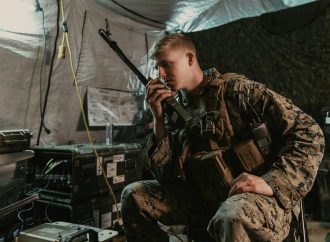
When Canada and (West) Germany accredited their ambassadors in Ottawa and Bonn in 1951, both were looking for their new place in world politics. Six years after the terror regime of the National Socialists had come to an end, the Federal Republic of Germany strove for postwar diplomatic recognition and Cold War alliance-building. Canada sought to strengthen its global relevance in an effort to emancipate from her allies – France, the United Kingdom and the United States of America. It was under this pretext that the Canadian government decided to station troops in West Germany to help defend it against the potential threat of the Soviet Union – merely six years after Canadian soldiers had bravely contributed to the liberation of Germany and the entire European continent from the Nazis. In doing so, Canada helped West Germany move from defeated enemy to democratic partner and North Atlantic Treaty Organization (NATO) ally, and its military presence in West Germany became one of Canada’s most important and enduring elements of the bilateral relationship, lasting from 1951 to 1993.
The 1970s marked a maturation of the relationship. Canada’s “Third Option” policy and its search for greater diversification beyond the United States gave new importance to Europe, and especially to West Germany. Agreements in science, technology, culture, and economic cooperation helped broaden the relationship beyond defence and immigration. The 1975 Helsinki Process also brought the German Democratic Republic (GDR) into the picture, which eventually opened its own Embassy in Ottawa in 1988. The mission closed again in September 1990, just before German re-unification — an illustrative example of how rapidly the political landscape shifted at the end of the Cold War. Notably, Prime Minister Pierre Trudeau, was the first head of a NATO government to pay an official visit to East Berlin in 1984.
Canada played a meaningful role in German re-unification by hosting the kick-off meeting of the “2+4 negotiations” in Ottawa in February 1990. From the beginning, Prime Minister Brian Mulroney strongly backed German unity and continuously helped through practical post-reunification cooperation, including environmental remediation in eastern Germany where Canada became central in cleaning up numerous hazardous legacies, among them most prominently the leftovers of the “SDAG Wismut”, the GDR’s leading uranium mining company.
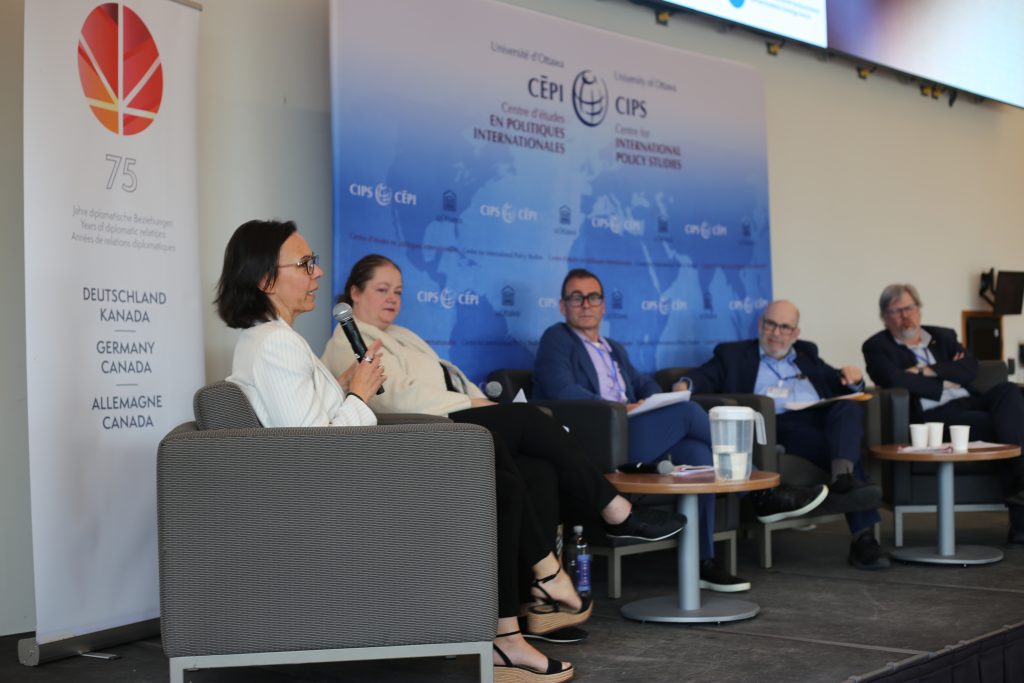
Today, amid significant global changes and growing challenges to the liberal world order, a central question surfaced repeatedly during the symposium: How should Canada and Germany, as democratic middle powers, position themselves in a world characterized by geopolitical uncertainty, technological disruption, economic competition, and growing pressure on democratic institutions? In a high-level dialogue, MP Yasir Naqvi and Bundestag member Sebastian Roloff described an international environment that differs markedly from the one that shaped much of the post-war era. Long-standing assumptions about alliances, trade, security, and geopolitical stability are being reconsidered across the democratic world. In this context, Canada and Germany were presented as countries with significant shared interests and a growing incentive to work more closely together. As the following conversations suggested, Canada and Germany are increasingly confronting the same strategic realities. Both countries are adapting to a changing transatlantic environment, reassessing long-standing assumptions about security and economic integration, strengthening democratic resilience, and seeking ways to remain innovative and competitive while preserving open societies.
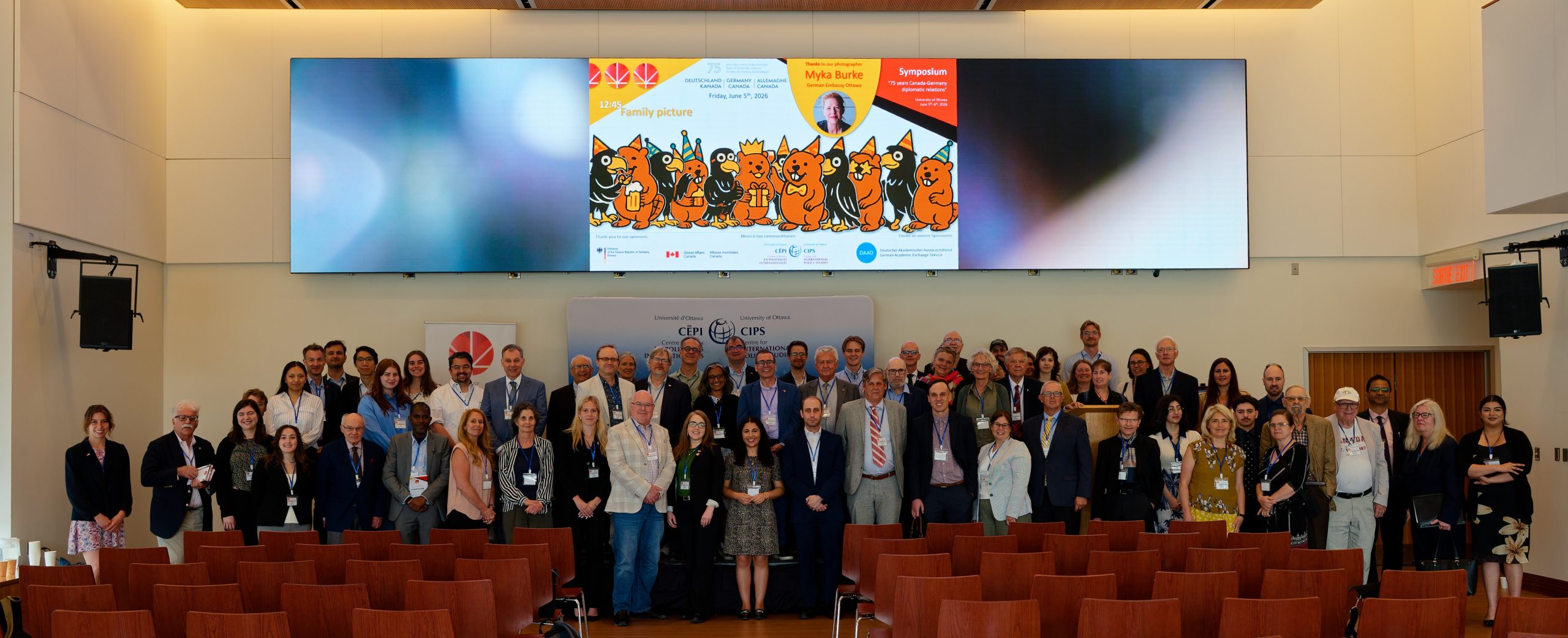
‘Family photo’ taken on June 5, 2026.
Several symposium participants identified this as entering a new phase. Earlier decades were characterized by cooperation within established transatlantic structures. Today, greater emphasis is being placed on direct partnerships among countries that share democratic values, economic interests, and common strategic challenges. Amidst rising political polarization, pressure on democratic institutions, changing media environments, foreign interference, and the influence of digital platforms on public discourse, democratic systems still rely on public trust, civic engagement, and institutional legitimacy, all of which require continual investment and renewal. Canada and Germany need to find ways to strengthen and redefine democratic resilience as a strategic issue: the ability of societies to maintain trust, sustain public debate, and resist manipulation increasingly influences national security, economic performance, and international credibility.
Here, economic policy and security policy are becoming increasingly interconnected. Supply chains, critical infrastructure, industrial capacity, critical minerals, energy systems, and technological development now carry strategic implications alongside their economic value. Existing frameworks such as the Comprehensive Economic and Trade Agreement (CETA) provide a strong foundation for growing economic relations, while newer forms of cooperation are emerging in areas such as defence procurement, clean technologies, energy security, and advanced technologies. Jointly, Canada and Germany can enhance their strategic autonomy, and eventually their national resilience, not least in the area of artificial intelligence where middle powers retain significant influence through research excellence, regulatory expertise, advanced industrial sectors, and international partnerships. Given the transformative power of this emerging technology, a successful cooperation in democratic and ethical AI governance will be essential for open societies to remain innovative, prosperous, and technologically advanced while preserving democratic values and public trust.
In essence, Canada and Germany are confronting similar strategic questions at the same moment to ensure international security, democratic resilience, economic competitiveness, technological change, environmental sustainability and institutional trust as a foundation for the future of democratic societies. Partnerships built on long-term relationships, shared interests, and mutual confidence are crucial here, not only between governments and business circles, but in particular between people and their often overlooked “everyday diplomacy”. Seventy-five years of diplomatic relations provide a substantial foundation. This foundation may become even more important as both countries navigate a rapidly changing international environment together.
Myka Burke is a Desk Officer in the Culture and Communications Department of the Embassy of the Federal Republic of Germany in Ottawa, Canada and a doctoral researcher at the Herder Institute of the University of Leipzig. Dr. Torsten Geißler is a Ministry of Research, Technology and Space Seconded Counsellor for Science and Technology at the Embassy of the Federal Republic of Germany in Ottawa, Canada. Dr. Jan Claudius Völkel is DAAD Seconded Professor at the University of Ottawa, Faculty of Social Sciences.