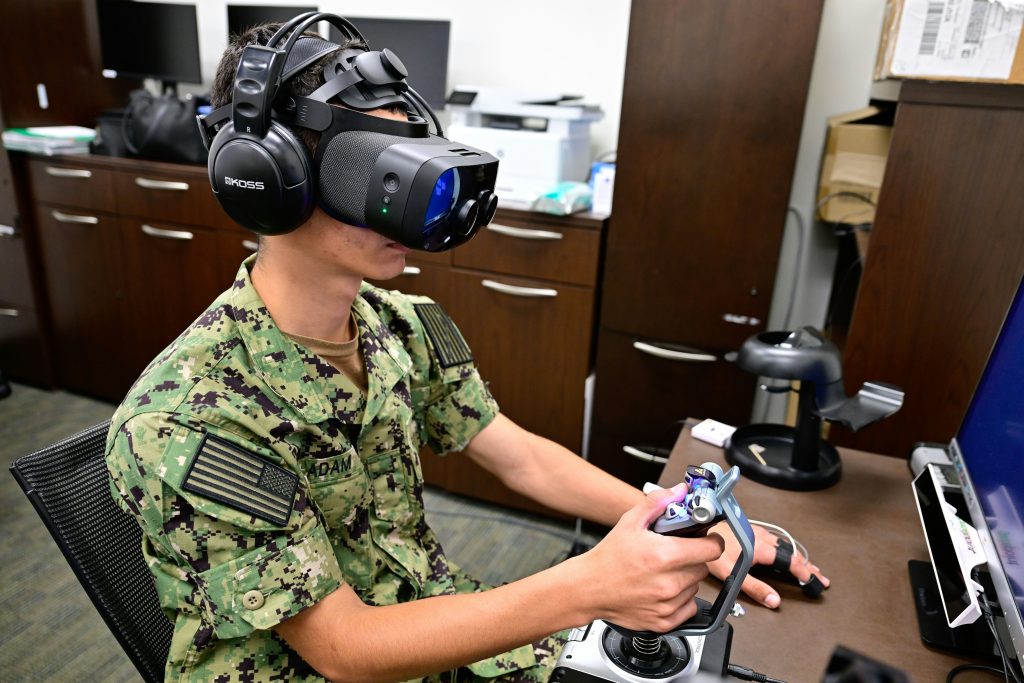
Canada is accelerating acquisition of military robotics and artificial intelligence (AI) enabled systems. Speaking to robotics entrepreneurs in Toronto this September, Lt.-Gen. Darcy Molstad, commander of Canadian Joint Forces Command, noted that the Canadian Armed Forces will buy more low-cost autonomous systems and told industry to expect a steady stream of requests for proposals (RFPs) over the next five years. Recent RFPs gave firms five days to respond the statutory minimum. Molstad stressed that the accelerated acquisition will be done responsibly, “with the right policies and checks in play.” How will those safeguards shape what Canada buys and how its forces use it?
Much depends on the control Canada retains after a purchase. Private companies largely own the infrastructure on which military AI depends. Canada relies on suppliers and allies for software updates, technical support and continued access to systems. In coalition operations, allies may also apply different standards to the systems they bring. When partners disagree about what counts as evidence of a problem, warnings about a malfunction can get lost in the cacophony.
As Michael Horowitz and Lauren Kahn argue, middle powers and countries of the Global South can sustain international cooperation on military AI even as its development outpaces diplomacy. Canada could start by working with partners to agree on what evidence suppliers must provide and to test whether military personnel can challenge AI recommendations under pressure. The results would give these countries a basis for setting common purchasing requirements and proposing international safeguards.
Make procurement a safeguard
Canada’s allies are already confronting questions of control. In October, Reuters reported that Palantir had sought to reassure European member states that Maven, the AI system used by NATO’s military headquarters to process battlefield data, had no “kill switch.” The company said that neither it nor the U.S. government could switch off the platform. For Canada, the question runs the other way. Would it be possible for the Canadian government to cease using an information-sharing tool if it determined it to be unreliable, while still having its partners depend on it?
Procurement gives Canada an immediate place to act. A February 2026 SIPRI study, itself supported by a Department of Defence grant, argues that purchasing processes can translate responsible-AI commitments into practice, provided that states retain an independent capacity to assess supplier claims. For systems that receive continuing updates, whether through real-time learning or manual in-field updates, evaluation must also continue beyond the initial purchase.
Contracts should give officials access to test results and incident reports, require suppliers to disclose significant changes and specify when those changes trigger retesting. They should also provide for continuity of support. Canada needs people with the technical expertise to investigate failures and judge whether an updated system remains suitable for its approved use. Agreeing on these requirements with partners would give suppliers a consistent set of expectations and allies a common basis for raising concerns.
Test the conditions for human judgment
The Canadian defence AI strategy already requires traceability, accountability, and protective measures in the system’s lifecycle. Accountability remains with the people making decisions. Yet a human signature offers little protection if the person signing has neither the time to check a recommendation nor the authority to challenge it.
A study of West Point cadets illustrates how Canada might examine that problem. Participants identified aircraft, received advice attributed to an algorithm or a human analyst, and could revise their answers. The cadets showed better judgment than a civilian comparison group about when to trust algorithmic advice. Would that judgment hold when serving personnel use their own systems under time pressure and have to raise a concern with a superior?
Canadian military exercises could introduce flawed recommendations and examine what happens next. Can personnel trace a recommendation to its source or find evidence that contradicts it? When someone flags a problem, does the intervention change the decision? If personnel repeatedly accept flawed advice, evaluators should examine the interface, the time available and how commanders respond when their assessments are questioned.
Turn domestic practice into international influence
Through the Responsible AI in the Military Domain (REAIM) process, Canada could work with the Netherlands, the Republic of Korea and other partners to develop common tests for military decision-support systems. Participants could use the same unclassified scenario to compare how personnel respond to conflicting information or a decline in the reliability of a system’s recommendations. Such research could lead to a targeted Canadian contribution to international efforts to better grasp human judgment and control over military AI systems. The precedent exists. The AI Safety Institute in Canada is already a part of international tests in evaluating the methodologies of other countries.
Even a well-tested system leaves room for miscalculation. One country might deploy troops in response to a flawed AI-assisted assessment. Another might interpret that deployment as preparation for an attack. Governments still need regulatory frameworks as well as channels to exchange information, build confidence, clarify intentions during a crisis, and investigate incidents afterward.
As Canada accelerates military AI procurement, its military effectiveness will depend in part on the choices it preserves, including when, how and whether to use the systems it buys. More testing and research would give Canadian diplomats and their partners evidence to bring to international negotiations. In UN discussions on lethal autonomous weapons, Ottawa should also make its own red lines clear. Which uses does Canada consider unacceptable, and what protections for civilians is it prepared to champion?
Branka Marijan is a Senior Researcher at Project Ploughshares. This blog is based on the remarks she made on October 2, 2026 at a CIPS event titled “Canada and the Middle Power Challenge“.
Anastasia Townshend is a Research Intern at Project Ploughshares. She holds a Master’s Degree in International Public Policy with a specialization in human security from the Balsillie School of International Affairs.